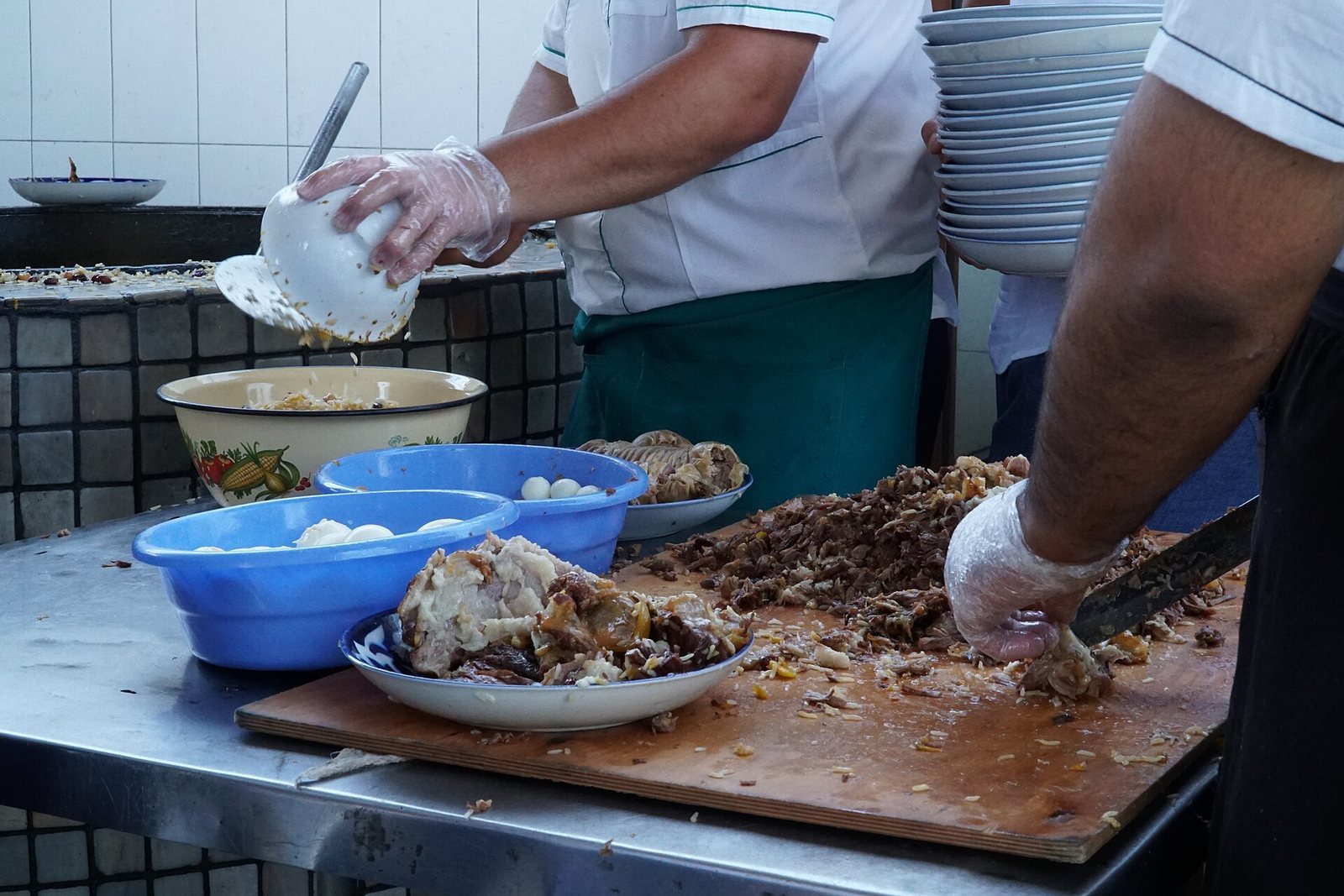
A traveler who's tried plov once thinks they now know Uzbek cuisine. That's like looking at one painting and deciding you've understood a whole museum. In Uzbekistan plov isn't a dish with a fixed recipe but a living tradition that speaks its own dialect in every region: in one place it's cooked dark and rich, in another light and almost diet-like, in another sweet, with dried fruit. Let's work out what plov really is, what it's built from, and why you can read a map of the country off a single plate.
What is Uzbek plov really?
The word itself goes back to a Persian root, but as a phenomenon plov long ago outgrew cookery. It's a social ritual: a clan, a mahalla, a whole street gathers around the big cauldron. There's a saying that a guest can't leave a home until they've been offered plov — to refuse it is almost improper. So when you sit down to a plate of plov in Uzbekistan, you're taking part not in a meal but in a small ceremony of hospitality more than two thousand years old.
Plov isn't what Uzbeks eat. It's how they receive, see off and hold their world together.
What is zirvak, and what rice does plov need?
It's the zirvak that decides whether the plov succeeds: the master oshpaz ("plov cook") judges the dish by how the onion and carrot are fried and how the spices have steeped into them. The carrot for plov in Uzbekistan is more often yellow — it's sweeter and denser than the red. Besides devzira, other local rice varieties (lazer, alanga and others) are used; part of the rice is sometimes replaced with chickpeas, mung beans or even wheat. The spices almost always include cumin (zira) and barberry, often whole heads of garlic and a hot chili pod.
Why is plov different in every city?
Ferghana (chaikhana) plov
The most famous, and often taken as the "benchmark." It's cooked in the Ferghana Valley and the Tashkent region: the onion and carrot are fried to a rich color, which makes the plov dark and aromatic, in plenty of oil. Devzira — the "correct" rice for this school — comes from exactly here. Chaikhana plov is the plov of big cauldrons and crowded feasts.
Samarkand plov
The complete opposite of Ferghana style: light, "honest"-looking — you can see the layers. The vegetables here aren't fried but laid raw in layers and steamed in the process; dark linseed oil (zigir-yog), pre-heated, is often used. Samarkand plov is considered lighter and more "diet." More on the city itself in the Samarkand guide.
Bukhara plov
The most "dessert-like" of all: dried fruit — raisins, sometimes dried apricots — is often added. The technique is special too: the ingredients are frequently boiled separately until half-done, then assembled in the cauldron in layers and finished together. The logical follow-on is the Bukhara guide.
Tashkent plov
In the capital all the ingredients are fried without fail, and the plov comes out rich in flavor and color. Tashkent is a convenient place to "get a taste" of plov before traveling the country; where exactly to look for it, we write in the Tashkent guide. Besides those named, the Khorezm and Kashkadarya versions also stand out — the regional recipes run into the dozens.
各地区的抓饭:八大流派
Fergana plov
技术: Made with devzira — the local russet rice that drinks up the zirvak without turning soft.
口味: Darker and 'drier' than Tashkent's: every grain separate, the flavor deeper, the fat never heavy.
标杆所在: Chaikhanas of Margilan and Rishtan at noon, when the kazan is opened for the first time.
They say a real oshpaz knows the plov is ready by sound: the rice 'whispers' when it is time to cover the kazan.
Tashkent plov
技术: Yellow carrots instead of red, laser or devzira rice, and above all the plating: rice, zirvak and meat are layered on the lagan, never mixed.
口味: Lighter and softer than Fergana's; yellow carrots add sweetness without color, and kazy on top lends the festive note.
标杆所在: The Besh Qozon plov center before 1 p.m. — after that the kazans run empty.
Tashkent measures plov in kazans: Besh Qozon can go through a cauldron holding a ton and a half of rice in a single morning.
Samarkand plov
技术: The only major style never stirred at all: rice, carrots and meat finish in layers, steamed.
口味: The lightest of the great schools — the rice stays almost white, the taste cleaner, the carrots keep their shape.
标杆所在: The oshxonas near Siab bazaar in the morning; by lunchtime the best kazans are already done.
Samarkand insists its plov can be eaten by the spoonful the day after a wedding — it never turns heavy.
Bukhara osh-i-sofi
技术: The rice is boiled separately and joined with the zirvak only at the end, with raisins and sometimes dried apricots.
口味: Sweetish and silky, without pronounced zira — the taste of a merchant city, not the steppe.
标杆所在: Bukhara's wedding oshxonas; on ordinary days, the old chaikhanas by Lyabi-Hauz.
'Sofi' comes from Sufi: legend places the recipe in dervish lodges, where meat and rice were cooked apart out of modesty.
Khorezm plov (chavla)
技术: Less carrot, more rice, a quieter fire: chavla cooks longer and with almost no stirring.
口味: The crumbliest and most restrained in flavor — closer to Persian polo than to Fergana osh.
标杆所在: Home oshxonas of Khiva outside the Itchan Kala walls — the tourist kazans inside are softer and sweeter.
Khorezmians joke that theirs is the only plov you can still dance the lazgi after.
Kashkadarya plov
技术: Chickpeas go into the kazan, and in season quince — stewed with the meat in the zirvak.
口味: Quince adds tartness and perfume, chickpeas a nutty density; the most autumnal flavor of all the schools.
标杆所在: Oshxonas of Shakhrisabz and Karshi in October–November, at quince season.
Locals hold that autumn plov without quince marks a lazy oshpaz.
Wedding toy-palov
技术: Cauldrons for hundreds of servings, cooking starts before dawn, the rice is washed in seven waters.
口味: Richer and fattier than the everyday version: this plov must 'hold' the guests until evening.
标杆所在: By invitation only — or in the morning at the big plov centers that cook toy-palov to order.
Morning wedding plov is a men's ritual: guests arrive at six, eat, and leave for work.
Chaikhana plov
技术: The everyday urban standard: one kazan each morning, the recipe pared to a stable minimum.
口味: The honest baseline — neither festive nor homestyle; it is the version by which cities are compared.
标杆所在: Any chaikhana with a local queue by 12:30. The queue is the quality mark.
A traveler's rule: if the plov is gone by 1 p.m., you have found the right chaikhana — come back earlier tomorrow.
Is it true plov is recognized as UNESCO heritage?
This is an important shift of focus: UNESCO protected not a "rice dish" but a ritual that gathers people around the cauldron. That's exactly why plov in Uzbekistan is so hard to "peel away" from its context — it's sewn fast to weddings, the Navruz holiday, wakes and hospitality. To try plov as a guest or in a chaikhana is to see this tradition from the inside, not just to eat.
Where do you try real plov in Uzbekistan?
The rule is simple: plov is a morning-and-midday dish. The big cauldron is cooked for lunch, and when it's empty, plov is finished until the next day. What's served in the evening at tourist places is usually reheated. So plan plov for the first half of the day — and if you get a home invitation, that's the best plov of the whole trip.
How is plov cooked in a cauldron?
We deliberately don't give "exact" weights: real plov is measured not by scales but by the eye and experience of the oshpaz, and the proportions drift from region to region. But the logic of cooking is the same for all schools — here it is, as an extractable scheme.
Plov in a cauldron: the order of steps
- Heat the oil. In a cast-iron cauldron, oil is heated strongly (in Ferghana — cottonseed; in Samarkand — pre-heated linseed zigir-yog).
- Fry the meat and onion. Bone-in meat and onion go in, fried to a golden crust and rich color.
- Add the carrot. Yellow carrot in matchsticks is laid on top and fried, without turning it to puree.
- Make the zirvak. Hot water is poured in, cumin, barberry and salt are added (to taste — whole heads of garlic and a hot pepper), and the base is simmered — this is the zirvak.
- Lay the rice. Washed rice (classically devzira) is spread evenly on top and covered with hot water so it covers the rice. Do not stir.
- Bring up and simmer. On high heat the water is boiled off, then the rice is gathered into a mound, covered, and simmered on low heat until crumbly.
- Serve. Stir only before serving, mound onto a lyagan platter, with meat, garlic, and sometimes a whole pepper pod on top.
The Samarkand school differs in a key step: the vegetables aren't fried but laid raw in layers and steamed — which is why the plov comes out lighter and easier.
Frequently asked questions about Uzbek plov
How is Uzbek plov different from ordinary rice with meat?
The key difference is the zirvak: the rice isn't boiled together with the meat but laid on top of a ready fried base of meat, onion, carrot and spices and simmered without stirring. That's why the rice comes out crumbly and soaked with flavor, rather than turning to porridge.
What rice do you need for real plov?
The classic choice is the devzira variety from the Ferghana Valley: dense grains with a pinkish-brick tint that absorb fat and aroma well and stay separate. Other local varieties (lazer, alanga) are used too, and part of the rice is sometimes replaced with chickpeas or mung beans.
How is Ferghana plov different from Samarkand plov?
Ferghana (chaikhana) style is dark and rich: the onion and carrot are fried. Samarkand style is light: the vegetables are laid raw in layers and steamed, often in linseed oil, and the dish is considered lighter. The two schools are told apart instantly by the color of the plate.
Why is dried fruit put in Bukhara plov?
It's a feature of the Bukhara tradition: raisins, sometimes dried apricots, are added, making it slightly sweet. The technique differs too — the ingredients are often boiled separately and assembled in the cauldron in layers.
When and where is it best to eat plov in Uzbekistan?
In the first half of the day. Plov is cooked for lunch in big cauldrons at chaikhanas and plov centers, and when the cauldron is empty, plov is finished until the next day. The most famous address is the Plov Center in Tashkent; the most authentic is as a guest of locals.
Is it true plov is on the UNESCO heritage list?
Yes. In 2016 UNESCO included "the culture and tradition of plov" on the list of the intangible cultural heritage of humanity, emphasizing its role in strengthening family and communal ties. The Tajik oshi palav was noted in the same decision.
Want to understand Uzbek food not as "exotica" but as a living culture with its own rules?
Become a Kvazar Explorer →