地点
泰尔梅兹:乌兹别克斯坦在伊斯兰之前向佛陀祈祷的地方
乌兹别克斯坦常被想成蓝色穹顶和伊斯兰学院的国家。但在南方、阿姆河边,泰尔梅兹保留着更早的一层历史:佛教寺院、贵霜时代遗址、苏菲圣陵和边境城市的粗粝气息。
The English overview now exposes the real city and landmark pages directly in HTML, so every card opens a page that exists.
乌兹别克斯坦常被想成蓝色穹顶和伊斯兰学院的国家。但在南方、阿姆河边,泰尔梅兹保留着更早的一层历史:佛教寺院、贵霜时代遗址、苏菲圣陵和边境城市的粗粝气息。
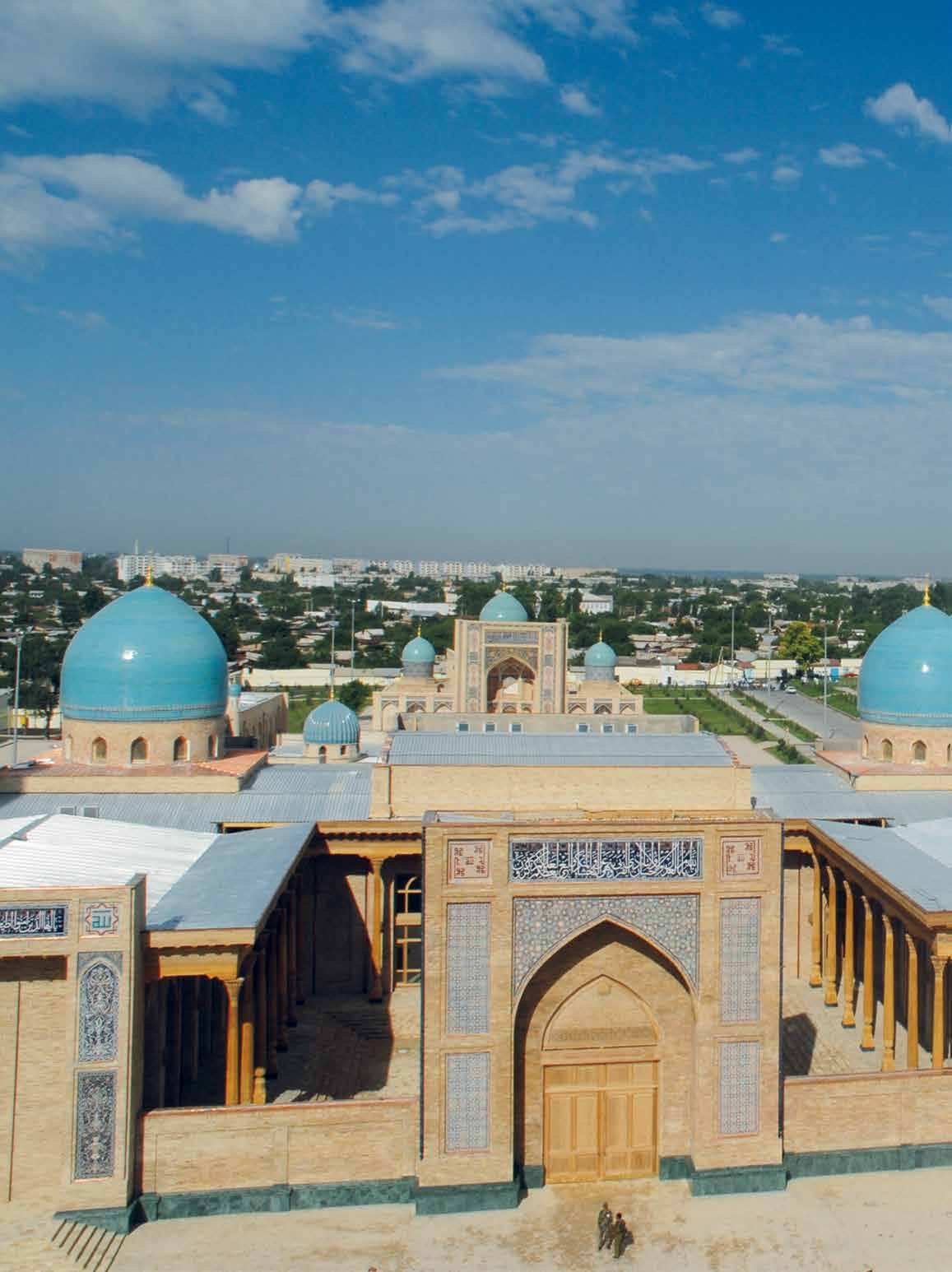
在阿姆河的高岸上,靠近边境的地方,矗立着一座苏菲贤者陵墓的蓝色圆顶。当地人尊称他为 Termez-ota——“铁尔梅兹之父”。这是乌兹别克斯坦南部最重要的圣地之一,从一位隐修者的简陋静修处逐渐发展而来,也是一处佛教过去让位于伊斯兰传统的地方。
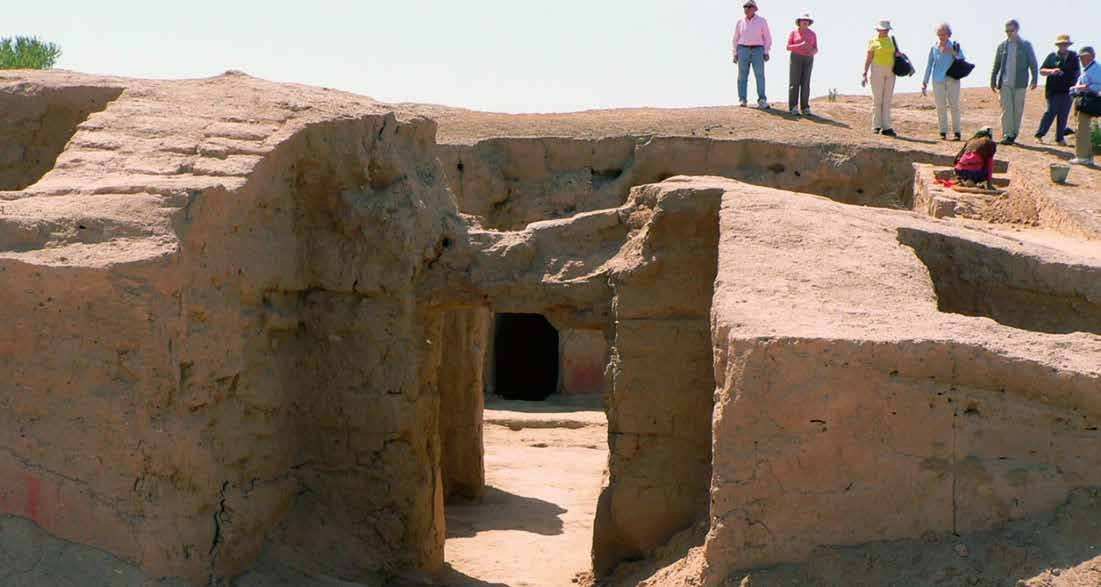
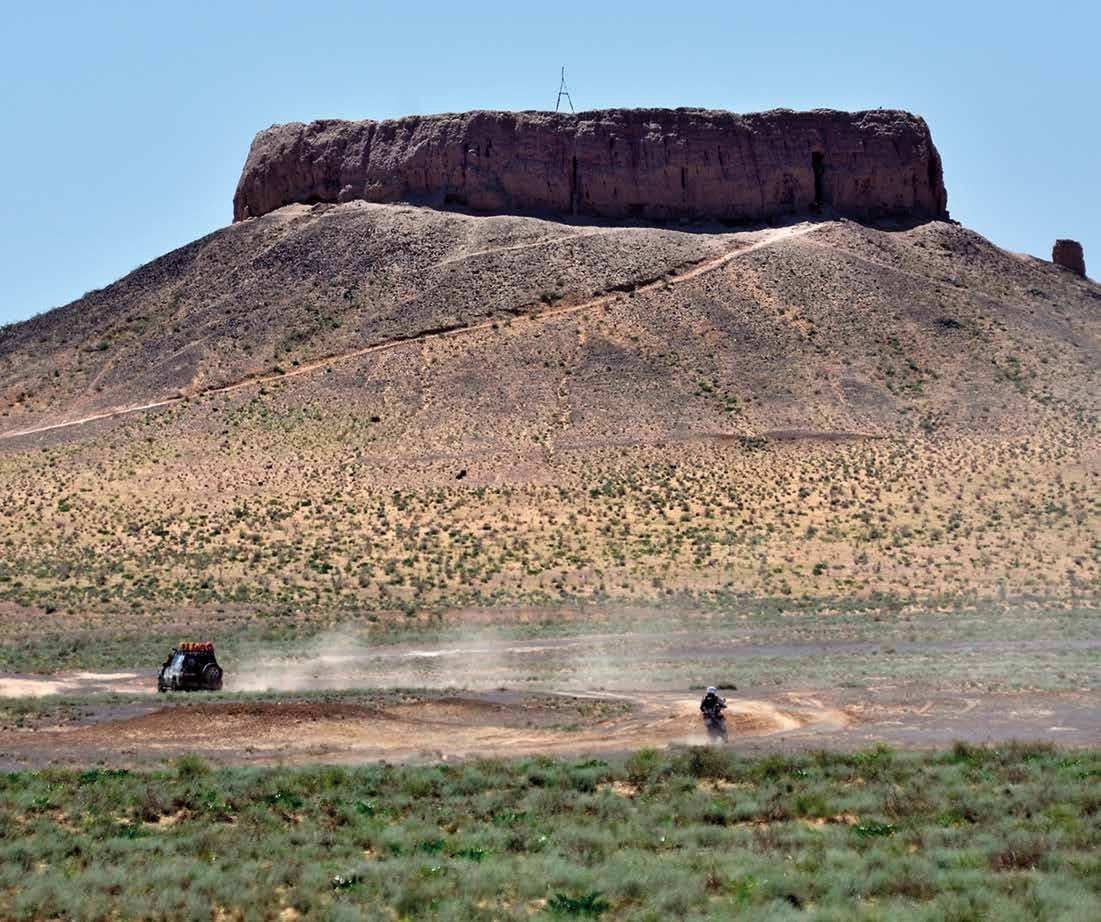
乌兹别克斯坦常被想象成蓝色圆顶和经学院的国家。但早在伊斯兰到来的一千年前,在南方的阿姆河岸边,身着红袍的僧侣曾向佛陀祈祷。铁尔梅兹曾是丝绸之路上的重要佛教中心,而它的寺院遗址至今仍静静躺在阿富汗边境附近的沙土之中。
Samarkand's blue domes are younger than they look. The real city is nearly three thousand years old, and it lies right next door — under grassy mounds where the capital of Sogdiana once stood, until the Mongols arrived in 1220.
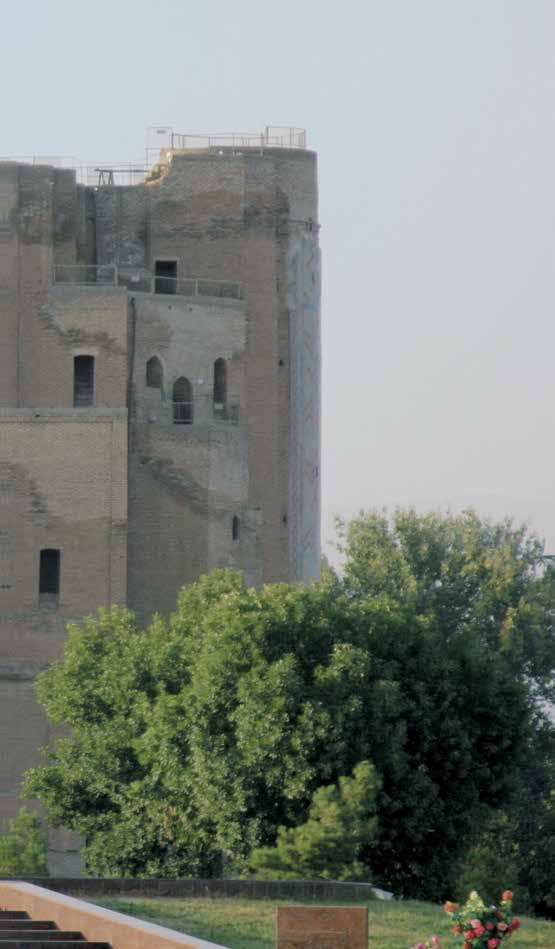
Amir Timur had already filled Samarkand with the greatest buildings of his age — and then wanted to surpass them in his own home city. So Ak-Saray was born, a palace conceived to eclipse everything built before. All that remains are two piers of the entrance portal, but even these ruins make you tip your head back.
The city's main avenues fan out from this square. Different monuments from different eras have stood on this spot — and who stands at the center today tells you more about the country than any guidebook. Right now it's Tamerlane on horseback.
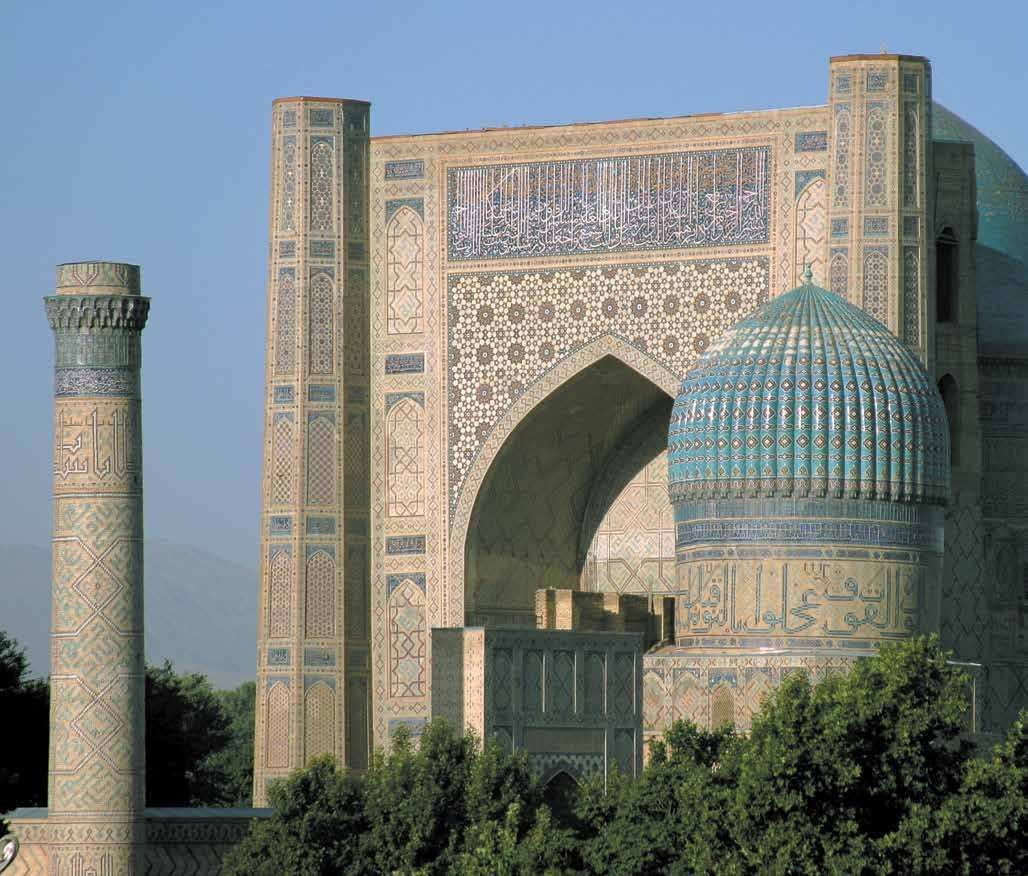
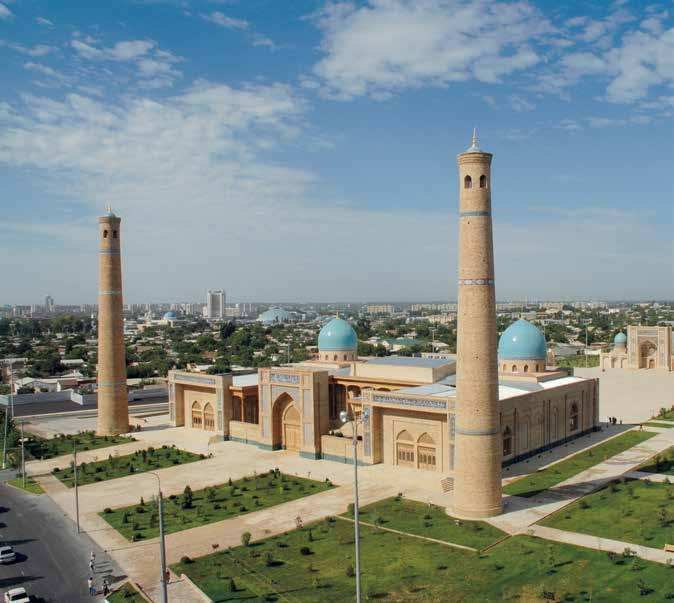
The Friday mosque was meant to be the grandest building in the Islamic world — a monument to a conqueror's might. And it was. Then it began to fall almost as soon as it was finished.
Tashkent's main bazaar trades at the same crossroads it did a thousand years ago — but under a giant dome that became a monument in its own right. Here you buy spices and plov, and along with them the frozen spirit of two eras.
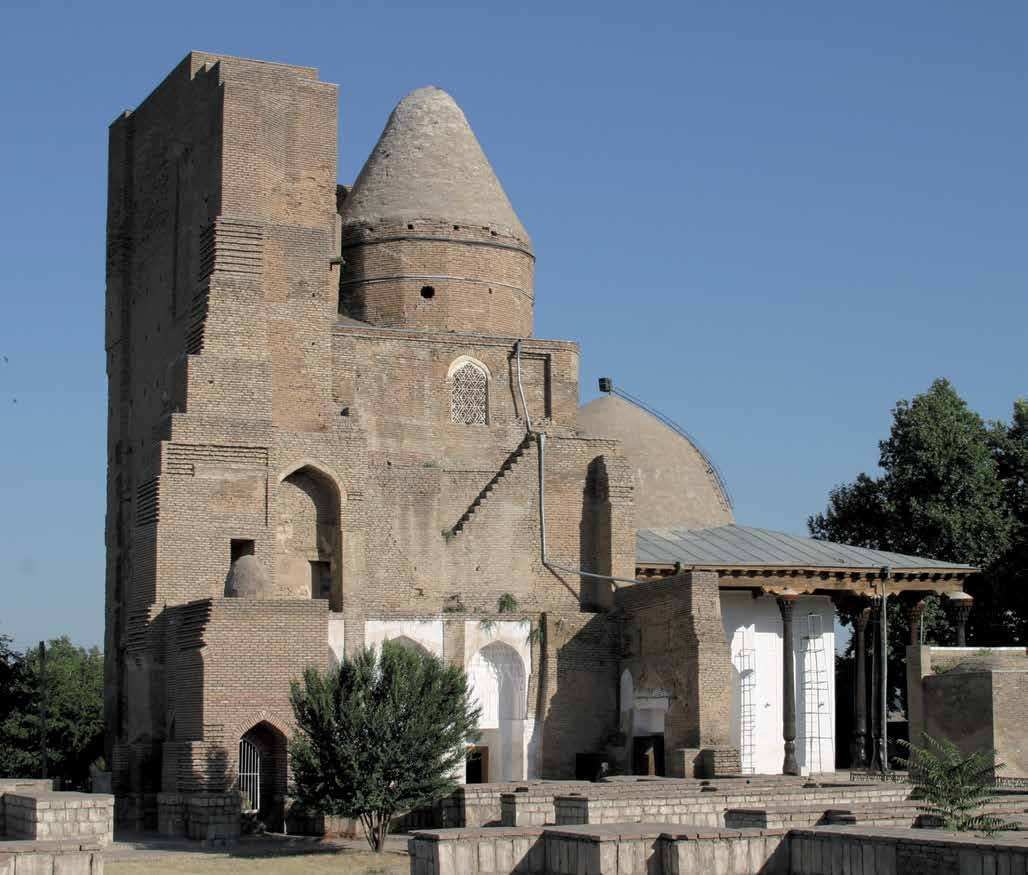
Having lost his beloved son, Amir Timur built a memorial in his home city and prepared a crypt for himself beside it — he wanted to be buried here, in Shakhrisabz. But fate decided otherwise: the great conqueror came to rest in Samarkand, and the prepared crypt remained empty.
Beside the bulk of Ak-Saray hides a place of a completely different mood — a quiet courtyard where a mosque stands under a blue dome, and in the tombs rest Timur's mentor and his kin. If the palace spoke of might, this ensemble speaks of memory and reflection.
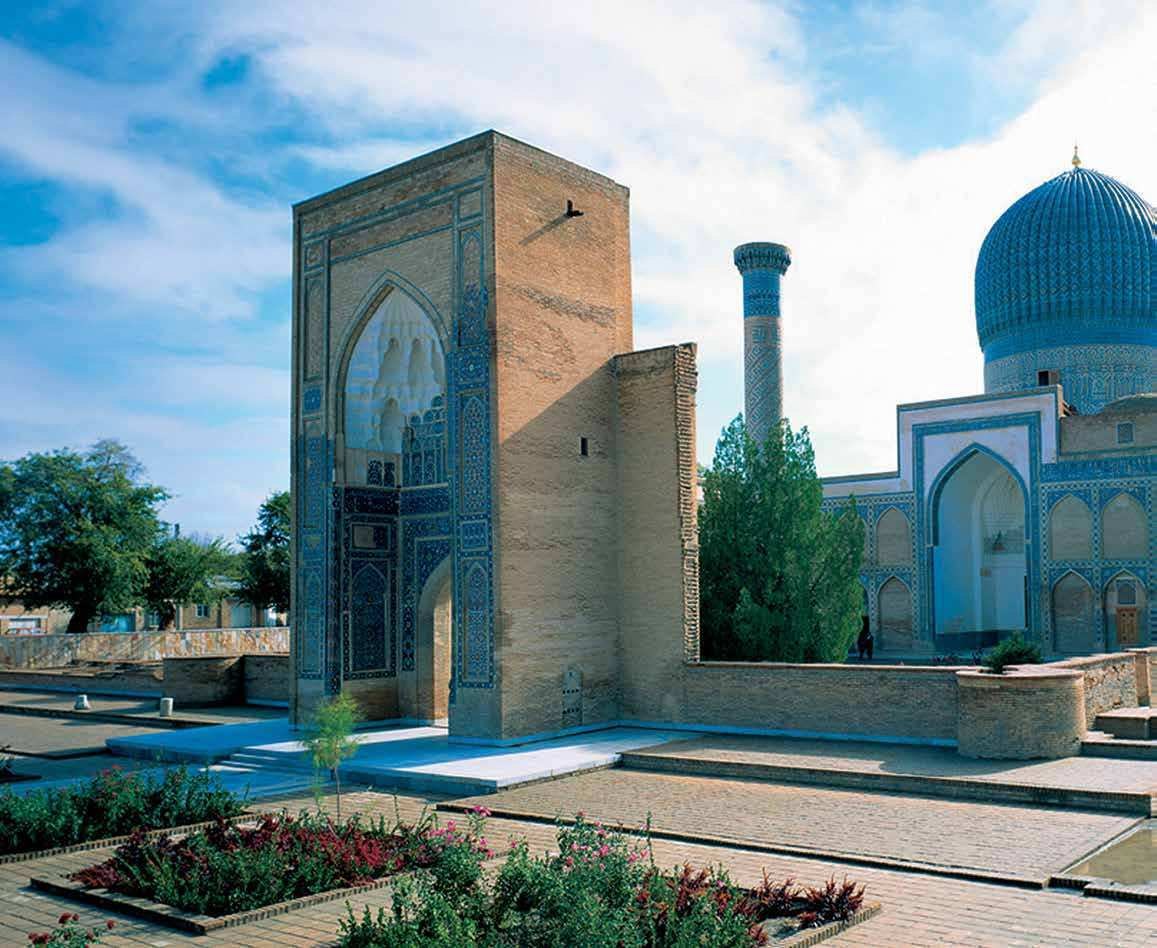
Beneath a ribbed turquoise dome that became a template for the Taj Mahal, under a slab of black jade, lies a man who redrew the map of Asia. And above him, an inscription that someone dared to disturb in 1941.
Deep in old Tashkent, among the mud-brick houses that survived the earthquake, stands an ensemble built around a book almost fourteen centuries old. By tradition its pages bear the blood of a murdered caliph, and the manuscript's road ran through five countries.
This isn't a cozy park for strolling but the ceremonial square of a state. Here everything is a statement: a globe instead of a leader, an arch of storks at the entrance, an alley of memory for the war dead. The country's main square, as Uzbekistan wants to see itself.
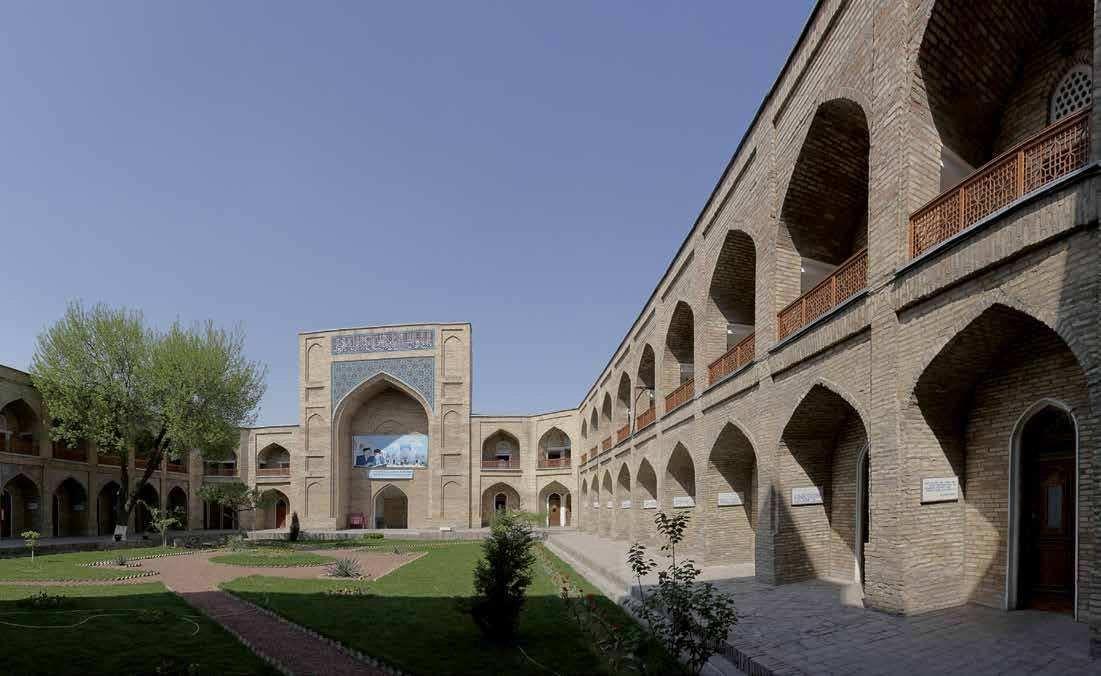
Tashkent's largest madrasah is named after the court title of a powerful vizier. Over four and a half centuries it has been a school, a caravanserai and a fortress — and, by a dark legend, a scaffold too.
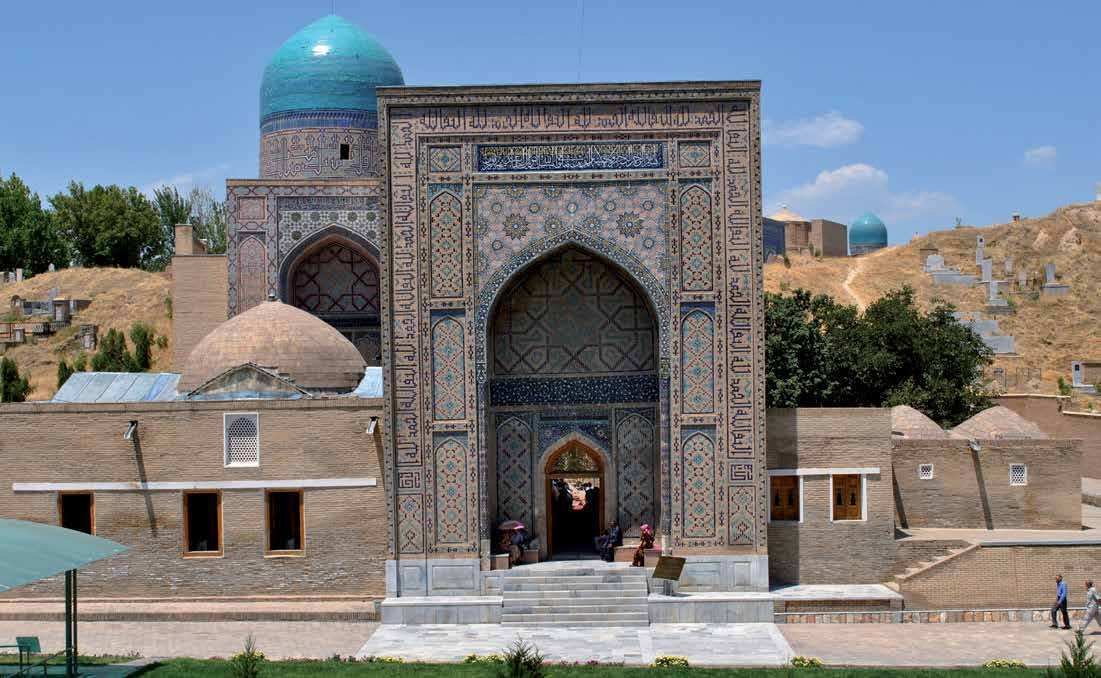
A narrow corridor climbing uphill between tombs, where turquoise closes in from both sides. Here lie Tamerlane's relatives — and here too, by legend, a beheaded king still lives.
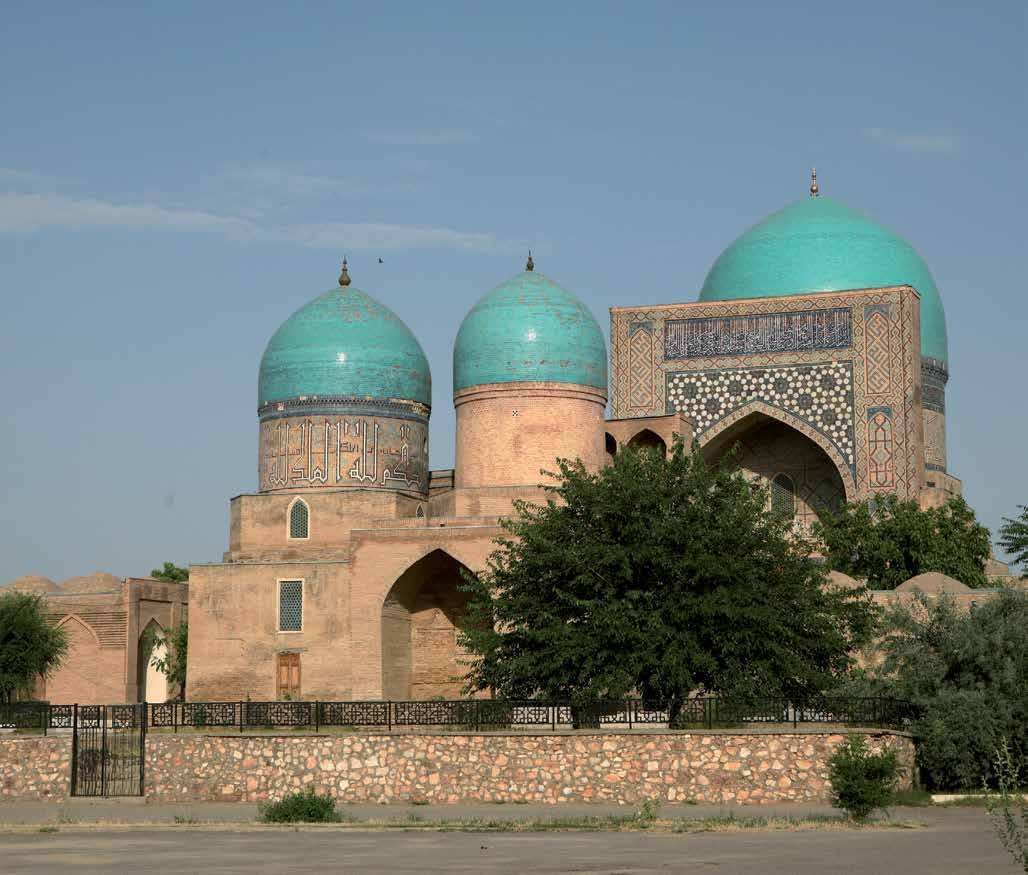
Samarkand became the capital of an empire. Shakhrisabz was the homeland. Timur built a palace here taller than those of Samarkand and prepared his own tomb — but in the end he wasn't buried here. That gap between intention and fate is what makes Shakhrisabz so special.
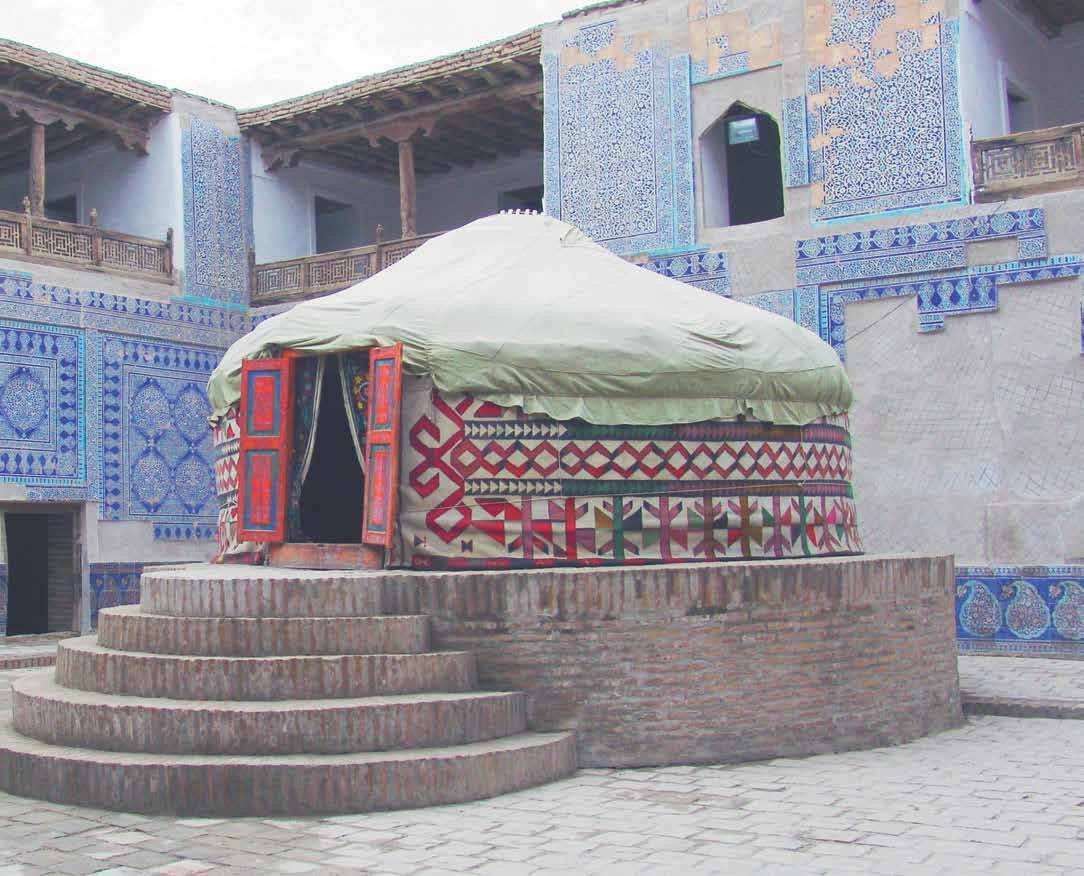
希瓦汗有两座重要宫殿:西门旁更像堡垒的 Kunya-Ark,以及东侧更华丽、更礼仪化的 Tash-Hauli。后者的通道和庭院故意复杂,陌生人很难一路走到统治者面前。
Uzbekistan's capital is over two thousand years old — yet you can barely see that age: the 1966 earthquake erased the old town, and Tashkent was rebuilt from scratch. In return it holds the world's oldest Quran, and its metro runs like an underground museum.
Travelers are often surprised: why is the capital of an ancient country so Soviet and so wide? The answer lies in one morning in 1966, when the city center collapsed in minutes. What you see today was built afterward. To understand the face of Tashkent, you have to know about those 5 hours and 23 minutes.
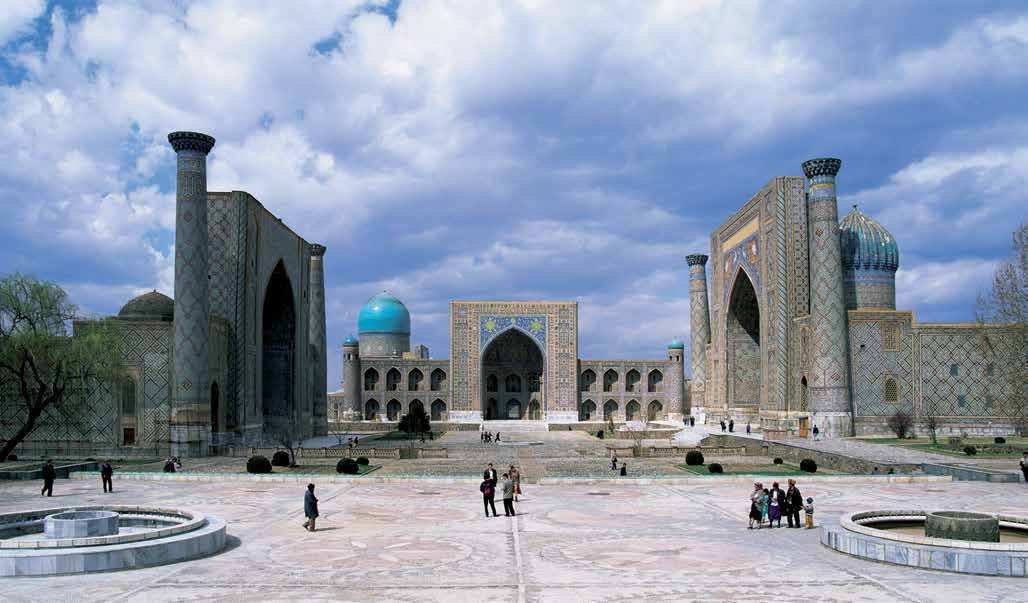
Three madrasas, two centuries between them, and one tiger that was never supposed to be there. Here's how to see Uzbekistan's most famous square as a design — not just a backdrop.
In a far-off city on the edge of a dried-up sea is kept the world's second-largest collection of Russian avant-garde. It was assembled by one man — an artist who drove around the villages, bought up forbidden paintings and hid them where Moscow wouldn't look. Today people travel across half a continent for this collection.
Central Asia's first metro was designed not only as transport but as a bomb shelter — which is why photographing it was banned until 2018. Now you can: space mosaics, majolica domes and marble halls, for a fifteen-cent ticket.
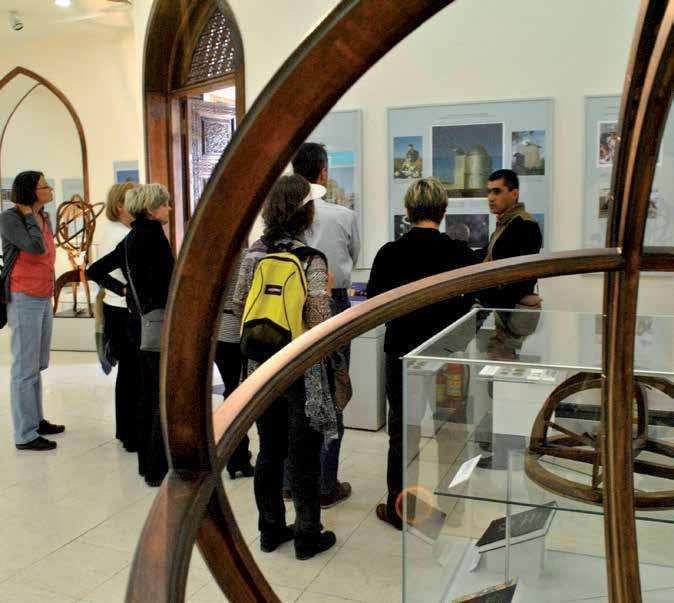
Two centuries before Galileo, Tamerlane's grandson built an instrument as tall as a three-story house in Samarkand — and calculated the length of the year to within a minute. Then he paid for it with his head.
在这里,丝绸不是玻璃柜里的展品,而是正在被抽丝、染色、整理和织造的材料。Yodgorlik 让你看到一匹 khan-atlas 从蚕茧到成品的全过程。
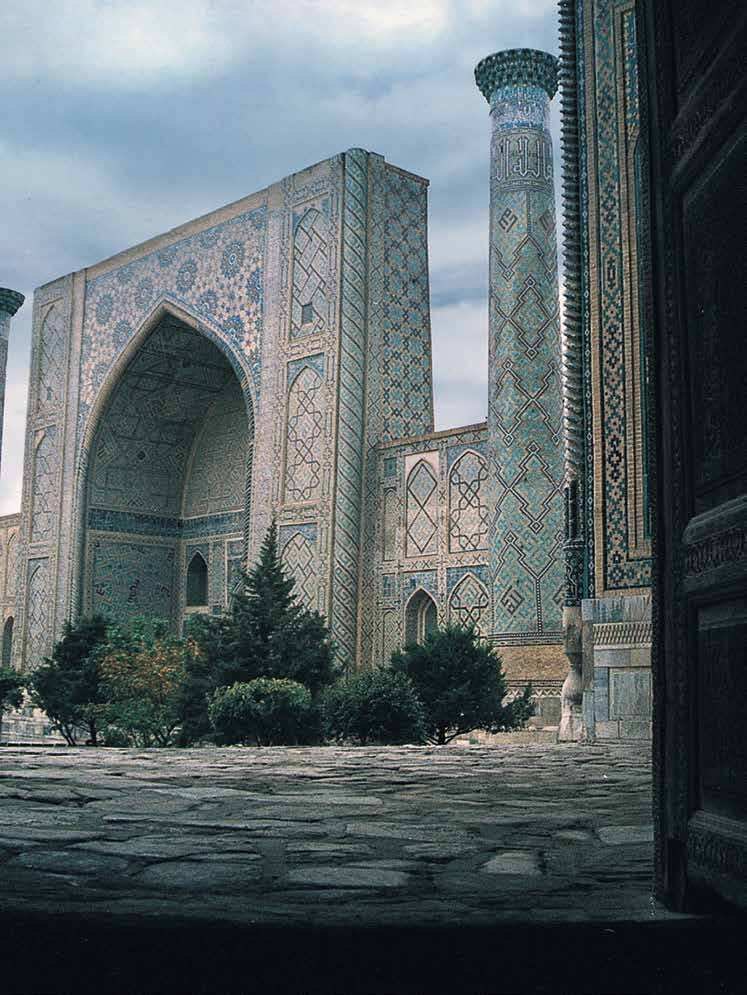
一座由帖木儿的孙子、天文学家乌鲁伯格修建,克制得像公式。另一座两百年后建在正对面,华丽、繁复、几乎不再顾忌古典规范。中间只隔一条窄街,却隔着两个时代。
乌兹别克斯坦各地区中文概览。 A consistent geography without mixing regions, cities and historical areas. Linked cities open their exact English guide.
Eleven cities with different characters - from Samarkand's blue domes and Margilan silk to Nukus avant-garde and the Buddhist past of Termez.
人们来这里不是为了蓝色圆顶,也不是为了宣礼塔。努库斯讲的是另一种故事:一个人把数千幅在莫斯科可能被毁掉的画带进卡拉卡尔帕克沙漠,从而保存了20世纪艺术的一整层记忆。
一个名叫巴布尔的少年从这座城市出发,后来征服印度、创建莫卧儿帝国;此后,他却一生在诗句中思念安集延。这里几乎没有保留下太多古建筑,但“改变历史的人从这里走出”这件事本身,就让城市变得特别。
巴布尔出生在安集延,却在数千公里外的印度去世,并在那里奠定了莫卧儿帝国的基础。他终其一生没能回到故乡。因此,人们把他墓地的泥土带回这里,带到他年轻时喜爱散步、也曾从这里永别故城的山丘上。
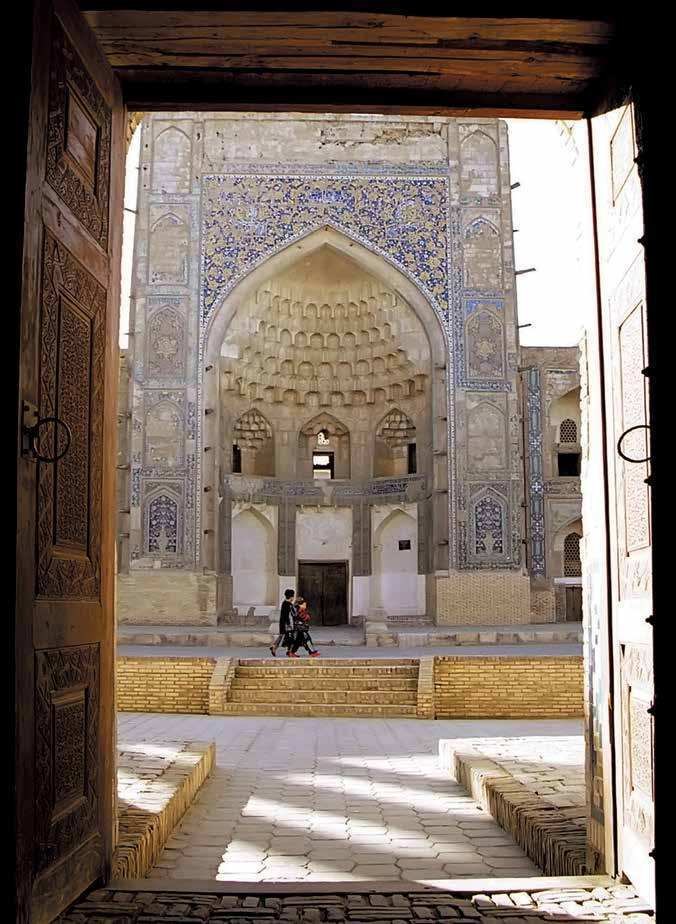
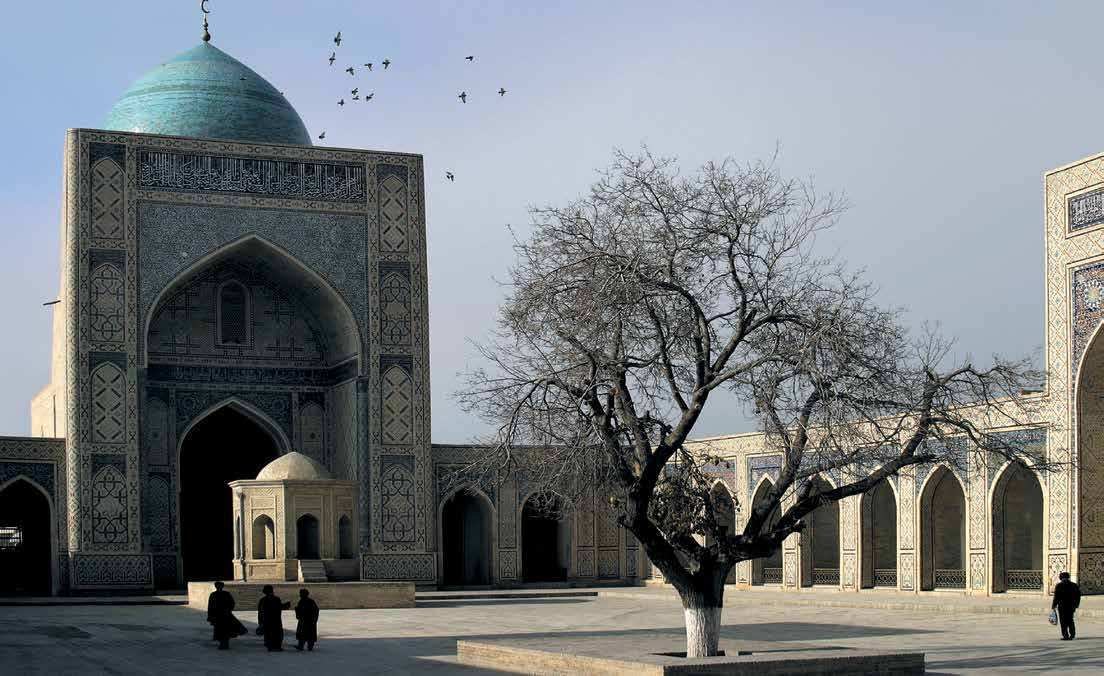
如果撒马尔罕是宏大的广场和帝国尺度,布哈拉就是几乎完整幸存下来的中世纪城市。在这里,不是几座纪念建筑散落在城市里,而是城市本身成了纪念碑。
努库斯附近的三座山丘上,躺着中亚最古老的墓地之一。传说这里埋葬着地球上的第一个人,而一座半毁的陵墓被称为“世界时钟”:每年掉下一块砖,最后一块落下时,世界就会结束。
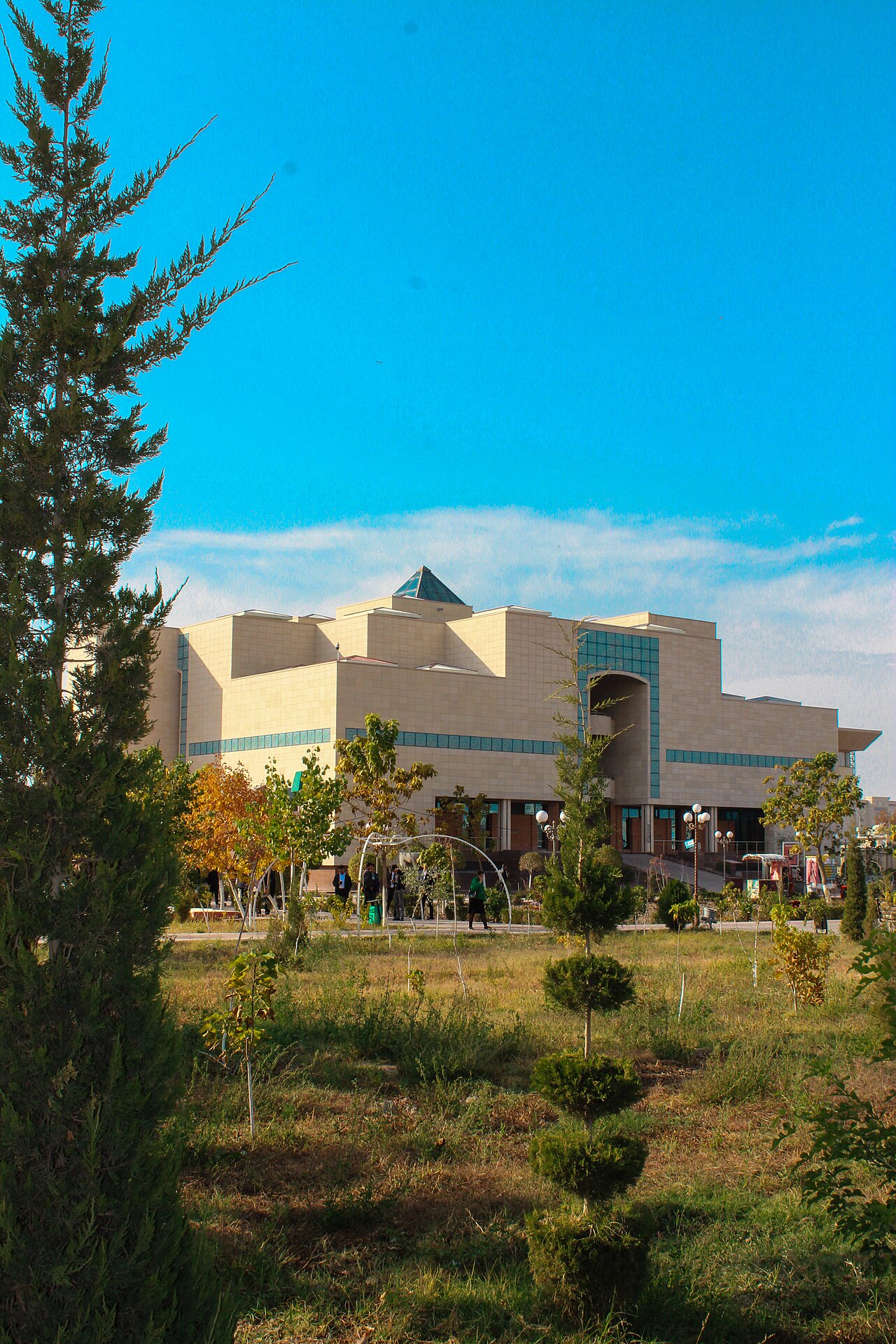
这是乌兹别克斯坦知名城市中最年轻的一座:不到 150 年历史,在这里找不到古代遗迹。但费尔干纳是一个便利而绿色的基地,道路从这里通往谷地最有意思的地方:马尔吉兰的丝绸、里什坦的陶瓷和浩罕的宫殿。
1902年,一场可怕的地震几乎把安集延从地图上抹去:数千人遇难,整片城区倒塌。但贾米聚礼清真寺和它32米高的宣礼塔——整个费尔干纳谷地最高的宣礼塔——仍然屹立。今天,它是安集延最重要的建筑遗迹。
Every translated landmark page currently available in the English structure.
Samarkand's blue domes are younger than they look. The real city is nearly three thousand years old, and it lies right next door — under grassy mounds where the capital of Sogdiana once stood, until the Mongols arrived in 1220.
The Friday mosque was meant to be the grandest building in the Islamic world — a monument to a conqueror's might. And it was. Then it began to fall almost as soon as it was finished.
Beneath a ribbed turquoise dome that became a template for the Taj Mahal, under a slab of black jade, lies a man who redrew the map of Asia. And above him, an inscription that someone dared to disturb in 1941.
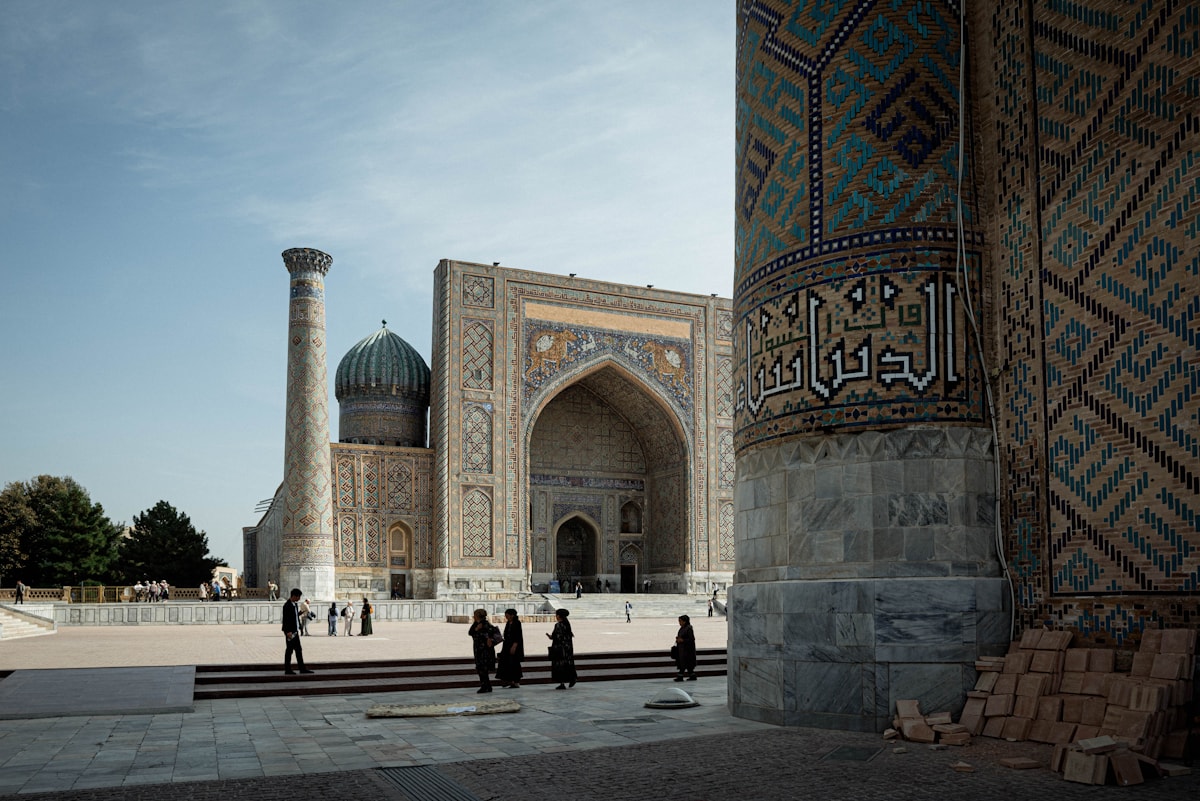
Three madrasas, two centuries between them, and one tiger that was never supposed to be there. Here's how to see Uzbekistan's most famous square as a design — not just a backdrop.
A narrow corridor climbing uphill between tombs, where turquoise closes in from both sides. Here lie Tamerlane's relatives — and here too, by legend, a beheaded king still lives.
One was built by Tamerlane's grandson, a scholar and stargazer — austere as a formula. The other, directly opposite, went up two hundred years later — opulent, excessive, indifferent to the canon. Between them lies a narrow lane and a whole change of eras.
Two centuries before Galileo, Tamerlane's grandson built an instrument as tall as a three-story house in Samarkand — and calculated the length of the year to within a minute. Then he paid for it with his head.
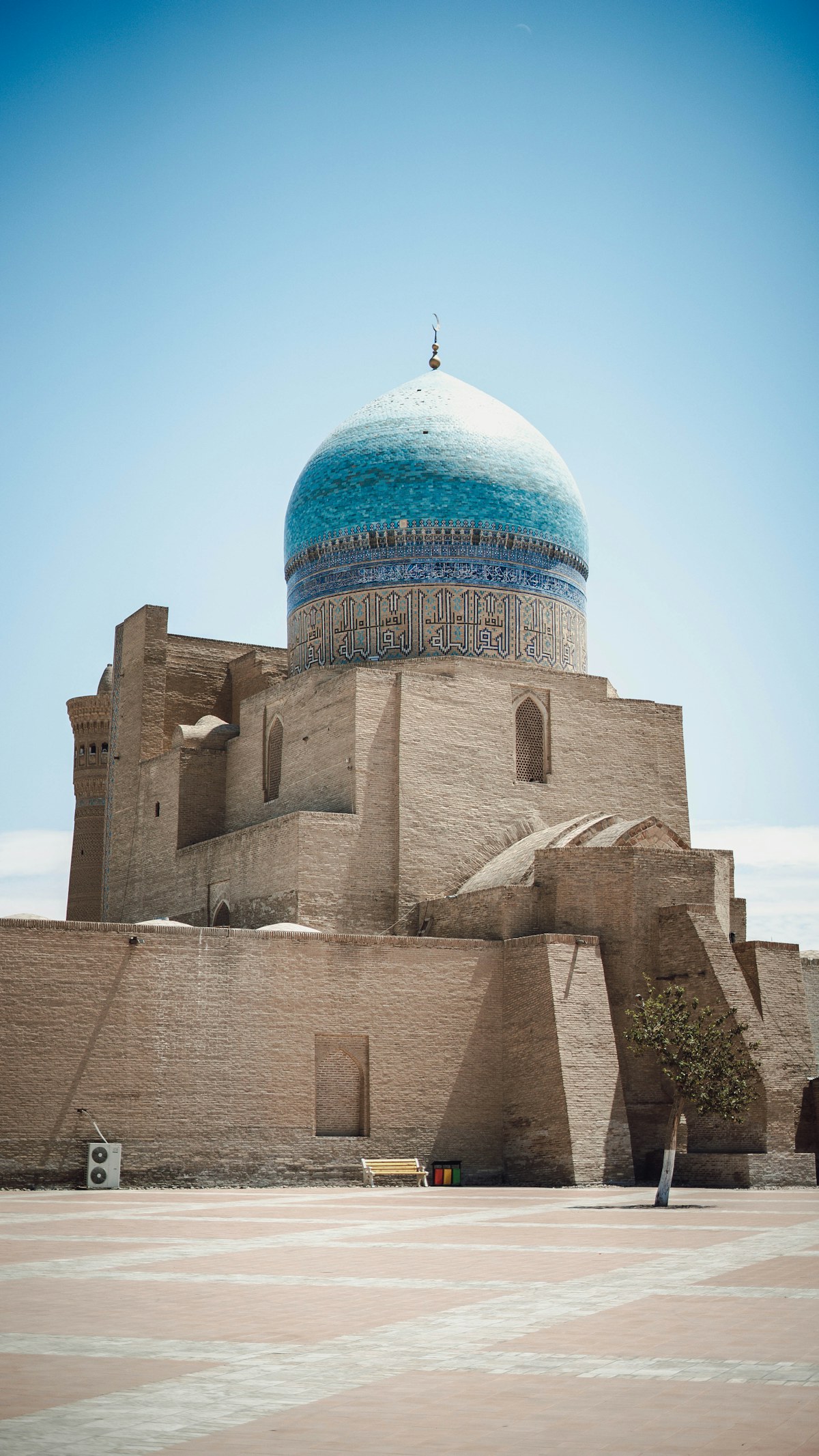
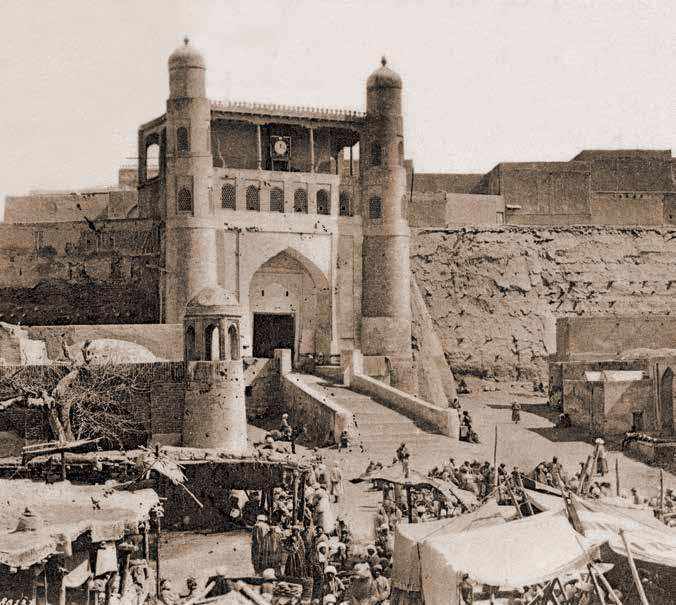
Clay walls on a twenty-meter mound, where Bukhara began. Behind them emirs were crowned, the treasury and the prison were kept — until one morning in 1920, aircraft appeared over the fortress.
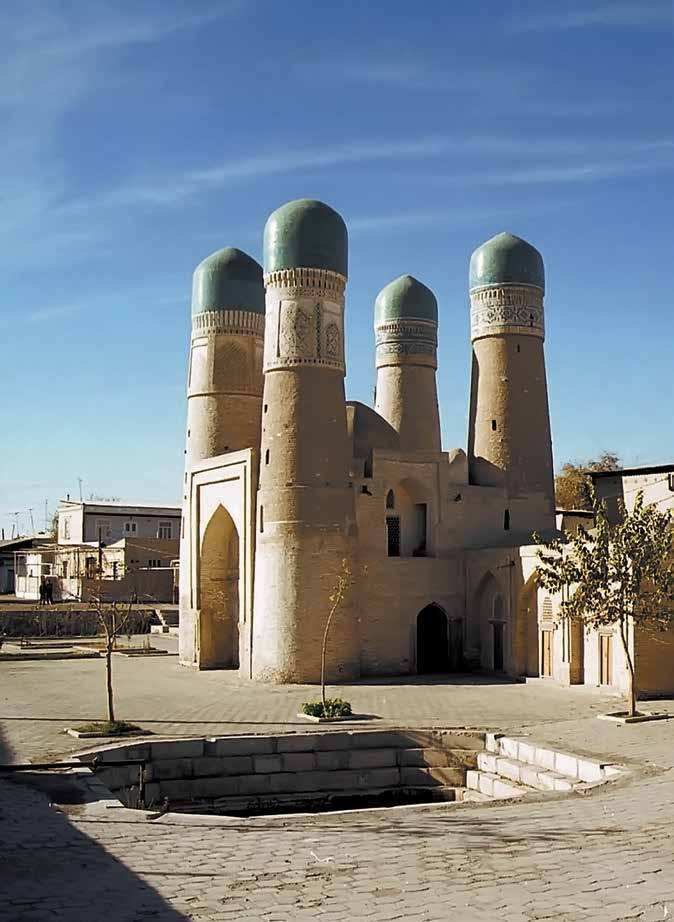
It isn't on any of the great squares — it's tucked into the residential lanes behind Lyabi-Hauz. And yet these four mismatched towers are, more than anything, the "postcard" of Bukhara. A tiny building that out-argued every monument in the city.
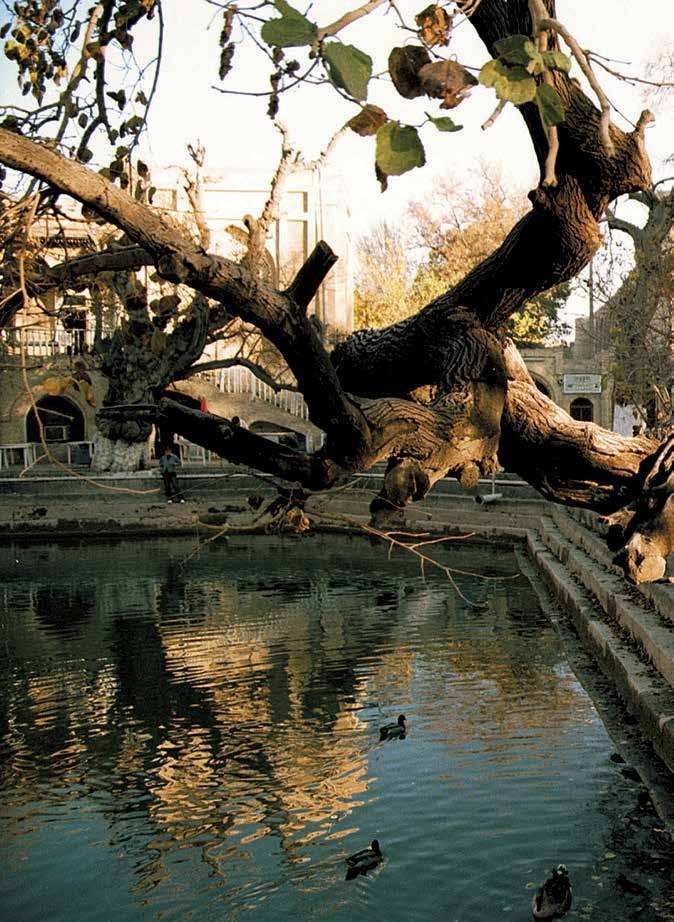
After centuries, minarets and domes, you come out to water in the shade of old mulberry trees — and Bukhara suddenly slows down. People still drink tea here, argue, laugh. And here, on a donkey, sits the wittiest man in the East.
A tower the condemned were thrown from, spared by the conqueror who leveled the rest of the city. Beside it, a mosque for twelve thousand, and a madrasa that never stopped teaching — not even under Soviet rule.
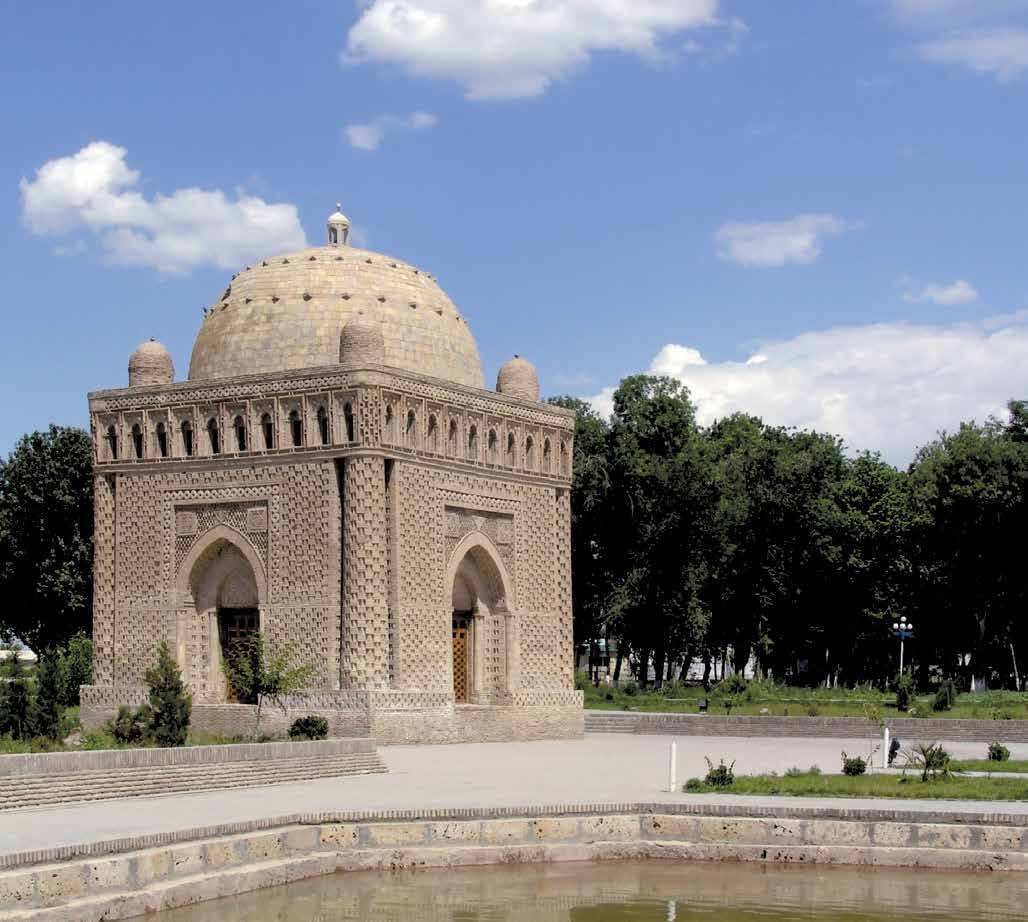
No tiles, no gilding — just fired clay, laid so the wall changes its face through the day. Bukhara's oldest building survived the Mongols because it was buried in sand in time.
Most of Bukhara's monuments became museums long ago. These did not. Under domes raised five hundred years ago at the forks of the trade roads, people still sell carpets, knives and spices. This isn't a reconstruction of the Silk Road — it's the Silk Road...
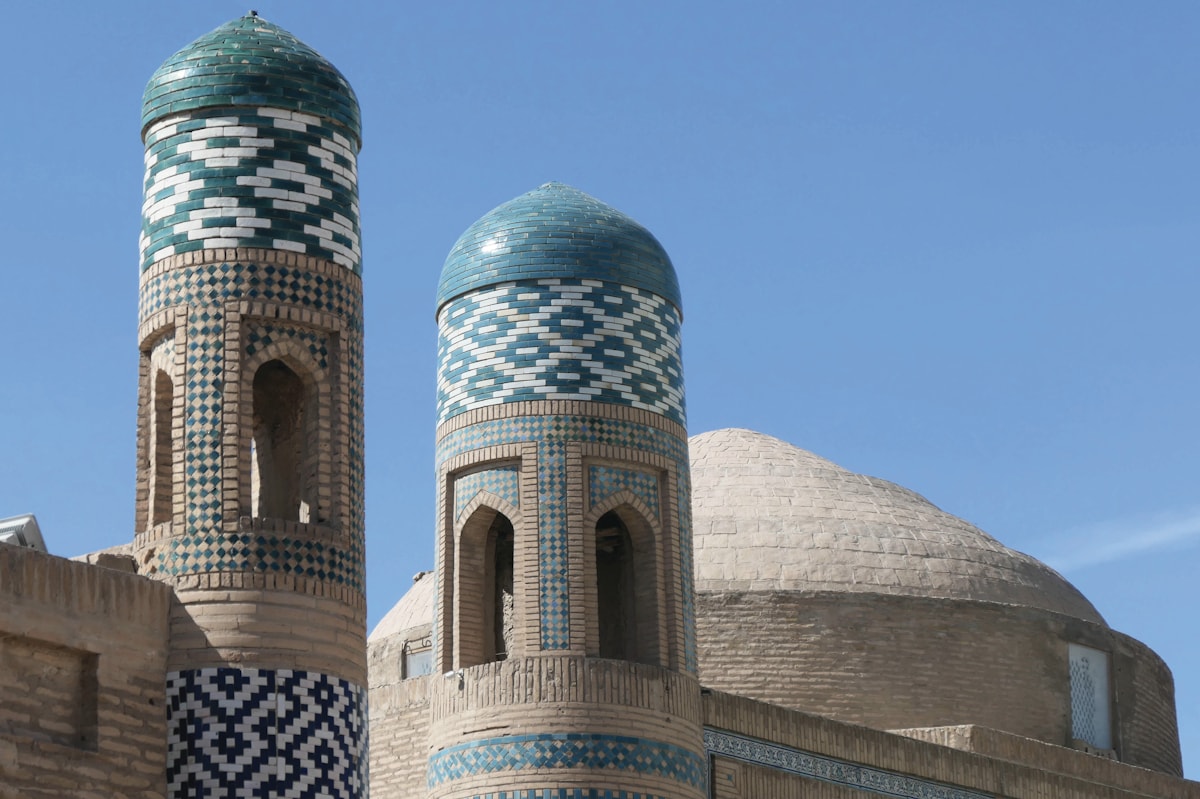
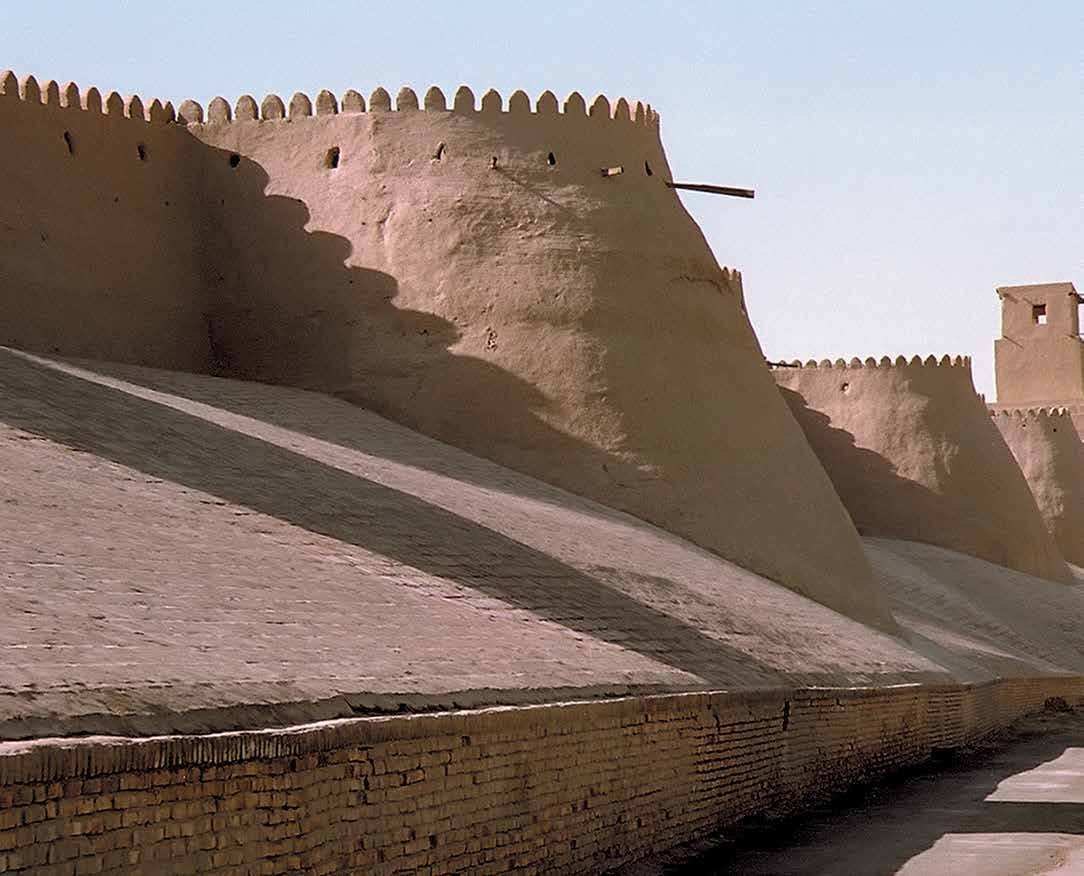
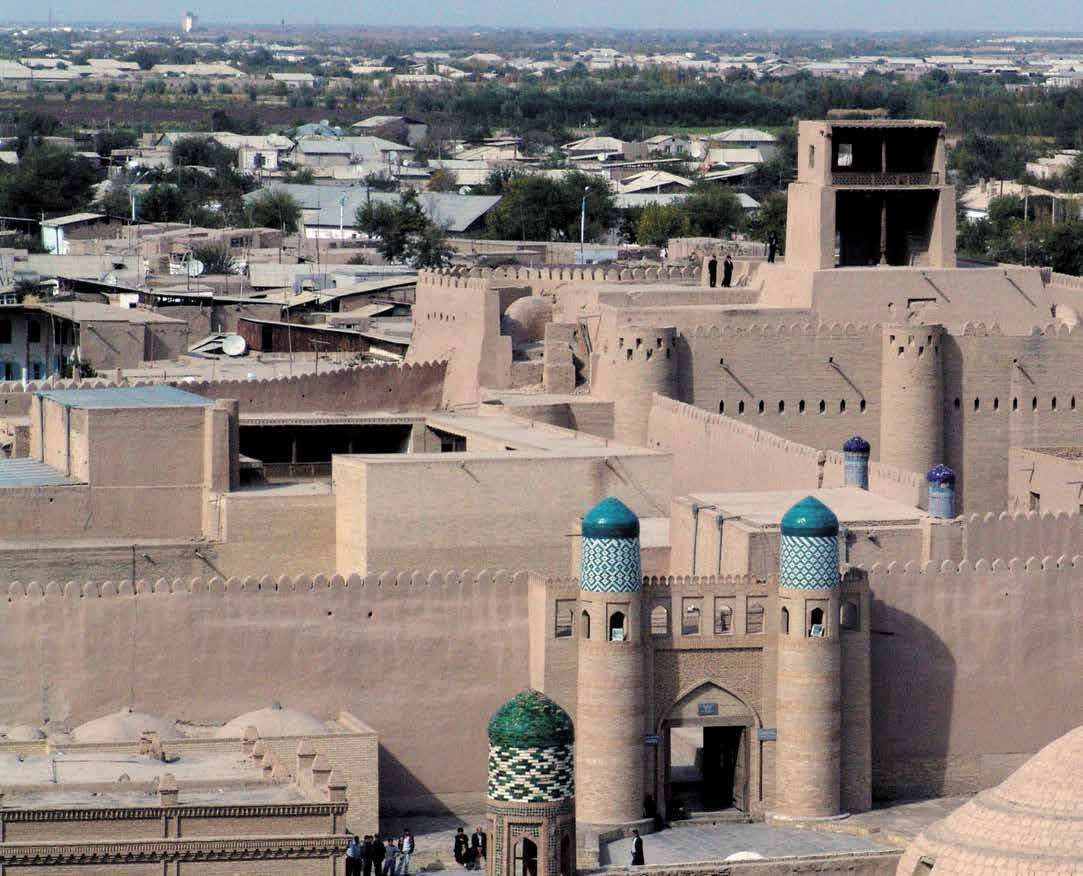
Less than a square kilometre of clay streets, minarets and madrasahs — and yet the first UNESCO site in Central Asia. Behind these walls a khan once ruled, scholars prayed, and slaves were sold.
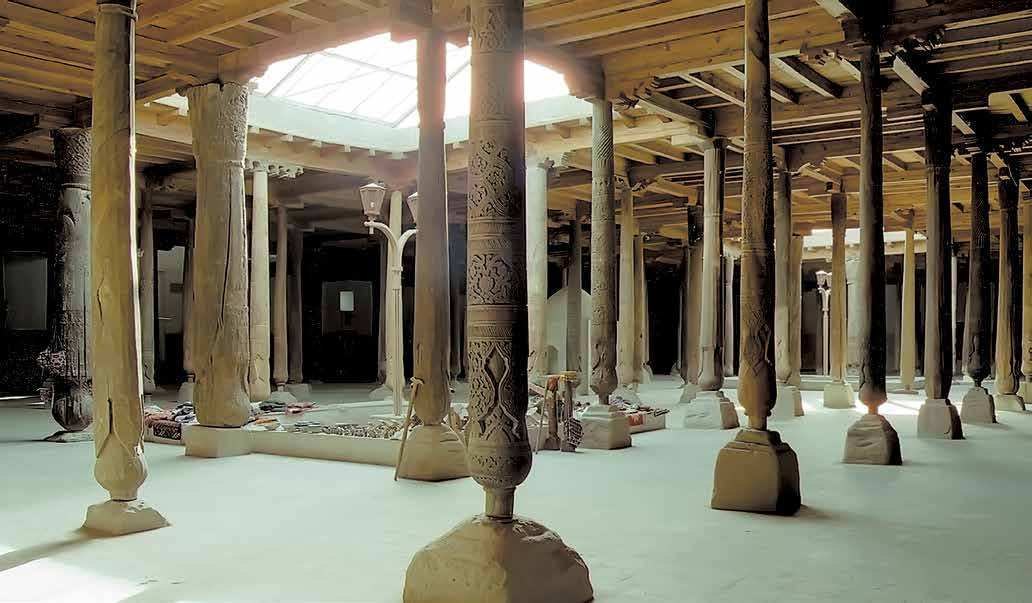
Everyone expects a mosque to have a dome, an arch and a blaze of tilework. The Juma Mosque in Khiva gives you none of that. From outside, a blank clay box. Inside, half-light and 213 wooden columns — and no two are the same.
The turquoise giant by Khiva's western gate was designed to outshine everything in the Islamic world. The khan died, the work stopped — and the unfinished tower became the city's most recognisable landmark.
Behind the walls of Itchan Kala hid another wall — and behind it, a whole state in miniature: the khan's palace, a mint, an arsenal, a harem and a prison. From here Khiva was ruled — and from here people were sent to be executed.
He was never crowned and never ruled. A simple leather-worker who became famous as an unbeatable wrestler, a healer, and the author of philosophical quatrains. Centuries later, a mausoleum with the largest dome in Khiva rose over his grave — and the city...
The Khiva khans had two palaces. Kunya-Ark — the old fortress-residence by the western gate. And Tash-Hauli — the new, ceremonial one by the eastern gate, built deliberately tangled: a stranger could never find his way to the ruler.
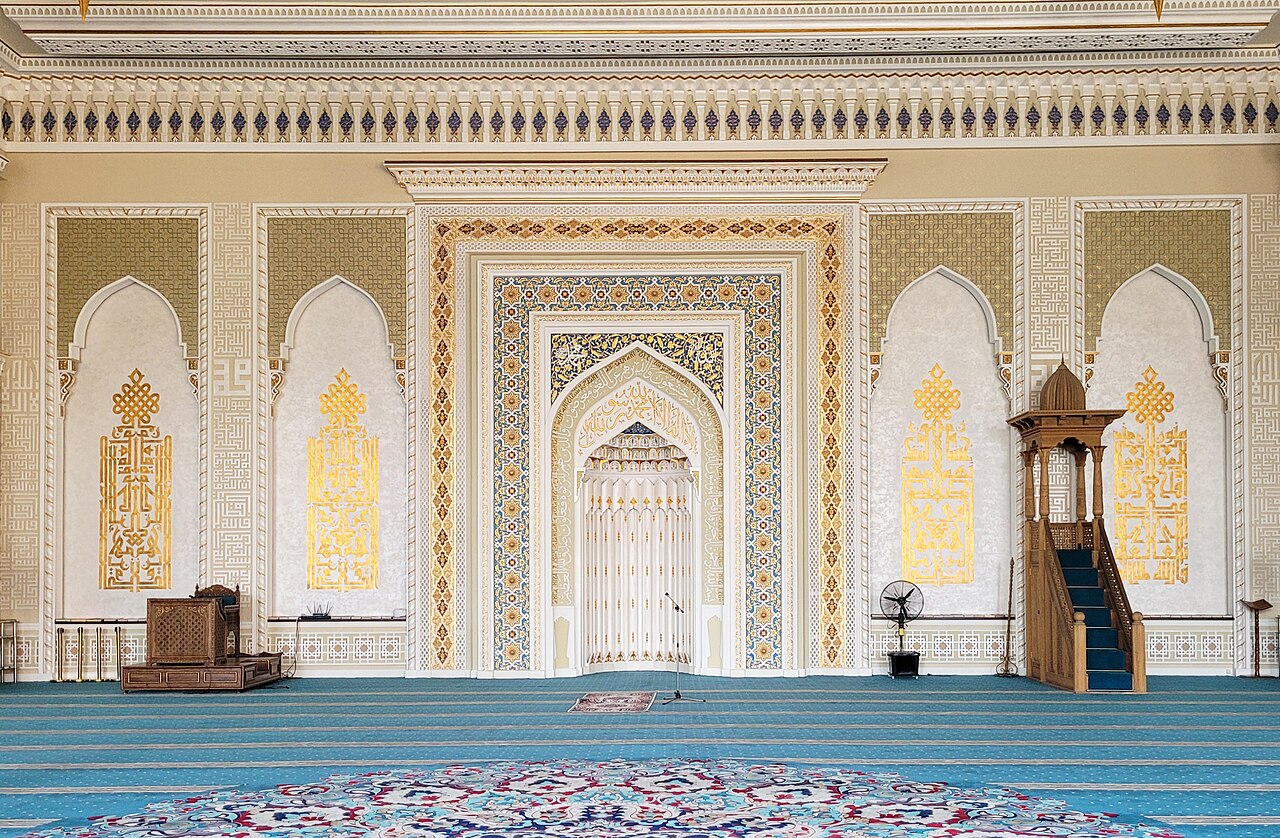
The city's main avenues fan out from this square. Different monuments from different eras have stood on this spot — and who stands at the center today tells you more about the country than any guidebook. Right now it's Tamerlane on horseback.
Tashkent's main bazaar trades at the same crossroads it did a thousand years ago — but under a giant dome that became a monument in its own right. Here you buy spices and plov, and along with them the frozen spirit of two eras.
Travelers are often surprised: why is the capital of an ancient country so Soviet and so wide? The answer lies in one morning in 1966, when the city center collapsed in minutes. What you see today was built afterward. To understand the face of Tashkent, you...
Deep in old Tashkent, among the mud-brick houses that survived the earthquake, stands an ensemble built around a book almost fourteen centuries old. By tradition its pages bear the blood of a murdered caliph, and the manuscript's road ran through five...
This isn't a cozy park for strolling but the ceremonial square of a state. Here everything is a statement: a globe instead of a leader, an arch of storks at the entrance, an alley of memory for the war dead. The country's main square, as Uzbekistan wants to...
Tashkent's largest madrasah is named after the court title of a powerful vizier. Over four and a half centuries it has been a school, a caravanserai and a fortress — and, by a dark legend, a scaffold too.
Central Asia's first metro was designed not only as transport but as a bomb shelter — which is why photographing it was banned until 2018. Now you can: space mosaics, majolica domes and marble halls, for a fifteen-cent ticket.
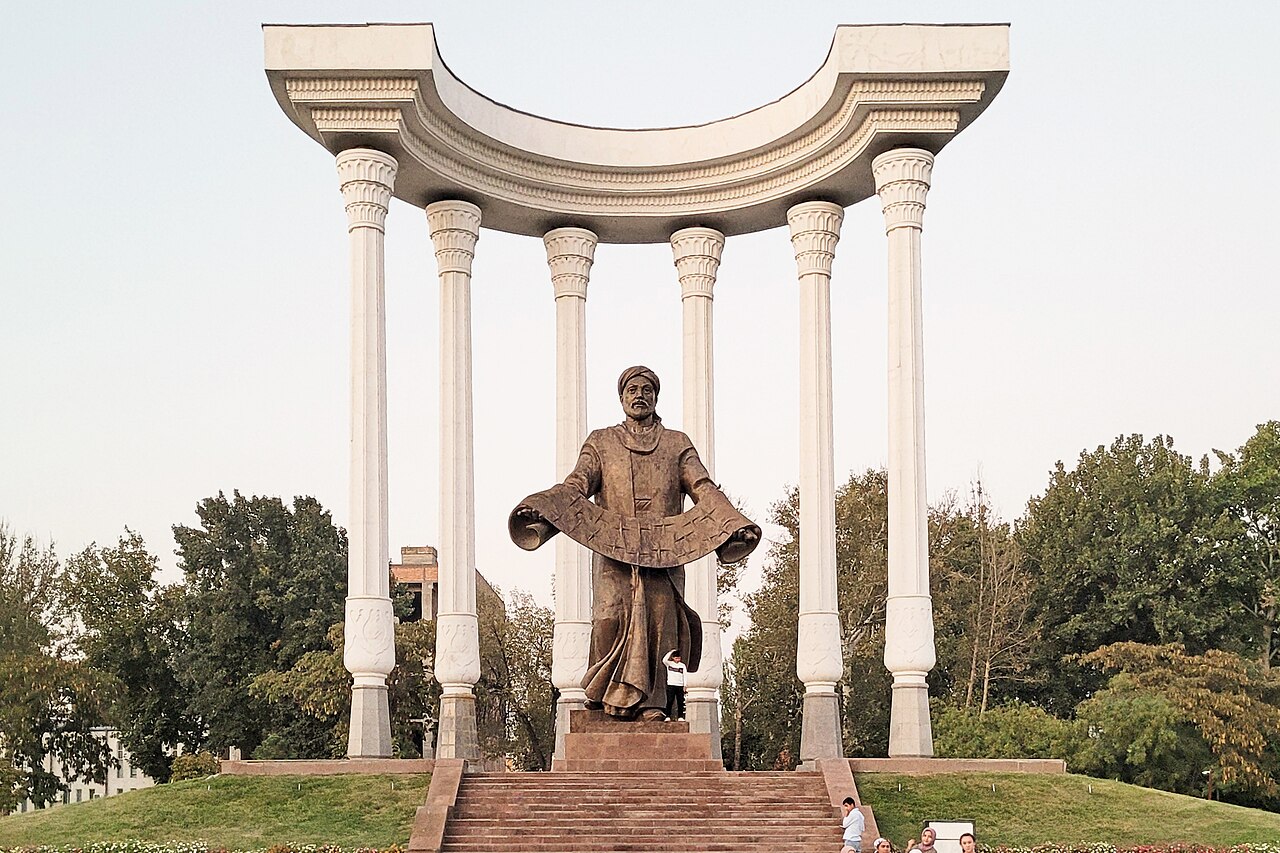
The youngest of Uzbekistan's recognizable cities: it's less than 150 years old, and you won't find antiquities here. But Ferghana is a convenient, green base from which roads radiate to everything of interest in the valley: to the silk of Margilan, the...
Muynak was once a fishing port on the shore of the planet's fourth-largest lake. Today the water is dozens of kilometers of desert away, and rusty ships stand on the sand where the sea once lapped. It's a monument to one of the largest ecological...
On three hills near Nukus lies one of the oldest cemeteries in Central Asia. Here, by legend, the first man on earth is buried, and a half-ruined mausoleum is called the "Clock of the World": it's believed that one brick falls from its wall every year — and...
In a far-off city on the edge of a dried-up sea is kept the world's second-largest collection of Russian avant-garde. It was assembled by one man — an artist who drove around the villages, bought up forbidden paintings and hid them where Moscow wouldn't...
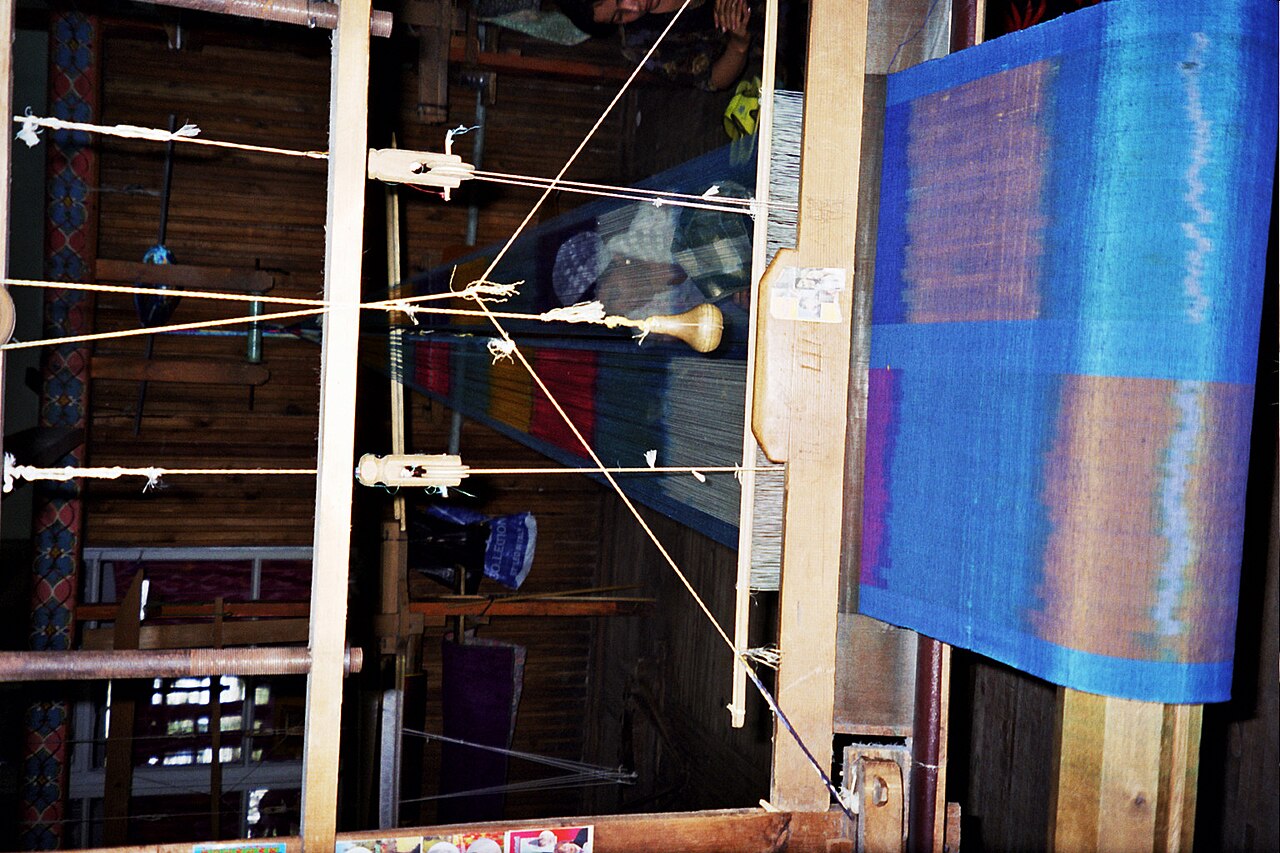
In Margilan, silk isn't made on a conveyor belt but by hand — almost exactly as it was a thousand years ago. At the Yodgorlik factory you can trace the whole path: from the silkworm cocoon to finished khan-atlas, whose fiery patterns are recognized the...
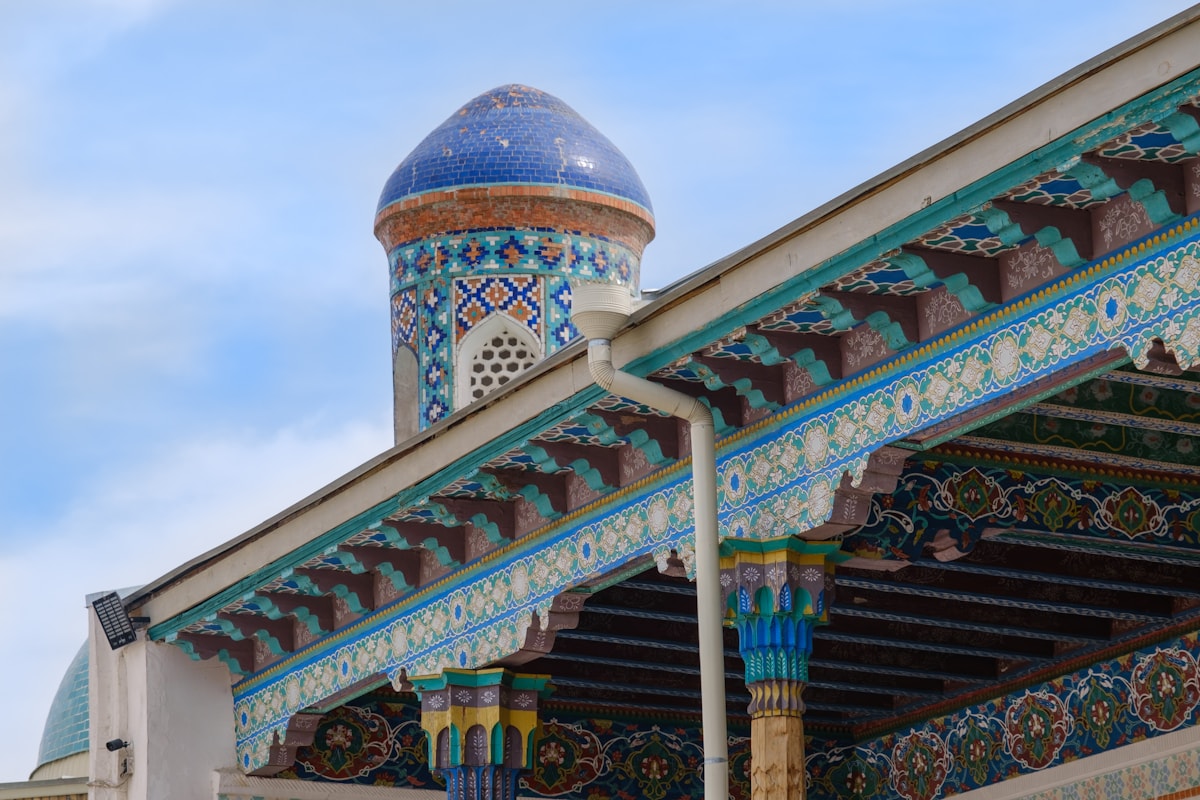
Kokand's main mosque was built by khans who dreamed of making their capital no worse than Samarkand and Bukhara. Its huge canopy is held up by dozens of carved wooden columns, and over the courtyard rises a slender brick minaret from which, by tradition...
The last ruler of the Kokand Khanate built himself a palace the Ferghana Valley had never seen: a hundred rooms, four minarets, a facade covered entirely in colored majolica. He had only a few years to enjoy it — and then Russian troops entered Kokand, and...
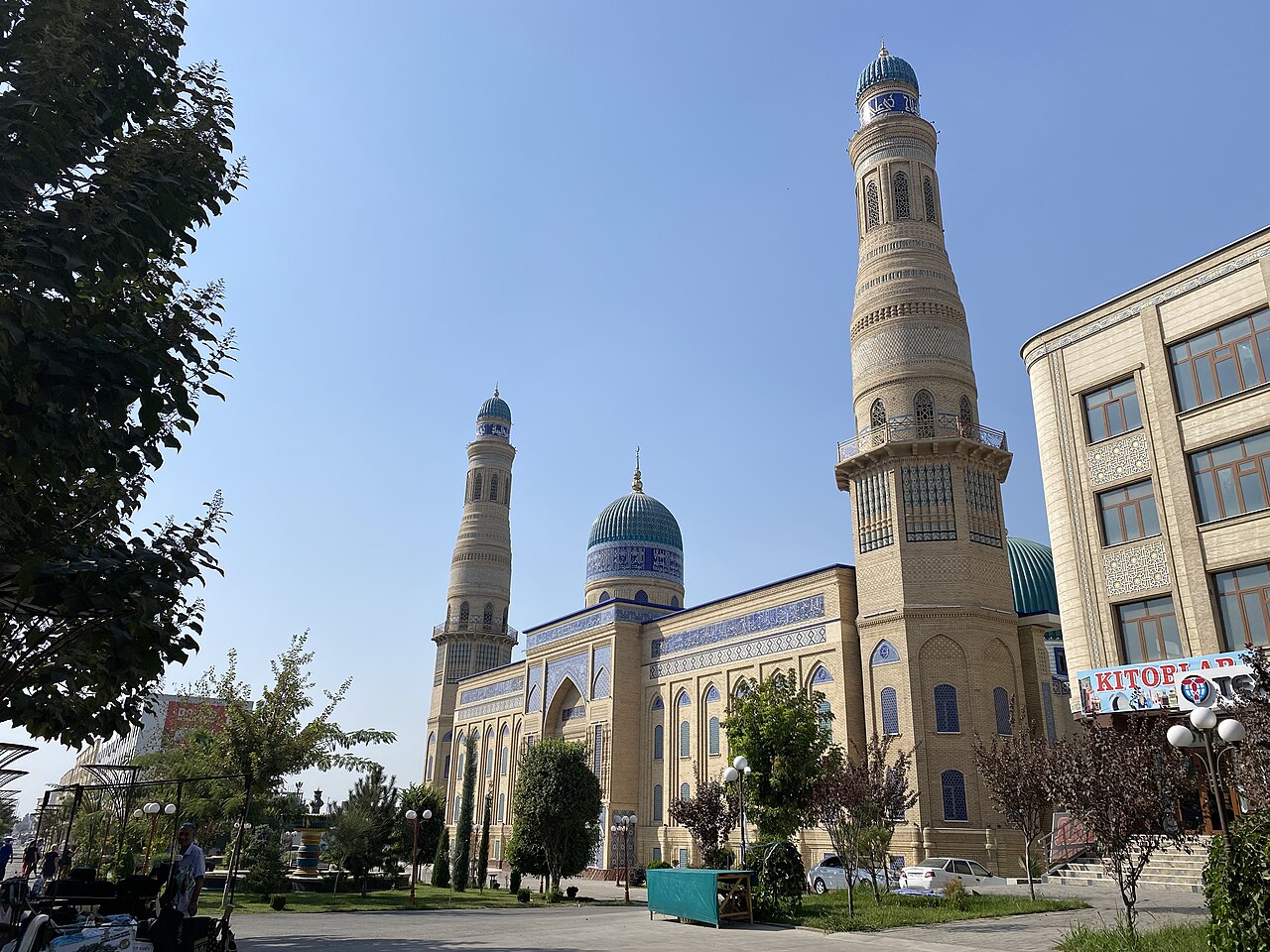
Babur was born in Andijan and died thousands of kilometers away — in India, having founded the Mughal Empire. He never managed to return home. So earth from his grave was brought here, to the hill where he loved to walk and from which he once left his...
In 1902 a terrible earthquake almost wiped Andijan off the map — thousands died, whole quarters collapsed. But the Jami congregational mosque, with its 32-meter minaret, the tallest in the entire Ferghana Valley, stood firm. Today it's the city's main...
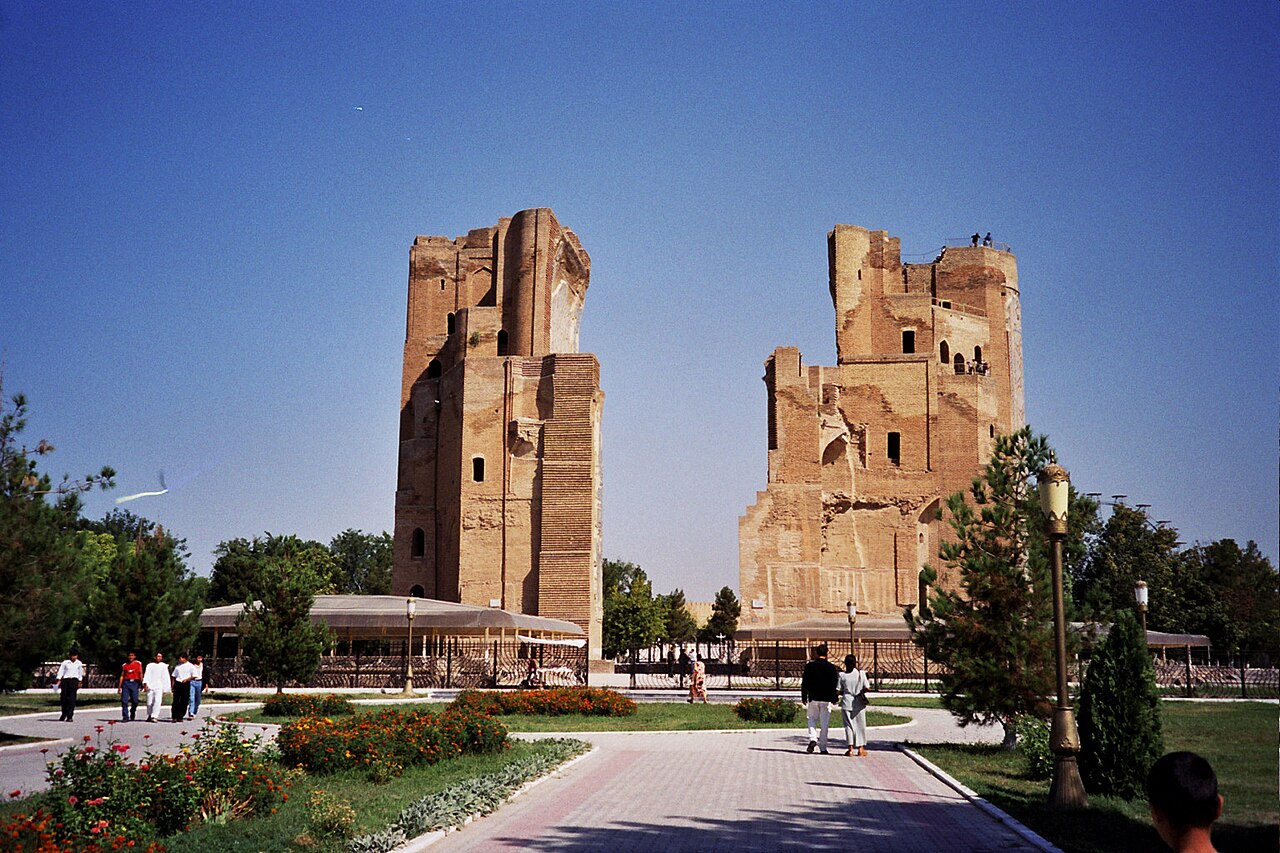
Amir Timur had already filled Samarkand with the greatest buildings of his age — and then wanted to surpass them in his own home city. So Ak-Saray was born, a palace conceived to eclipse everything built before. All that remains are two piers of the...
Having lost his beloved son, Amir Timur built a memorial in his home city and prepared a crypt for himself beside it — he wanted to be buried here, in Shakhrisabz. But fate decided otherwise: the great conqueror came to rest in Samarkand, and the prepared...
Beside the bulk of Ak-Saray hides a place of a completely different mood — a quiet courtyard where a mosque stands under a blue dome, and in the tombs rest Timur's mentor and his kin. If the palace spoke of might, this ensemble speaks of memory and reflection.
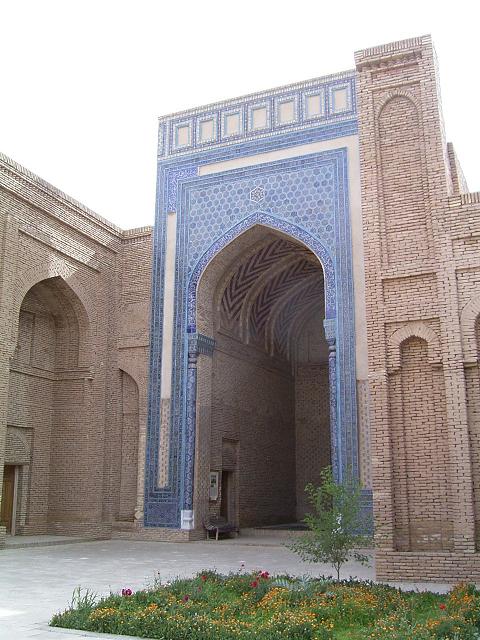
On the high bank of the Amu Darya, right by the border, stand the blue domes of the tomb of a Sufi sage whom people here respectfully call Termez-ota — "father of Termez." It's one of the chief shrines of southern Uzbekistan, grown from the modest cell of a...
Uzbekistan is usually seen as a country of blue domes and madrasas. But a thousand years before Islam, in the south, on the banks of the Amu Darya, monks in red robes prayed to the Buddha. Termez was a major Buddhist center of the Silk Road — and its...
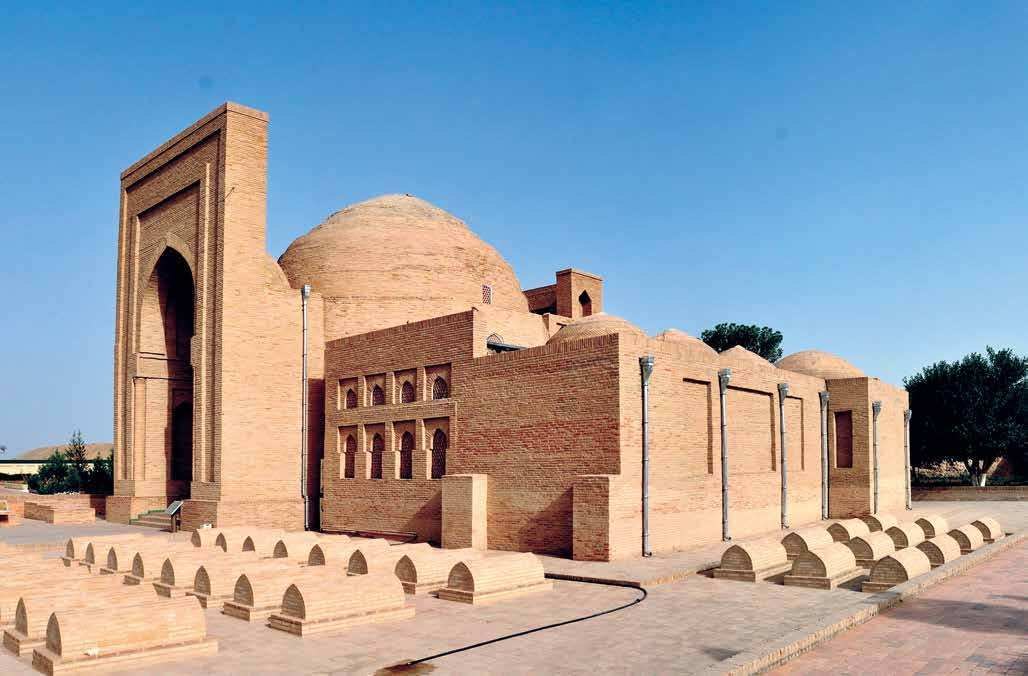
For six centuries in a row, one noble family buried its dead here — and each generation added a new mausoleum to the ensemble. So Sultan-Saodat grew up in Termez: a long row of tombs along which you can read the history of local architecture like the rings...
A country is not a list of places.
It is a civilization to understand.