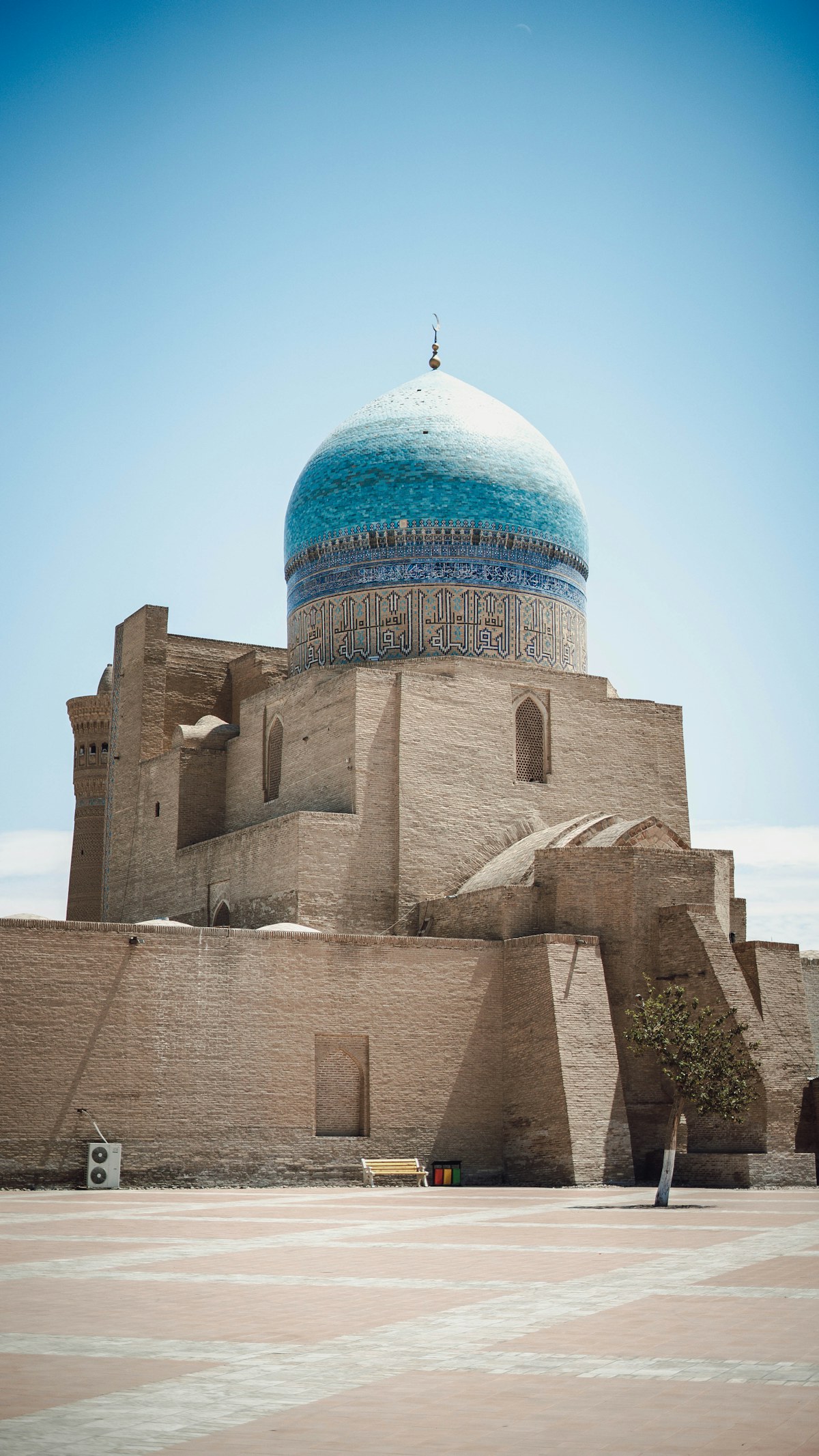
Uzbekistan has a reputation problem that the facts don't support. Its location — landlocked in Central Asia, sharing a border with Afghanistan — primes people to expect risk, and the reality lands as a genuine surprise: this is one of the safest countries in the world to travel, with violent crime against tourists almost unheard of. But "safe" doesn't mean "nothing to know." The hazards here are simply different from what most people brace for — less about crime, more about a few rules and small scams. This guide gives the honest picture.
How safe is Uzbekistan really?
The data is consistent and reassuring. Beyond the Level 1 rating and the safety-index rankings, the everyday experience travelers describe is one of calm: clean, well-lit cities, a visible and friendly police presence, and a culture where hospitality toward guests is a defining value. Many report feeling safer in Tashkent, Samarkand or Bukhara at night than in major Western cities. Note that advisories vary slightly by country — Australia, for instance, advises a "high degree of caution" citing broader regional risks — so check your own government's current advice, but the consensus is firmly positive. The overall planning picture is in our first-trip guide.
The danger most people pack for here doesn't exist. The one that does fits in a medicine bag and a taxi app.
What crime and scams should you watch for?
The honest framing is that crime has shifted from the street to the soft scam. Keep an eye on your belongings in dense markets and the metro, but the bigger watch-list is small cons: a stranger showing "found" cash and asking you to share; money-changers offering better rates outside banks (changing money on the black market is illegal — use banks and official points); rarely, someone posing as police asking to "check documents" (ask to see credentials). In Bukhara's old town, silk and carpet sellers may open at multiples of the real price — bargain, and the genuine figure appears. Hire only licensed, badged guides at major sites. None of this is threatening; it's the ordinary friction of a tourist economy.
Is it safe for solo and female travelers?
This is one of Uzbekistan's standout strengths, and it's reflected in both rankings and traveler reports. Women travelling alone consistently describe feeling genuinely welcomed and safe. You may encounter some staring or persistent vendor attention in bazaars — generally not threatening, but worth being prepared for. The practical playbook is simple: dress "modest but modern" (covered shoulders and knees, a scarf for religious sites), use the Yandex Go app instead of hailing private cars, and keep the same night-time awareness you'd use anywhere. Our dedicated solo travel guide goes deeper, including a frank section for solo women and LGBTQ+ travelers.
What rules actually catch tourists out?
This is the part most "is it safe" articles underplay, and it matters more than the scams. Uzbekistan has strict customs rules: certain common medications may be restricted, so carry everything in its original labelled packaging with a signed, ideally translated doctor's letter, and check the current banned list before you fly. Drones are a notorious trap — bringing one can mean confiscation and legal trouble, so don't. Avoid photographing police, military installations and government buildings. Keep your registration slips (see our visa and registration guide). These administrative details, not violent crime, are what genuinely derail the occasional tourist.
What about health and water?
Health risks are low and manageable. The single most important habit is avoiding tap water — it reliably causes stomach trouble, so stick to bottled for drinking and teeth-brushing. Food is generally safe in proper restaurants and busy, reputable stalls; apply normal common sense. The climate is the bigger natural hazard: summer heat can exceed 40°C, making dehydration and heatstroke genuine risks on long sightseeing days, so plan around it (see our summer guide). Bring a basic first-aid kit and any personal medications. Tashkent has good private clinics with English-speaking staff (such as international medical centres); outside the capital, care drops off, so travel insurance with medical evacuation is strongly advised.
What about roads and border regions?
If anything is likely to go wrong, statistically it's the road. Driving standards and road maintenance are below what most Western and many other travelers expect, so the safest choice between cities is the train network — comfortable, punctual and removing you from the traffic entirely (see our transport guide). For the few sensitive zones: some areas near the Afghan border in Surkhandarya can require authorisation from the authorities, and the Kyrgyzstan land border occasionally closes without warning. None of this touches the classic route — Tashkent, Samarkand, Bukhara, Khiva are all completely fine — but check ahead if you plan to go off the standard path.
What emergency numbers should you save?
Preparation makes any emergency easier. The unified 112 line, introduced in 2024, connects you to the right service automatically and is the simplest number to remember. The tourist hotline 1173 (the Unified Safe Tourism Call Center) is purpose-built for visitors. The individual lines — 102 police, 103 ambulance, 101 fire — still work too. Because operators may not speak English outside the capital, two small steps help a lot: save the numbers offline, and carry your hotel's name and address written in Uzbek or Russian so you can show it. Your hotel or tour operator can also help translate in an urgent situation. A local SIM or eSIM, giving you data and maps, is itself a safety tool.
Frequently asked questions about safety in Uzbekistan
Is Uzbekistan safe for tourists right now?
Yes. It's rated Level 1 by the US State Department — the lowest risk tier — and consistently ranks among the world's safest countries. Violent crime against tourists is rare, the main cities are heavily policed, and around 12 million visitors came in 2025 without issue. Apply normal precautions and you'll be fine. Always check your own government's current advisory before travelling.
Is it safe because it borders Afghanistan?
The Afghan border doesn't affect tourist safety. The classic Silk Road cities — Tashkent, Samarkand, Bukhara, Khiva — are far from the border and entirely safe. Only a few specific areas near Afghanistan in the Surkhandarya region may require permits, and the average traveler never goes near them. Proximity to Afghanistan is a perception issue, not a real risk for tourists.
Can I drink the tap water in Uzbekistan?
No — tap water isn't safe to drink anywhere in Uzbekistan, even in major cities, and it reliably causes stomach upset. Use bottled water for drinking and brushing teeth, and avoid ice from unknown sources. Bottled water is cheap and everywhere; a filter bottle is a good zero-waste alternative. This is the single most important health precaution.
What's the biggest safety risk for tourists?
Not crime — it's administrative mistakes and roads. Bringing restricted medications without documentation or a drone can cause serious customs trouble, and road safety is poor (prefer trains between cities). Pack medications in original packaging with a doctor's letter, leave drones at home, and you've eliminated the two most likely problems.
What number do I call in an emergency?
Dial 112, the unified emergency number that routes to all services, introduced in 2024. There's also a tourist hotline, 1173. Individual services are 102 (police), 103 (ambulance), 101 (fire). Operators may not speak English outside Tashkent, so carry your hotel address written in Uzbek or Russian and save the numbers offline before you need them.
Want to see Uzbekistan the way the people who live here see it?
Become a Kvazar Explorer →