There are countries where the cuisine is an add-on to the journey. Uzbekistan isn't one of them. Here food is the way a society holds itself together: plov is cooked for a wedding and for a wake, the flatbread isn't cut with a knife or laid upside down, and a guest is seated at the table before anyone asks their name. To understand Uzbek cuisine is to understand how life along the Silk Road is arranged, where Persian, Turkic, Mongol and settled-farming traditions met for centuries. This guide walks through the main dishes — from plov to sweets — and explains not only what to order, but why it's cooked the way it is.
Why is Uzbek plov different in every city?
The base is the same everywhere: rice, carrots (often yellow), meat (lamb or beef), onion and cumin, all simmered in a cast-iron cauldron in cottonseed or tail-fat. From there the differences begin, and they're not accidental — they're the imprint of the local land and history.
The Ferghana Valley is the home of the plov most often meant by the word "Uzbek": rich, with rice that has soaked up the zirvak (the meat-and-carrot base), each grain separate. The Tashkent version is softer and more festive — its established form is largely urban and celebratory. Samarkand plov, on the other hand, is built on a fundamentally different principle: the ingredients are laid in layers and not stirred when served, the rice stays light, and the dish is brought to the table "inverted," meat and carrot on top.
Asking which plov is the "most correct" is like asking which city in the country is the real one. The correct one is the one at your home.
The practical takeaway for a traveler: don't eat plov in the evening at a tourist restaurant. Real plov is cooked in the morning at an oshxona (plov house), the big cauldron runs out by lunch, and what's served late is usually reheated. If you want to try the city version in its own setting, go where there's a line of locals at the cauldron.
What is samsa and how is it different from a pie?
The dough comes in two types: plain (like flatbread) and layered — the latter is prized more, falling apart in flakes. The classic filling is lamb with tail-fat and a lot of onion; the fat here isn't a flaw but the point: it keeps the filling juicy. A seasonal favorite is samsa with pumpkin (kади / kadi), slightly sweet and light. Samsa is eaten with the hands, often on the go, and is one of the best street snacks in the country.
What to order besides plov: lagman and shurpa
Lagman is food for those who value the process: the dough isn't cut but pulled by hand into one long strand, folded and stretched many times. Everything depends on the skill — the noodles must be springy. The sauce (vaja) is made from meat, bell pepper, radish, garlic and herbs. Soup lagman warms you; the fried version is denser and closer to a main course.
Shurpa is often underrated, and wrongly so: it's an honest, simple soup whose flavor rests on the quality of the lamb and a long simmer. The vegetables — potato, carrot, onion, sometimes chickpeas and quince — go in as large pieces, so they give flavor without falling apart. Good shurpa is clear and aromatic, not cloudy and greasy.
How are manty different from dumplings?
Proper manty are juicy: at the first bite, broth collects inside, given off by the onion and fat. That's why the meat is chopped with a knife rather than put through a grinder — it keeps the texture. Manty with pumpkin are popular too, and in spring with greens (jusai, spinach). The onion in the filling is generous — almost equal to the meat in volume, and responsible for the juiciness.
Why can't you lay Uzbek flatbread upside down?
Non is baked in a tandoor and comes in dozens of kinds: the everyday obi-non, the festive enriched patyr, thin flatbreads. Samarkand non is especially renowned — dense and slow to go stale; legend has it that it couldn't be reproduced in another city even with the same dough and baker, because the secret is in the local water and air. The center of the flatbread is decorated with a pattern made by a stamp — the chekich — and this pattern isn't only beauty but also the way the middle is kept from puffing up.
What sweets should you try in Uzbekistan?
Uzbekistan is a country of gardens, and it shows on the table. Dried fruit here isn't a snack but a point of pride: apricots from Ferghana, seedless raisins (kishmish) of dozens of varieties, dried melon, figs. Halva comes in flour, nut and tahini types — each region has its own masters. With tea they serve navat — large amber crystals of grape sugar that melt slowly. And fresh fruit in season — melons and watermelons, pomegranates, grapes, apricots — deserves a separate trip to the bazaar.
Why does everything in Uzbekistan begin with tea?
The paradox that surprises visitors: the less tea poured into the bowl, the more respect. A bowl full to the brim is a hint of "drink and go"; a half-full one means "stay, I'll keep refilling and come back to you again." Tea is drunk without milk, often green, and hot even in the heat (it's easier to bear the heat that way). The chaikhana, meanwhile, isn't just an establishment but a social institution: a shaded platform-suri with cushions by the water, where time slows down.
In Uzbekistan they don't say "let's grab a bite." They say "let's have tea" — and it can mean anything from a conversation to plov for four.
Where do you eat for real in Uzbekistan?
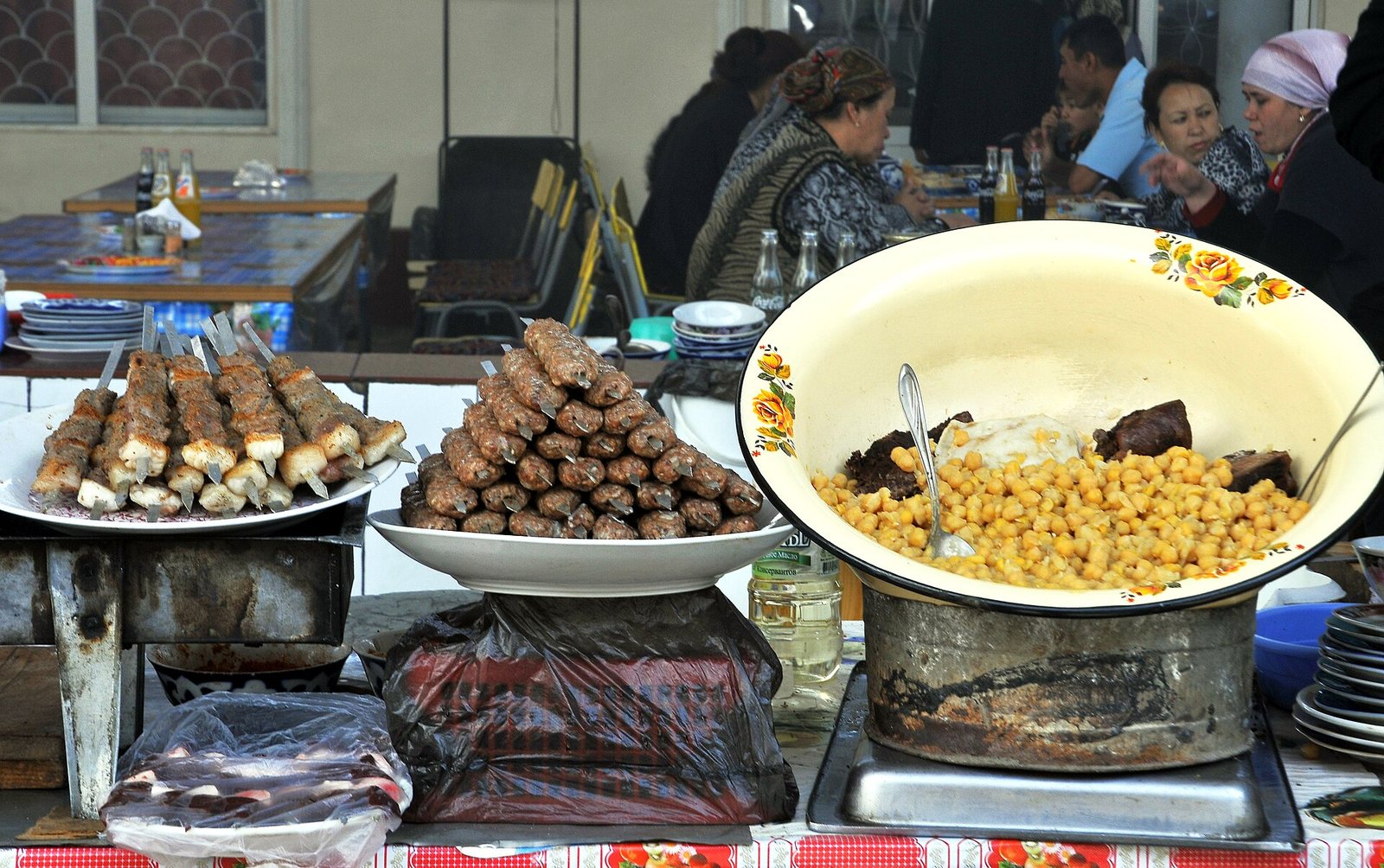
A few pointers. Plov — look for an oshxona where the cauldron empties by lunch; in Tashkent these are the well-known plov centers, but in any city the locals will point you to "theirs." Samsa and flatbread — take them at the tandoor, where they're pulled from the oven in front of you. The bazaar (Chorsu in Tashkent, the Siab in Samarkand) is not only produce but also the canteens inside, where the traders themselves eat — a sure sign of quality. And the country's main rule: if you're invited home for plov, cancel your other plans.
Frequently asked questions about Uzbek cuisine
What must you try in Uzbekistan?
The minimum: plov (ideally in its "home" city), tandoor samsa, lagman, shurpa, manty and fresh non. For sweets — dried fruit from the bazaar, halva and navat with tea. Wash it all down with green tea.
Which plov is considered the best?
There's no single "best" — there are regional versions. Ferghana style is prized for richness and crumbliness, Tashkent for its festive softness, Samarkand for its unusual layered presentation with light rice. The best plov is the one eaten in its home city and in the first half of the day.
Is Uzbek cuisine spicy?
No, Uzbek cuisine is barely spicy. It's aromatic and hearty — the main spices are cumin (zira), black pepper and coriander — but there's little hot pepper in traditional dishes. Spicy seasonings (like the "Korean carrot" salad at bazaars) are the influence of other cuisines of the region.
What can a vegetarian eat in Uzbekistan?
It won't be easy: the cuisine is meat-based, and even vegetable dishes are often cooked on meat fat or broth. But there are options: pumpkin samsa, flatbread, salads (achichuk of tomato and onion), dried fruit and nuts, manty with pumpkin or greens. It's worth checking in advance what dishes are cooked with.
Why can't you lay flatbread upside down?
Non (flatbread) has the special status of respected bread. By tradition it isn't turned bottom up, isn't cut with a knife and isn't dropped — that's considered disrespect. Flatbread is broken by hand and placed on the table face up.
Is it safe to eat street food in Uzbekistan?
Generally yes, if you choose busy places where the food is cooked in front of you and served hot — tandoor samsa, fresh plov, flatbread. The risk is higher with dishes that sit for a long time. Drink bottled water and wash fruit from the bazaar.
Want to understand Uzbek food not as "exotica" but as a living culture with its own rules?
Become a Kvazar Explorer →