Uzbekistan is one of the most affordable destinations in Asia, and that's the easy part to say. The useful part is knowing where the value actually is — and where, even in a cheap country, costs sneak up on the unprepared. A trip here can be done on a true backpacker shoestring or stretched into quiet comfort without much extra, but both depend on a few specific decisions: how you book trains, where you sleep, how you fly in, and when you go. This guide is about those decisions.
How cheap is Uzbekistan really?
The value here is genuine, not a marketing line. A filling meal in a local restaurant, a high-speed train across the country, a night in a courtyard guesthouse — each costs a fraction of its European equivalent. That's what makes Uzbekistan such a rewarding budget destination: you're not trading comfort for savings, you're simply in a place where good things are inexpensive. The exceptions worth budgeting for are getting there (flights) and the entry fees at major monuments, which add up across a trip. For realistic planning, pair this with our budget guide.
The trick to a cheap trip here isn't going without. It's spotting the three or four places where money quietly drains — and plugging them.
What are realistic daily budgets?
Rather than quote figures that date quickly with the som's volatility, think in tiers and where each spends. The backpacker tier leans on guesthouse dorms, self-catering or canteens, marshrutkas and economy train seats. The mid-range tier — where most independent travelers land — buys private rooms, restaurant meals and Afrosiyob tickets without strain. The comfort tier adds boutique stays and private cars and still won't approach Western European costs. Across all tiers, the variable that moves your budget most is accommodation, followed by how you cover the long legs. We keep current figures in the budget guide rather than here, where they'd age fast.
How do you save on transport?
Transport is where small decisions compound. The single best move is booking train tickets yourself on the official railway site well in advance: agents add fees, and the affordable standard-class Afrosiyob seats vanish first, pushing latecomers into costly business or VIP fares. For routes the fast trains don't serve, slower diesel services and shared taxis from the town taxi stand (you buy a seat, not the car) are bargains. Within cities, the Tashkent metro is gloriously cheap and doubles as a sight in itself, and the Yandex Go app keeps taxi fares honest. Skip hotel airport transfers — use the official taxi desk in arrivals instead.
Where are the cheapest places to stay?
Accommodation is where budget travelers win most easily. The guesthouse culture means you can stay inside a historic courtyard house — the kind of place that would be a boutique splurge elsewhere — for a modest sum, breakfast included. Dorm beds in the cities cover the true shoestring end. Two practical notes: Booking.com has far better coverage than Airbnb here, and many guesthouses collect payment in cash at check-in, so carry enough US dollars rather than relying on ATMs. Basing near each old town also saves on taxis, since you'll walk everywhere. The city guides point to the right neighbourhoods.
How do you eat cheaply?
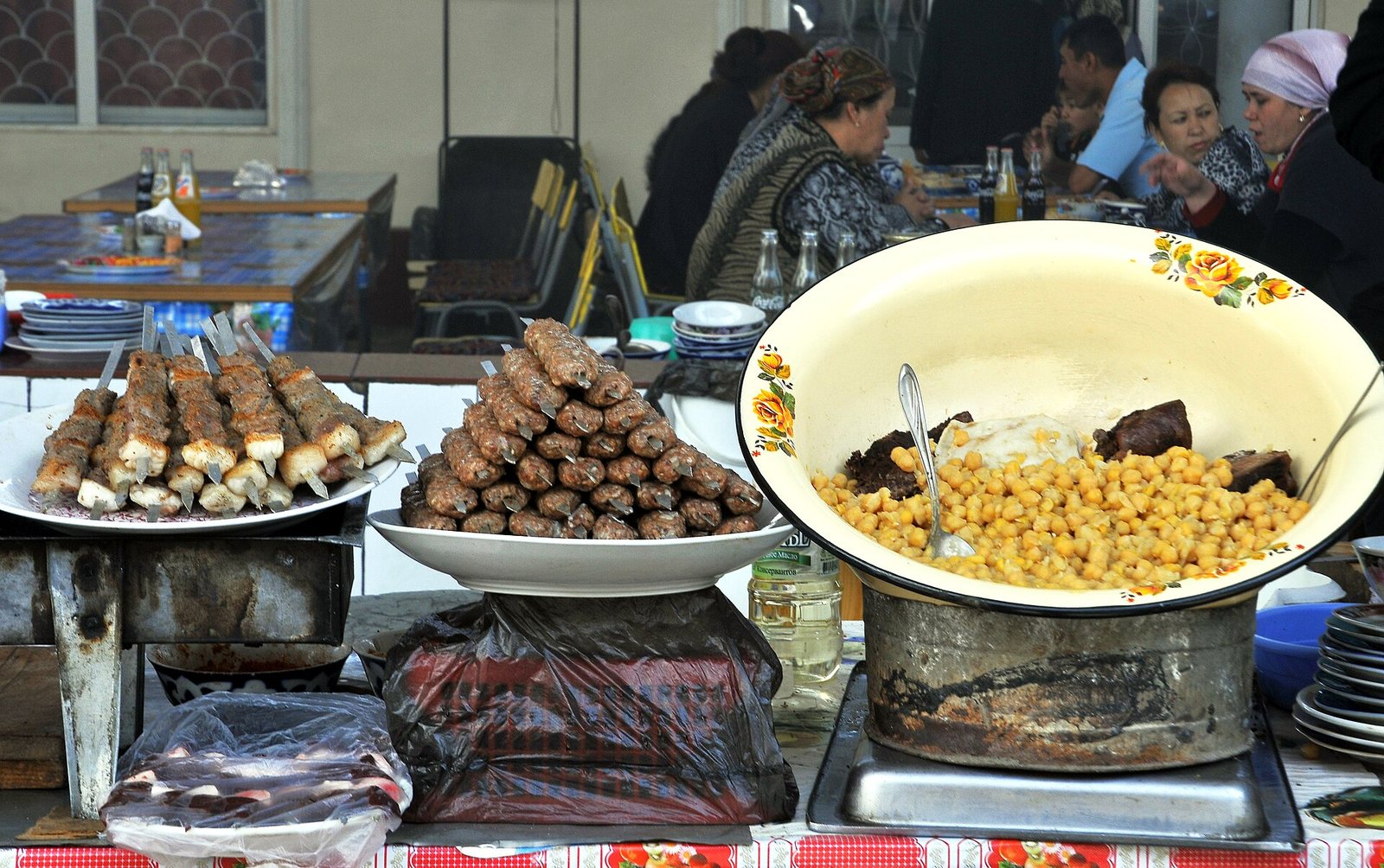
Food is one of the joys of budget travel here precisely because the cheapest options are often the best. A bowl of plov from a dedicated oshxona, a hot somsa from a clay oven, fruit and bread from a bazaar — these cost little and taste of the place. The mark-up appears only in tourist-zone restaurants, easily dodged by walking a block off the main square. Self-catering from markets stretches a tight budget further, and since most guesthouses include a generous breakfast, you're often only buying two meals a day. Tap water isn't safe, so factor in bottled water (or a filter bottle to save).
How do you save on flights and timing?
The two biggest budget levers are how you fly and when you go. Open-jaw routing — into Tashkent, out of Urgench or Samarkand, say — saves a long return leg and often money. Indirect flights to regional airports can undercut direct Tashkent fares; Turkish via Istanbul and budget carriers from the Gulf open up cheaper options. And timing matters enormously: package groups skip winter, so November–March brings markedly lower flight and hotel prices, with the major monuments open year-round and snow rare outside the mountains. If your budget is the priority over perfect weather, see our winter guide.
What are the hidden costs to watch?
Even in a cheap country, money leaks in predictable spots. Budget for the cumulative entry fees — each monument is modest, but a full Silk Road circuit of paid sites adds up. Avoid the transfer trap by using the airport's official taxi desk and Yandex Go rather than hotel cars. And plan around cash: the som is volatile and inflation-prone, cards aren't accepted everywhere, and exchange offices can be hard to find, so bring dollars or euros to change and keep cash on hand for guesthouses, bazaars and taxis. None of these are large, but unplanned they erode a tight budget.
Top money-saving tips
- Book trains yourself, early. Official site, economy class, well ahead — avoids agent fees and the sold-out scramble into business/VIP fares.
- Stay in guesthouses. Courtyard houses at near-hostel prices, breakfast included; carry USD cash to pay at check-in.
- Eat at local canteens and bazaars. Best food, lowest prices; step off the main square to dodge tourist mark-ups.
- Fly open-jaw to regional airports. Avoids backtracking; indirect flights can undercut direct Tashkent fares.
- Travel in low season. November–March slashes flight and hotel prices, with monuments open year-round.
- Use the metro and the official airport taxi desk. Both are tiny costs that hotels and touts would inflate.
Frequently asked questions about budget travel in Uzbekistan
Is Uzbekistan a cheap country to travel in?
Yes — it's one of the most affordable destinations in Asia. Accommodation, food and public transport are excellent value, and even mid-range travel costs far less than Western Europe. The main expenses are international flights and the cumulative entry fees at major monuments. Day-to-day spending is low.
What's the cheapest way to travel between cities?
For the main Silk Road cities, economy-class seats on the high-speed Afrosiyob, booked early on the official site, offer the best balance of price and speed. Slower diesel trains and shared taxis (paid per seat from the town taxi stand) are cheaper still on routes the fast trains don't serve. Avoid booking through agents.
Do I need a lot of cash, or can I use cards?
Bring cash. Cards work in cities for hotels and larger restaurants, but bazaars, taxis, small eateries and many guesthouses need cash (som). Bring US dollars or euros to exchange — exchange points can be scarce — and withdraw som from city ATMs as you go. The som is volatile, so don't over-exchange at once.
When is the cheapest time to visit?
Winter, roughly November to March. Package tours skip the season, so flights and hotel rates fall sharply, while the major monuments stay open and serious cold is rare outside the mountains. The trade-off is colder, shorter days — but for budget travelers who don't mind layering up, it's the best-value window of the year.
How much do entrance fees add up to?
Individually each site is modest, but they accumulate across a Silk Road trip taking in many paid monuments in Samarkand, Bukhara and Khiva. Budget for them as a real line item rather than an afterthought. Many beautiful sights — bazaars, exteriors, neighbourhoods — are free, so you can balance paid highlights with free wandering.
Want to see Uzbekistan the way the people who live here see it?
Become a Kvazar Explorer →