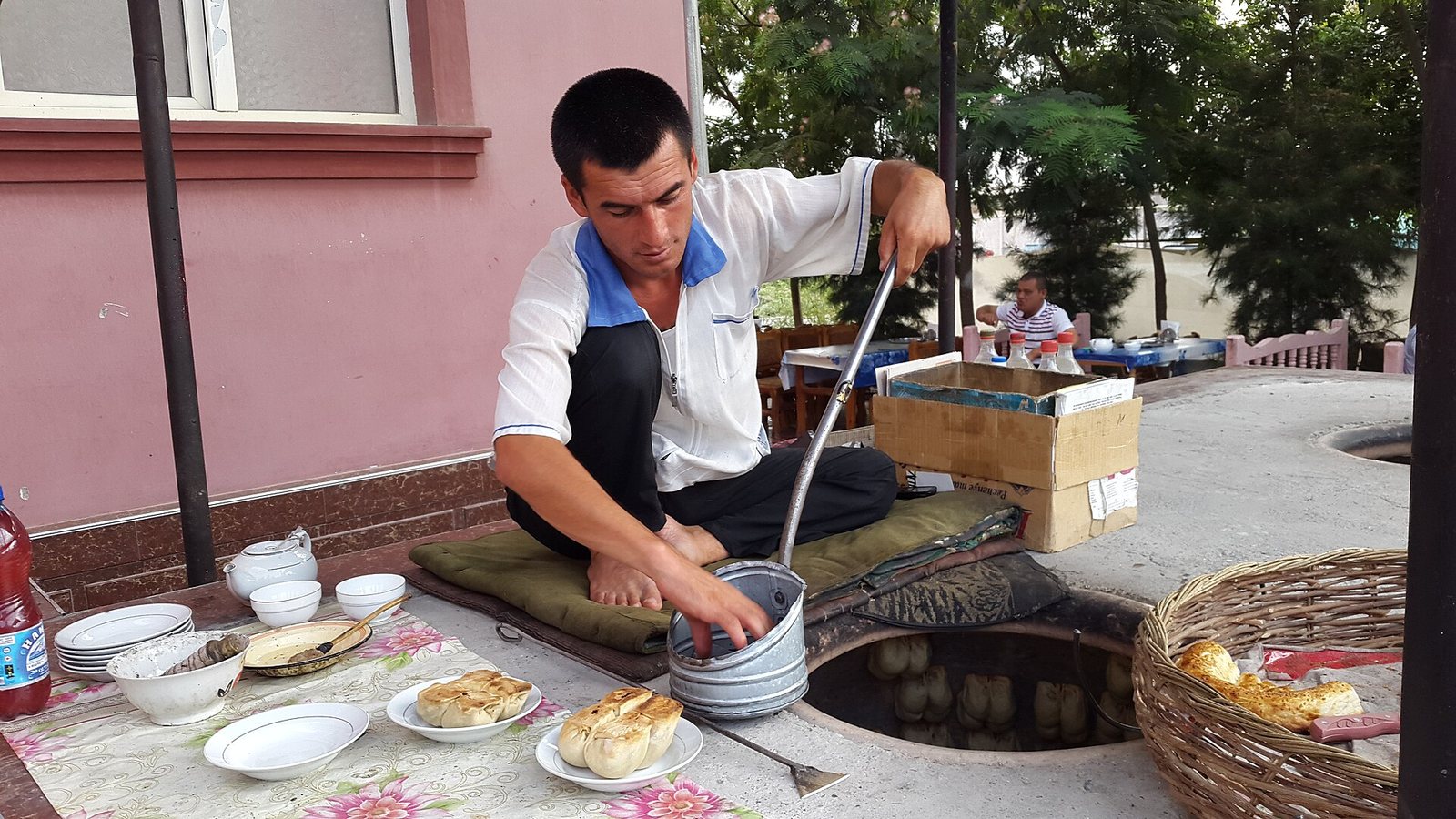
Samsa is the second thing, after plov, that a traveler tries in Uzbekistan — usually right at the bazaar: a hot triangle with a crisp crust that burns the fingers and runs with juice. Calling it a "pie" is tempting and wrong. Samsa has its own technology, its own dough and its own oven, and it's exactly these that separate real samsa from what's sold under the name in a supermarket. Let's work out what this dish is and why it's not at all what it seems.
How is samsa different from an ordinary pie?
That's exactly why homemade or shop samsa from mince on a tray is already a different dish, however similar it looks. "The real" samsa is recognized at the first bite: a thin crisp shell, and beneath it a hot, juicy filling of meat pieces and onion. This contrast of crunch and juiciness is its signature.
Samsa pretends to be a pie, but it's built like plov: the flavor is decided not by the dough but by the meat, onion and fat — and the fire that seals them in.
What dough does real samsa have?
Layered samsa is the "dress" version: many of the thinnest layers that separate into crisp petals when baked. It's convenient to make at home without a tandyr, and it's the one most often sought in recipes. Tandoor samsa, on the other hand, is the everyday, bazaar kind: simpler in dough, but with that smoky-oven aroma you can't reproduce at home. The same oven gives the Uzbek flatbread its crust — we cover it separately.
What fillings does samsa come in?
Pumpkin samsa (samsa with kadi) is a love of its own and a seasonal specialty: juicy in the Eastern way, slightly sweet, it surprises many more than the meat one. At the bazaar it's worth asking what fillings there are today — the choice changes with the season. The sesame and yolk on the crust aren't decoration for looks but part of the flavor and aroma of the finished samsa.
How is samsa shaped and baked?
We deliberately don't give weights — they drift from baker to baker; it's more important to grasp the logic. Here's an extractable scheme for layered samsa, which is realistic to make at home.
Samsa: the order of steps
- Mix the dough. Flour, water, salt (often an egg and a little oil) — until elastic; let it rest.
- Make the layers. Roll thin, brush with melted fat/oil, roll up, chill, slice and roll out again into rounds. The more repeats, the more layers.
- Prepare the filling. Chop the meat by knife, take at least as much onion as meat, add pieces of fat, salt and pepper; optionally cumin and greens.
- Shape. Put a spoon of filling on a round of dough and pinch into a triangle (or square), sealing the edges tightly so the juice doesn't escape.
- Prepare for baking. Lay seam-down on a tray, brush the top with beaten yolk, sprinkle with sesame.
- Bake. In a preheated oven (around 200 °C) until a golden crisp crust forms (about half an hour).
- Serve hot. With green tea and, optionally, a tomato or yogurt sauce.
Tandoor samsa is stuck to the water-moistened wall of a scorching tandyr — you definitely can't reproduce that at home, which is why people go to the bazaar for it.
Frequently asked questions about Uzbek samsa
How is samsa different from a pie?
Samsa is filled not with mince but with knife-chopped meat, plus plenty of onion and, always, fat — that gives the juiciness. And real samsa is baked on the scorching wall of a tandyr, not fried in oil, so the crust is crisp and there's plenty of juice inside.
What is real samsa baked in?
In a tandyr — a domed clay oven. Raw samsa is stuck to the scorching wall, the back moistened with water. At home it's baked in an oven (more often the layered kind), but you can't reproduce the smoky aroma of tandoor samsa that way.
What fillings does samsa come in?
Most often meat (lamb or beef with onion). Pumpkin (with kadi) is very popular — juicy and slightly sweet. There are also potato and greens versions, and for tea a sweet samsa with fruit jam, sprinkled with sugar and sesame.
Why is so much onion put in the filling?
Onion gives the juice: it's taken in at least the amount of the meat. When baked, it releases moisture that soaks the filling and keeps it from drying out. Together with pieces of fat, the onion creates that signature juiciness of samsa.
What shape does samsa come in?
Most often triangular, but square and round are also found. The shape depends largely on the dough and the region; it doesn't affect the taste. The top is usually brushed with yolk and sprinkled with sesame or poppy seed.
Want to understand Uzbek food not as "exotica" but as a living culture with its own rules?
Become a Kvazar Explorer →