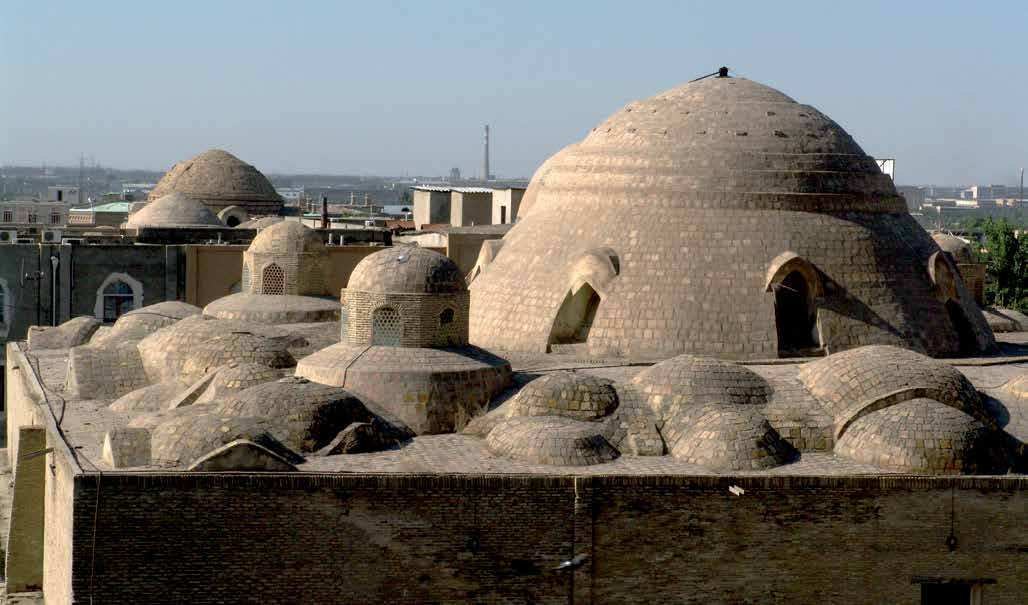
Bukhara is the only city in Uzbekistan where a medieval shopping centre still works as intended. The domed arcades at the crossings of the old town's main streets were built in the 16th century as covered markets for specific guilds: money changers under one dome, hatters under another, jewellers under a third. Five hundred years on, people still trade, chase metal and sew beneath them. This guide explains what these domes are, what to buy under them, how to tell real craft from imported trinkets, and how to bargain without overpaying or offending the maker.
What are Bukhara's trading domes?
To understand the domes is to understand how a Silk Road trading city worked. A dome at a street crossing functioned as a covered hub: caravans, money changers, makers and buyers met under one shaded roof, sorted by craft. That these buildings were left working rather than turned into a museum under glass is what keeps Bukhara working: the craft continues within the same walls. How to read the rest of the old town is in our guide to the Bukhara walking route.
Most of the world's medieval bazaars became museums or ruins. Bukhara's domes simply never closed — people have traded under them for five hundred years straight.
Which are the three main domes?
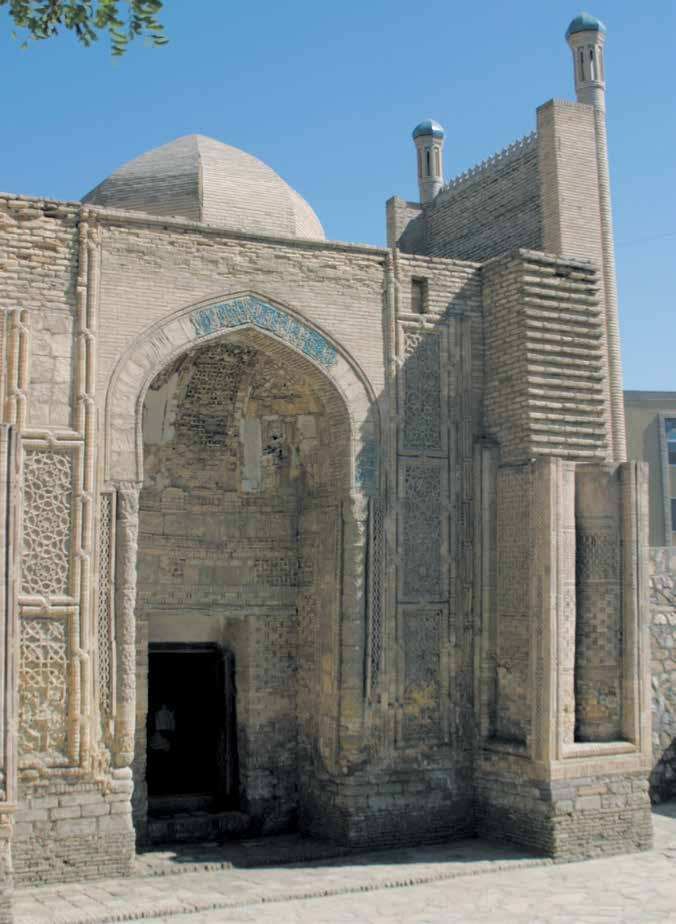
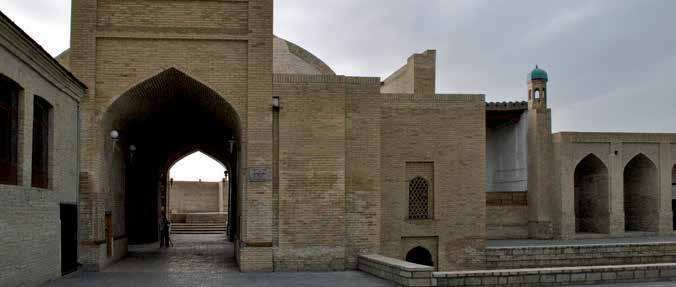
The domes carry their function in their names: "zargaron" — jewellers, "telpak furushon" — hat sellers, "sarrafon" — money changers. These aren't random markets but specialised hubs, and although the range has shifted toward the touristic over the centuries, the specialisation partly survives: jewellery and metal are still strong under the jewellers' dome. It's convenient to walk all three in one stroll — they stand along the old town's main axis, close to each other, between the Poi-Kalyan ensemble and Lyabi-Hauz. Allow time not to "dash through" but to talk to the makers — that's where the price and the meaning lie.
What's worth buying under the domes?
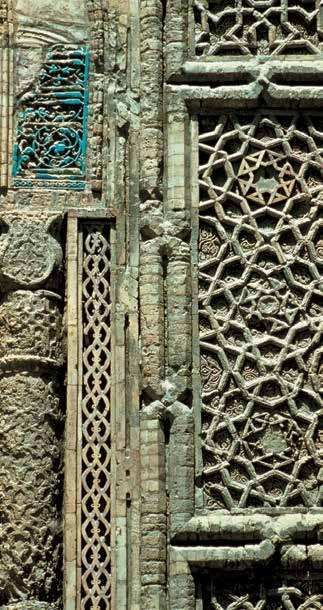
Buy what the city itself is strong in. Bukhara's copper and brass chasing is an old school: trays, jugs, openwork lamps. Knives with inlaid handles are a local pride. Miniatures and painting on wood and papier-mâché are fine handwork. In textiles, carpets and suzani are strong — hand-embroidered panels that become family heirlooms. There's silk here too, though its home is Margilan, and ceramics are more honestly bought in Rishtan. The logic is simple: buy a craft where its school is, not "all in one place."
How to tell real craft from import?
This is the key buyer's skill at any tourist bazaar. Real chasing carries the marks of the hand; a carpet and suzani show natural irregularities and natural dyes; a miniature has a maker's signature. The best sign of authenticity is when the item is sold by the person who made it, and they happily explain how. Conversely, perfectly identical items at a suspiciously low price are almost certainly factory imports. Don't hesitate to ask "who made this and where" — an honest maker answers gladly, a reseller dodges. It's the same authenticity logic as in Margilan and Rishtan.
How to bargain properly?
Bargaining here is part of the culture, and taking part is expected — but with respect. A few rules. Compare the price at two or three stalls before haggling seriously — that's how you learn the real range. Start friendly: tea, conversation, interest in the technique win the maker over more than pressure. Name a counter-price calmly and be ready to meet in the middle between theirs and yours. Don't slash aggressively: behind hand-chased metal or a carpet lie days and weeks of labour, and trying to "triple the discount" insults the maker. Be ready to pay cash — it's sometimes an argument for a small concession. And remember: if you don't intend to buy, don't drag the maker into a long haggle for sport. For more items, it's logical to ask for a discount politely. How payment works in the country is in the cards guide.
What to pay with and how to carry purchases?
Under the domes, cash in som is safest: larger sellers may have a terminal, but many makers don't, and cash sometimes gives grounds for a small discount. Clean dollars are easy to exchange in advance — money and exchange are covered in our trip-cost guide. The main practical concern is shipping: chasing and knives are heavy, carpets bulky, ceramics fragile. Ask the seller about packing and the option of international shipping; large carpet shops often arrange delivery. And remember the export rules: truly old items (antiques, carpets and objects above a certain age) may require an export permit — ask the seller and keep the receipt. Modern reproductions pose no such problem.
Common questions about Bukhara's domes
What are the trading domes in Bukhara?
They are medieval domed covered markets (toki) from the 16th century at the crossings of the old town's main streets. Each historically specialised in a guild — jewellers, hatters, money changers. The domed form gave shade and coolness. Today they are both architectural monuments and working craft bazaars, preserved almost unchanged for five hundred years.
What's best to buy in Bukhara?
What the local school is strong in: metal chasing (trays, jugs, lamps), knives, miniatures, carpets and suzani, plus silk and fabrics. Ceramics are more honestly bought in Rishtan, and silk in Margilan, since each city has its specialisation. Buy a craft where its tradition is, not "all in one place."
How do you tell real craft from a souvenir?
Signs of the genuine: traces of handwork and imperfect symmetry, a maker's mark or signature, a workshop or the maker nearby, willingness to explain technique and origin. Suspicious: a too-low price, perfectly identical "batches," and dodging "who made this." The best sign is when the item is sold by the person who created it.
Is bargaining expected?
Yes, bargaining is appropriate and expected, especially for textiles and metal, but it's a respectful dialogue, not a battle. Compare prices at a few stalls, start friendly, name a counter-price calmly. Slashing the price to a third disrespects the handwork. Cash sometimes gives grounds for a small concession.
Can you take purchases abroad?
Modern reproductions travel freely. But truly old items — antiques, carpets and objects above a certain age — may require an export permit, so ask the seller about the item's status and keep the receipt. Large carpet shops often help with the paperwork and international shipping.
Want to see Uzbekistan the way the people who live here see it?
Become a Kvazar Explorer →