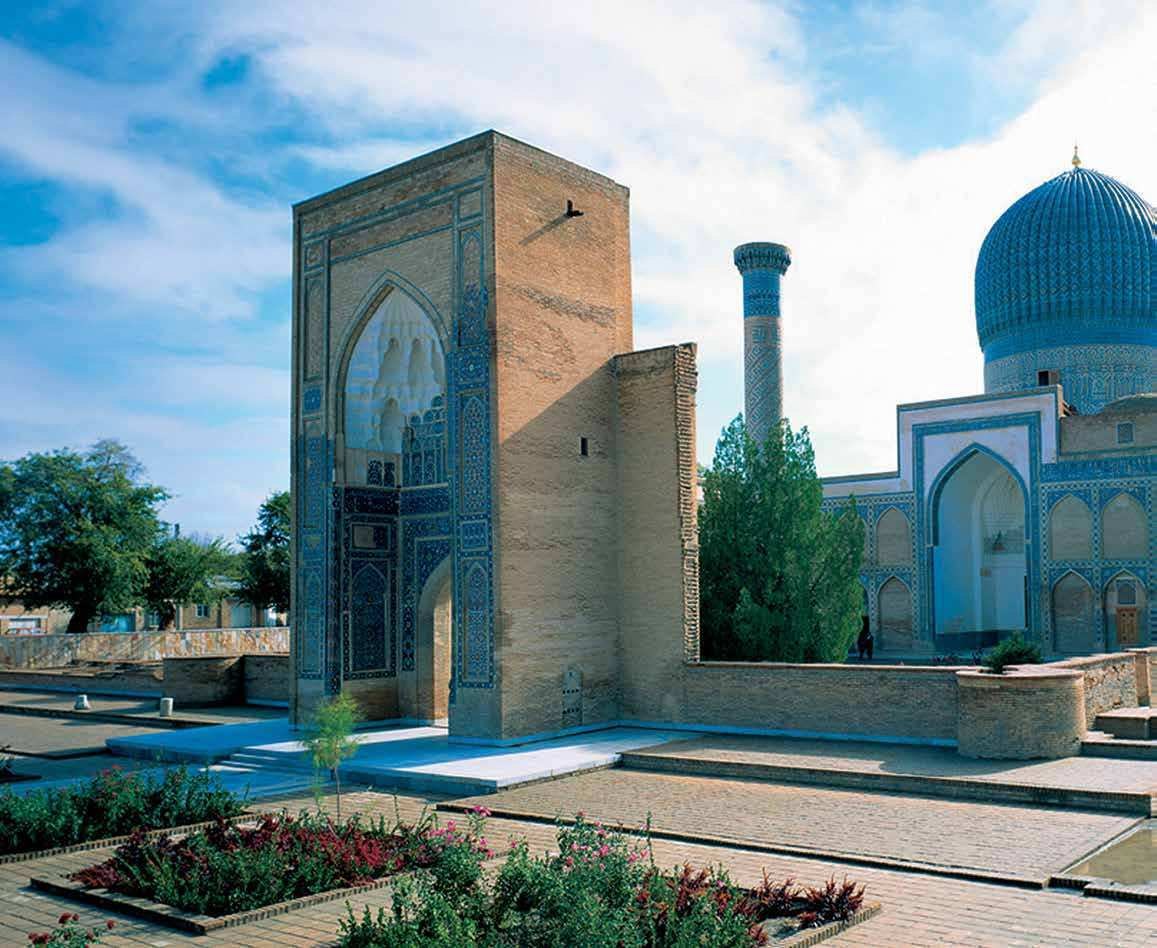
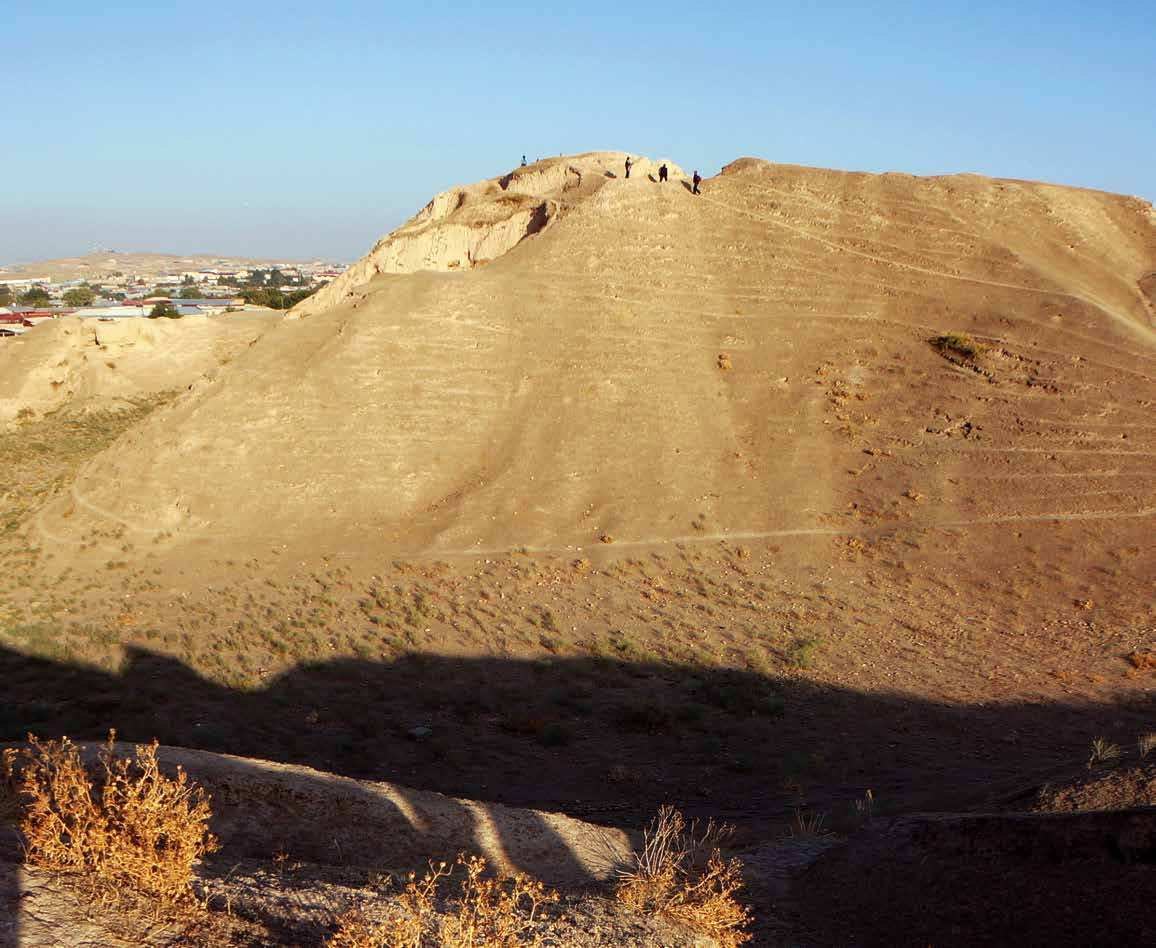
Most travelers in Samarkand see Tamerlane's city: the Registan, Bibi-Khanym, the blue domes of the 14th and 15th centuries. But that's only the top layer. Just to the north lies something almost nobody looks at — the bare hills of Afrasiab. And yet this is where the real ancient Samarkand stood, thousands of years older than anything Tamerlane built. Here's what those mounds hide, and why they're worth a stop.
What is the Afrasiab archaeological site?
The key distinction is this: the showpiece Samarkand we know is the Timurid era — the 14th and 15th centuries. Afrasiab is Samarkand before Tamerlane, the original city that lived here for two millennia. The hills look empty, but beneath them lie tens of meters of cultural layers spanning the city's entire early history, from its very beginning.
How old is Afrasiab — and Samarkand?
It is Afrasiab that gives Samarkand its claim to be one of the oldest cities on Earth. When people say "Samarkand is 2,750 years old," they don't mean the Registan — they mean these mounds. Sogdians, the armies of Alexander the Great (for whom this was Marakanda), Arabs, the Samanids and the Karakhanids all succeeded one another here, and each era left its own layer.
What was Samarkand before Tamerlane?
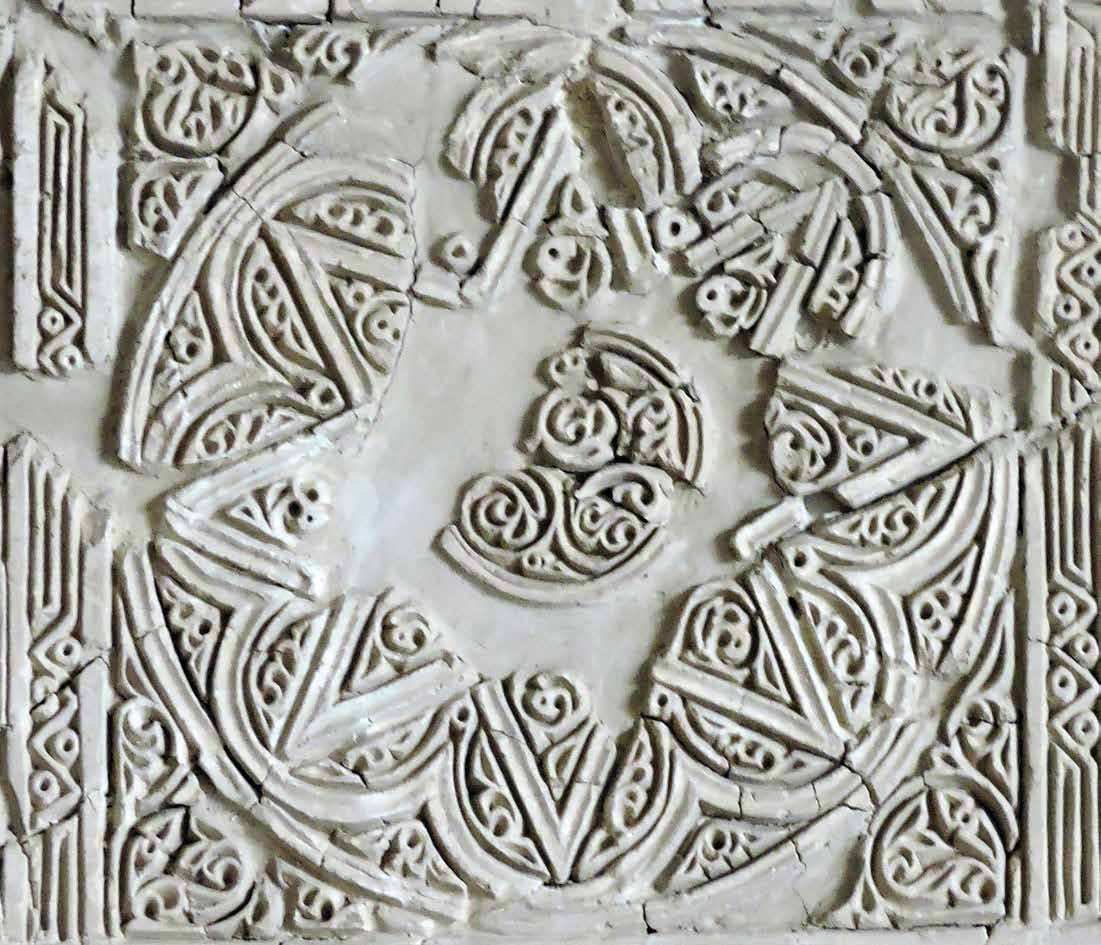
This is the key to understanding the city: long before Tamerlane, Samarkand was already a major trading hub, the "heart of the Great Silk Road." We tell the story of the road that created these cities in a separate piece. The wealth of Sogdiana was built on caravan trade — and it is exactly that wealth that is captured in the famous frescoes found at Afrasiab.
How was Afrasiab destroyed?
That is the drama of the place. The Mongol invasion drew a line: everything before 1220 stayed under these mounds, while everything we see today — the Registan, Bibi-Khanym — was built afterward, under Tamerlane, who made Samarkand the capital of his empire a century and a half later. Afrasiab is literally the "other," dead Samarkand, lying a step away from the living one.
The Mongols erased one city so completely that people never returned to its ashes — they built a new one beside it. The old city still sleeps under the hills, intact, because it is dead.
What are the famous Afrasiab frescoes?
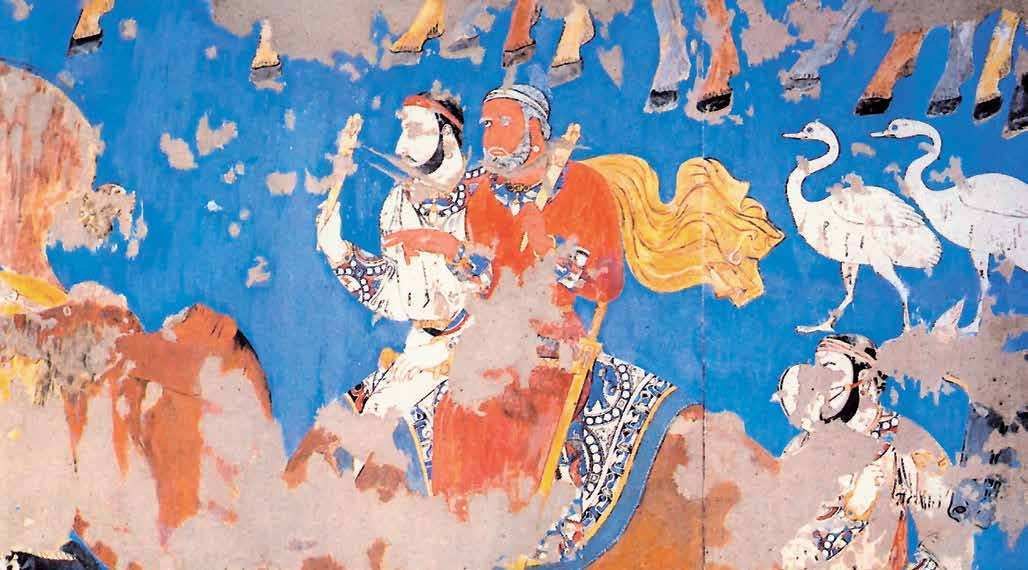
The frescoes are priceless because they show a world that no longer exists: the vivid, cosmopolitan Sogdian culture before the arrival of Islam. Here are Chinese envoys, a Turkic guard, and exotic curiosities — by one reading, the paintings even show ostriches presented to the court. The originals were carefully removed by archaeologists and displayed in the museum; some travel periodically to international exhibitions.
What is there to see at Afrasiab today?
- Where: north of the Bibi-Khanym Mosque and the Siab Bazaar, on the edge of the historic center.
- The highlight: the "Hall of the Ambassadors" frescoes in the museum — they are the reason to come.
- Tip: do the museum first (to get the context), then walk the mounds — otherwise they read as "just an empty field."
For how to fit Afrasiab into an itinerary, see our Samarkand travel guide; nearby are Bibi-Khanym and the Shah-i-Zinda necropolis, which grew up on the slope of Afrasiab.
Frequently asked questions about Afrasiab
How old is Samarkand, really?
About 2,700–2,750 years: the city on the hills of Afrasiab arose no later than the 7th–8th centuries BCE. That makes Samarkand one of the oldest continuously inhabited cities in the world — a contemporary of Rome and Babylon.
How is Afrasiab different from the rest of Samarkand?
Afrasiab is the ancient city from before Tamerlane — the capital of Sogdiana, destroyed in 1220. The Registan, Bibi-Khanym and the blue domes were built later, in the 14th–15th centuries under the Timurids, on a new site to the south of the hills.
Who destroyed the city?
In 1220 the armies of Genghis Khan stormed, sacked and burned Samarkand on Afrasiab. The destruction was so complete that the city was not rebuilt on the same spot — a new Samarkand was built farther south.
What is the "Hall of the Ambassadors"?
It is a 7th-century Sogdian wall painting from the palace of Afrasiab's ruler, depicting the reception of embassies from various countries. A unique monument of pre-Islamic art in Central Asia; the originals are kept in the museum on the site.
Is it worth going if it's "just hills"?
Yes — but start with the museum to get the context. Without it, the mounds look like wasteland; with it, they turn into three thousand years of a city's history. The "Hall of the Ambassadors" frescoes alone are worth it.
Want to see, in those empty hills, not wasteland but a whole dead city three thousand years old?
Become a Kvazar Explorer →