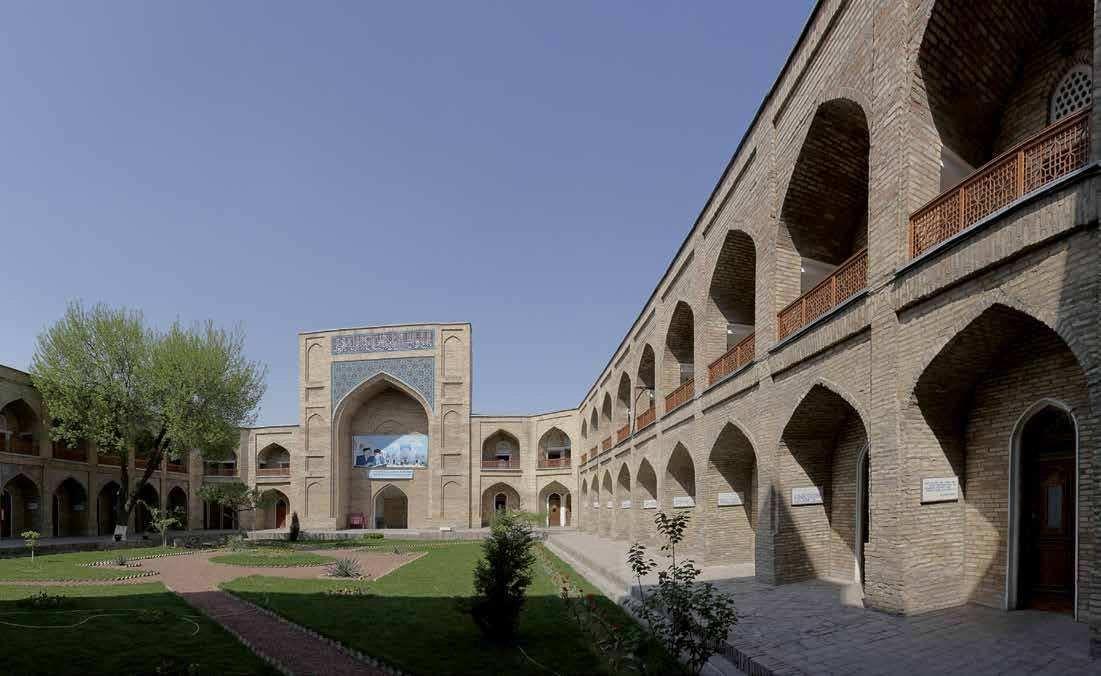
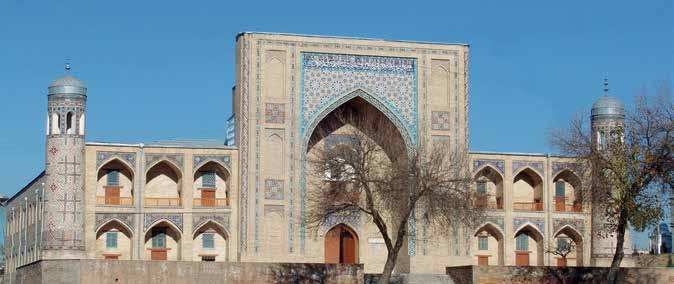
On the way from Chorsu Bazaar to the Hazrati Imam ensemble stands a building easy to take for "just another madrasah" — and to walk past. That would be a mistake: Kukeldash is the largest and one of the oldest surviving structures in Tashkent to outlast earthquakes and centuries. And its strange name and the legends around it make it one of the most intriguing places in the old town. Let's unpack what this monument is.
What is the Kukeldash Madrasah?
The word "madrasah" means an Islamic secondary and higher school, where theologians, teachers and even officials were trained. Kukeldash was to Tashkent roughly what the Registan is to Samarkand — its principal centre of learning. The tilework survives only in part and was restored in the 1950s; today the madrasah again functions as a religious school.
What does the name "Kukeldash" mean?
"Milk kinship" in the medieval East meant an almost blood-like bond and opened the way to the highest offices of state. The exact attribution is disputed: some sources link the madrasah to Kulbaba kukeldash, a powerful dignitary of Abdullah Khan II, others to the vizier of the Tashkent ruler Darvish Khan. No documents directly confirm who the donor was, so it's more honest to say the name points to the patron's title rather than to a securely identified person.
Is it true people were thrown from the madrasah?
This legend is part of the "dark" folklore that often attaches to old fortified structures. It survives because the madrasah was indeed used at various times for purposes other than teaching, including as a stronghold, and its tall portal loomed over the street. True or not, it's exactly such stories that give the building character and make you stop at its walls rather than walk past.
Every old portal of the East has two versions of its biography: the official one about learning, and the dark one about executions. Kukeldash keeps both.
What tree grew on the dome?
A tree sprouting on a dome and rooting in the masonry is a motif found in the folklore of many Eastern cities: nature breaking through the man-made was read as a good omen. The legend can't be verified, but it captures the townspeople's attitude to Kukeldash well — a place wrapped in both dread and veneration at once.
Which roles did Kukeldash change?
This shift of roles — school, inn, fortress, school again — mirrors the turbulent history of Tashkent itself. A building meant for learning became, in unsettled centuries, now a trading hub, now a defensive point, and each time returned to life. Kukeldash is a vivid example of how a single monument holds several of a city's eras.
What is there to see at Kukeldash today?
- Where: near Chorsu, on the "Tashkent Registan" — literally on the way from the bazaar to the old town.
- Note: it's a working school — the courtyard and rooms may be closed to visitors.
- Pairing: it makes sense to combine it with Chorsu Bazaar and the Hazrati Imam ensemble in one walk through the old town.
For how to fit Kukeldash into a route through the capital, see our guide to Tashkent. To compare the scale of madrasahs, take a look at our piece on Samarkand's Registan.
Frequently asked questions about the Kukeldash Madrasah
What does the word "Kukeldash" mean?
It's the court title "kukeltash," meaning "the khan's milk brother" — a man nursed by the same wet-nurse as the ruler and so especially close to him. Powerful viziers of the Shaybanid era held it; the madrasah is named after a vizier with this epithet.
When was Kukeldash built?
In the second half of the 16th century, under the Shaybanid dynasty (around 1570 is often cited). It's one of the largest surviving madrasahs of its time in Central Asia.
Is it true it was a place of execution?
It's a popular legend: that unfaithful wives were thrown in sacks from the tall portal onto the street "as a lesson." Such executions are not documented, and the story should be taken as folklore rather than fact.
Who exactly built the madrasah?
It's not firmly established. Construction is linked either to Kulbaba kukeldash, a dignitary of Abdullah Khan II, or to the vizier of the Tashkent ruler Darvish Khan. No direct documents on the donor have been found, so the name points to a title rather than a certain person.
Can you go inside?
The madrasah is active, so access to the courtyard and rooms may be limited during lessons. Entry to the grounds usually carries a small fee. Check on site.
Want to see in the madrasah not "another portal" but a building with three biographies and two legends?
Become a Kvazar explorer →