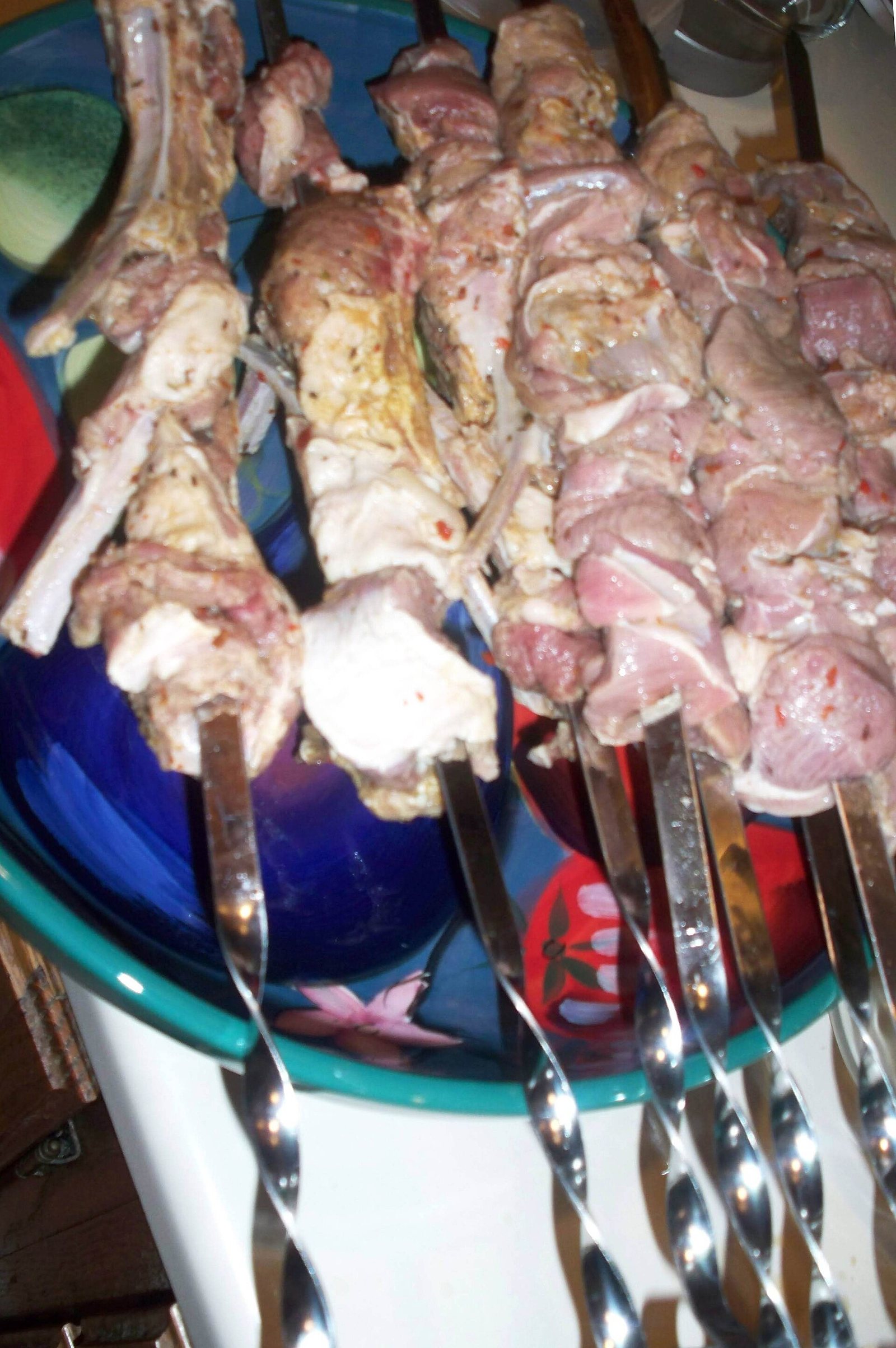
Shashlik (kebab) in Uzbekistan is a street classic: the smell of coals and the haze over the grill is recognized a block away, and all around are chaikhanas and bazaars. What's there to understand, you'd think — meat on a skewer. But Uzbek shashlik is arranged by its own rules, and the main one concerns not the marinade but the fat. Let's work out how the local shashlik differs from the usual kind, why tail fat is needed, and what the difference is between chunk shashlik and lyulya-kebab.
What is Uzbek shashlik?
Shashlik is social, street food: it's grilled by chaikhanas, at bazaars, at festivals and family picnics. Unlike European marinades with their abundance of spices and acid, the Uzbek approach is minimalist: good fatty meat doesn't need to be "drowned out" with seasonings. Onion, cumin, salt — and the coals do the rest.
Good shashlik begins not on the grill but on the pasture: it all comes down to the lamb and its tail fat. The marinade here isn't a disguise but a light polish.
Why is tail fat put in shashlik?
Tail fat is the fat from the fatty-tailed part of special breeds of sheep, and in Central Asian cooking it's especially prized: it melts easily, has a mild flavor and works as a natural "sauce" right on the skewer. It plays the same role in manty and in plov. If you see shashlik without flecks of fat, it'll most likely be drier.
How does shashlik differ from lyulya-kebab?
Making lyulya-kebab is harder than it looks: if the mince isn't fatty enough and poorly kneaded, it slides off the skewer into the coals. So fatty lamb is taken for lyulya, the meat is kneaded (beaten) long and thoroughly, and the tail fat acts as "glue." A good lyulya is smooth, dense and very juicy. In essence it's a relative of chunk shashlik, just from minced meat.
How is Uzbek shashlik made?
Every master has their own exact proportions — what matters more is the principles: fatty meat, a simple marinade, tail fat, coals.
Shashlik: the order of steps
- Choose the meat. Fatty lamb (a cut suited to good shashlik), plus tail fat in separate pieces.
- Cut. Meat into medium pieces, tail fat into smaller cubes.
- Marinate. Onion (plenty), cumin, salt, pepper, optionally a little vinegar or lemon; leave the meat cold for at least a few hours.
- Thread. On the skewer, alternate pieces of meat with cubes of fat.
- Grill over coals. Over even heat (no open flame), turning, until a golden crust and doneness.
- Serve. With pickled onion, flatbread, herbs, optionally dusted with sumac.
For lyulya-kebab, instead of chunks — well-kneaded fatty lamb mince with tail fat, molded onto the skewer; no egg or bread added.
Frequently asked questions about Uzbek shashlik
Why is tail fat added to Uzbek shashlik?
It melts over the coals and soaks the meat with fat, keeping it from drying out. Pieces of fat are alternated with meat on the skewer — this makes the lamb juicy. Without tail fat, lean meat over the heat quickly turns dry.
How does shashlik differ from lyulya-kebab?
Shashlik is pieces of meat on a skewer, while lyulya-kebab is minced lamb with onion and tail fat molded onto the skewer as a "sausage." Lyulya has no egg or bread: the mince holds thanks to fatty, well-kneaded meat.
What meat is Uzbek shashlik made from?
The classic is lamb with tail fat. It's also made from beef, chicken and offal. Pork isn't put in traditional Uzbek shashlik. The main thing is that the meat be fatty enough.
What marinade is Uzbek shashlik made with?
A simple one: onion, cumin, salt, pepper, sometimes a little vinegar or lemon. The Uzbek approach is minimalist — good fatty meat isn't "drowned out" with spices, letting the meat's flavor and the smoke of the coals work.
What is shashlik served with in Uzbekistan?
With rings of pickled onion, fresh flatbread and herbs, sometimes dusted with sumac (which gives a tang). It's most often washed down with green tea. Shashlik is typical food of chaikhanas, bazaars and picnics.
Want to understand Uzbek food not as "exotica" but as a living culture with its own rules?
Become a Kvazar Explorer →