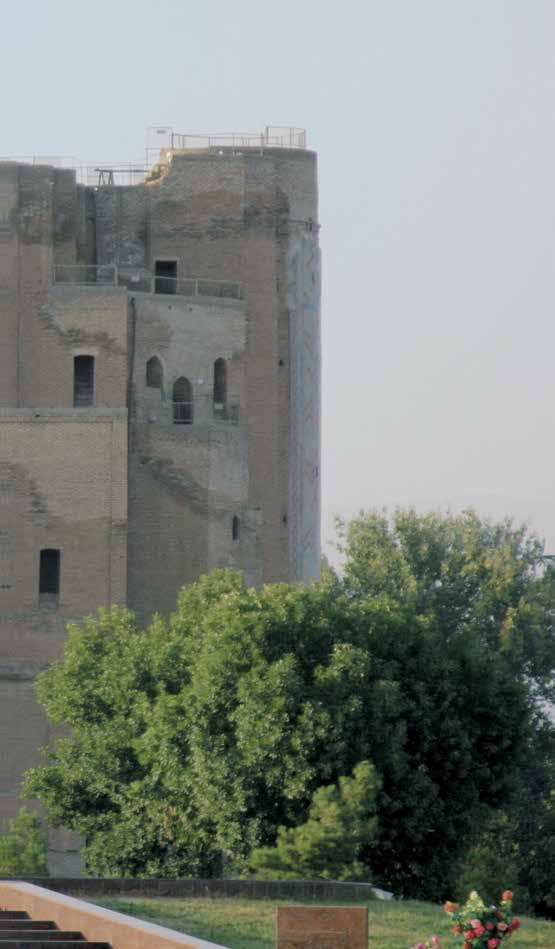
A little over an hour's drive from Samarkand, beyond a mountain pass, lies a green city whose name translates from Persian as "green city" — Shakhrisabz. It was once called Kesh and was the birthplace of Amir Timur (Tamerlane). Having become the lord of a vast empire, Timur didn't forget his home: he turned it into a second capital and launched a building campaign here meant to eclipse Samarkand. This guide covers what has come down to us from that era and whether it's worth coming here as a separate trip.
Why does Shakhrisabz matter?
Timur quickly turned his home city into a major cultural and scientific center of the empire and built structures here meant to astonish by their scale. Over the palace entrance, by tradition, was an inscription to the effect of "if you doubt our might — look upon our buildings." After Timur's death the city gradually lost importance, and much has come down to us only in ruins — but even the ruins speak of the design more loudly than some intact buildings do.
What is the Ak-Saray palace?
Only two piers of the portal survive, between which there was once an arch of incredible width. Even these fragments rise so high it's hard to believe the building's original size. The palace was decorated with tilework, had courtyards and, by descriptions, even a pool at height. The Spanish ambassador Ruy González de Clavijo, who stayed here in the early 15th century, left testimony of its splendor — his notes remain a valuable source on Timur's court.
From Timur's most ambitious palace, two piers remain — and they're still taller than most of what's built today.
Where did Timur want to be buried?
This fact is one of the most eloquent in the city's history. The man who chose where to be born could not choose where to rest: death caught Timur on campaign in winter, the passes to Shakhrisabz were closed, and he was buried in the capital. The empty crypt that waited for him in his home city is an almost literary image of how intention diverges from fate.
What else to see: Dorut-Tilovat and Kok-Gumbaz
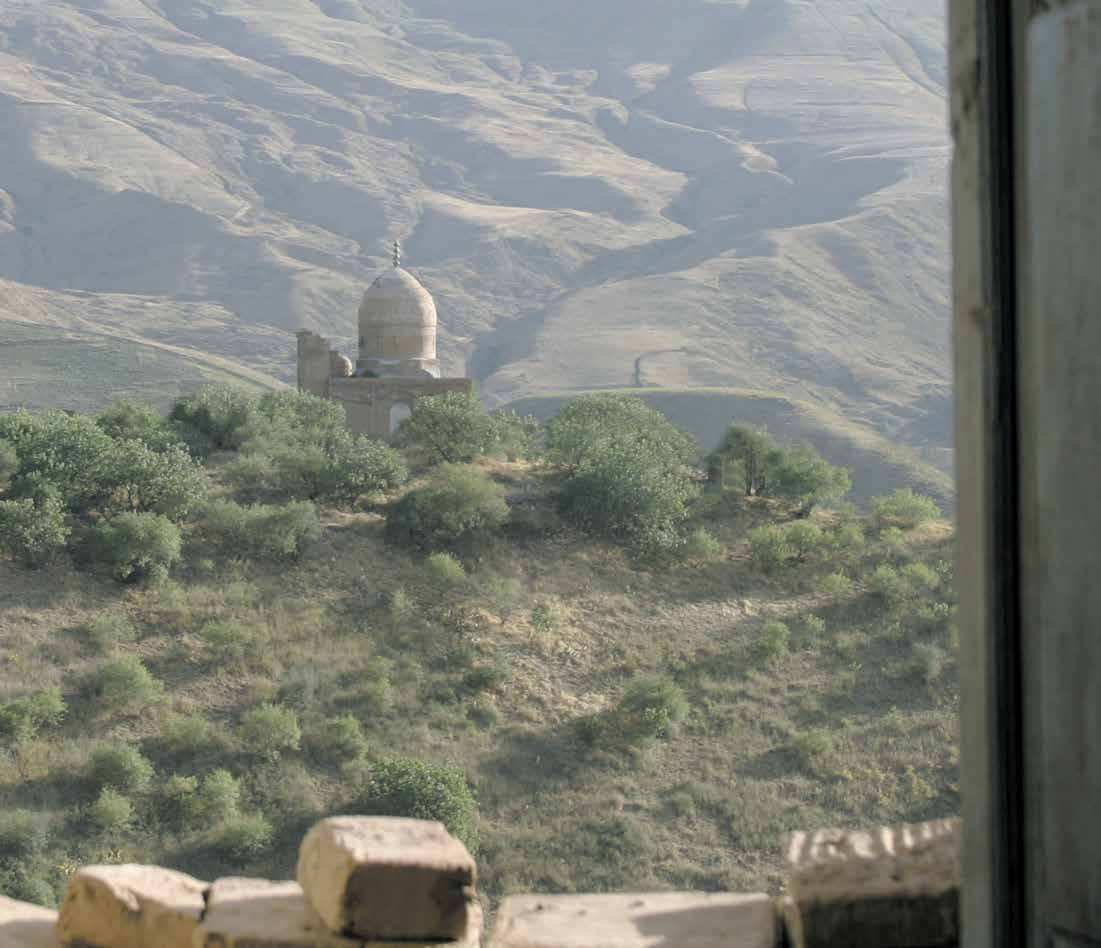
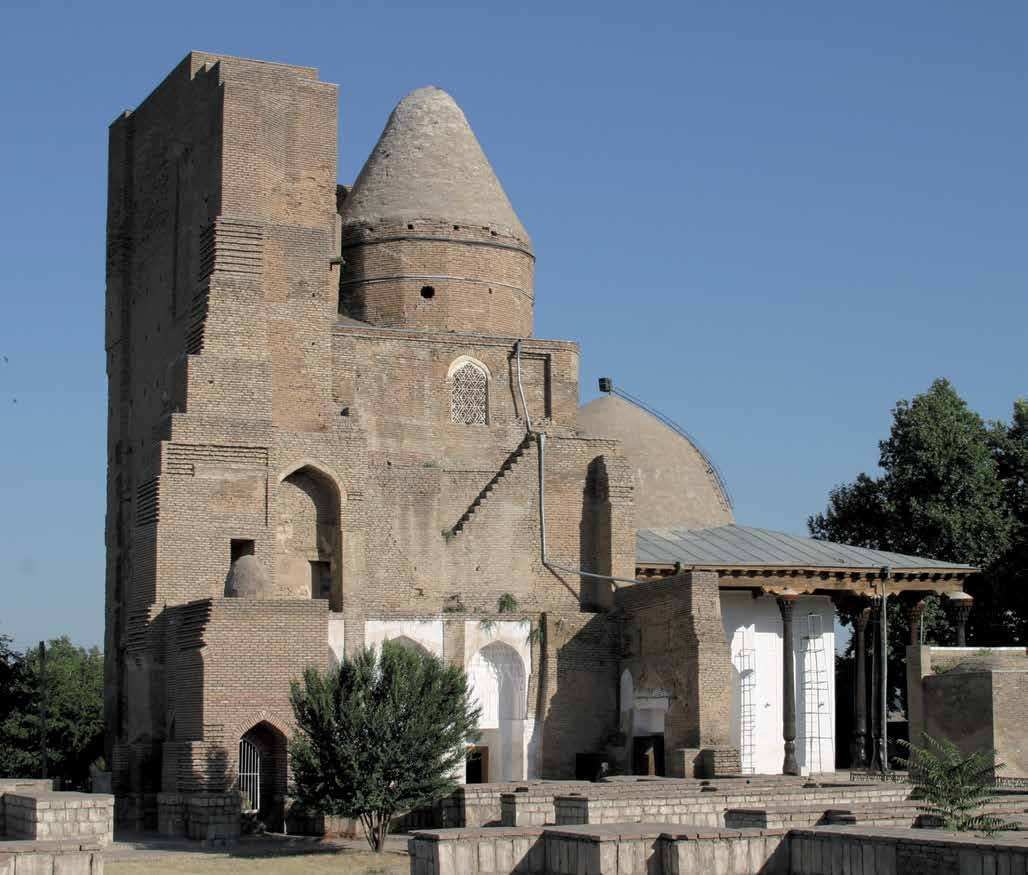
If Ak-Saray is about power and scale, Dorut-Tilovat is about memory and faith. There's less monumentality here and more quiet. Together the two points give a full portrait of a Timurid city: on one side a palace meant to astonish everyone, on the other a place of commemoration of the family. Both are in the historic part and seen on a single walk.
Is it worth going to Shakhrisabz if you've already seen Samarkand?
Many come here precisely after Samarkand — and then the city reads especially well: you've already seen the Gur-e-Amir where Timur lies, and now you stand by the empty tomb he prepared for himself at home. This pairing of the two cities gives a far more rounded understanding of the Timurids than either does alone.
How much time do you need for Shakhrisabz?
There's usually no need to stay overnight: see the monuments, stroll the green streets, try the local food — and head back. But if you want to take it slowly and meet fewer tourists, you can arrive at opening time in the morning, while it's cool and empty.
How do you get to Shakhrisabz?
The road over the pass is itself scenic, so the journey is part of the experience. From other cities it's longer and more complicated, so Shakhrisabz almost always logically "hangs" on Samarkand. Arrange a wait with the driver in advance, so you can return calmly in the evening.
Frequently asked questions about Shakhrisabz
What is Shakhrisabz famous for?
It's the home city of Amir Timur (Tamerlane) and a UNESCO World Heritage Site. The main monuments are the ruins of the Ak-Saray palace, the Dorus-Saodat and Dorut-Tilovat complexes, and the Kok-Gumbaz mosque.
Why isn't Timur buried in Shakhrisabz?
He prepared a tomb for himself here, in the Dorus-Saodat complex, but died on a winter campaign when the passes to the city were closed, and was buried in Samarkand in the Gur-e-Amir mausoleum. The prepared tomb in Shakhrisabz remained empty.
What remains of the Ak-Saray palace?
Only the gigantic ruins of the entrance portal — two piers, between which there was a huge arch. But even the fragments impress by their height and give a sense of the original scale.
Is it worth going to Shakhrisabz instead of Samarkand?
No, it's a complement, not a replacement. Samarkand has more intact monuments; Shakhrisabz is valuable as Timur's birthplace and his unrealized design. It's best to come here after Samarkand.
How do you get from Samarkand to Shakhrisabz?
By car or taxi over a mountain pass — about an hour to an hour and a half each way. It's usually a day trip with a return in the evening.
Want to see Uzbekistan the way the people who live here see it?
Become a Kvazar Explorer →