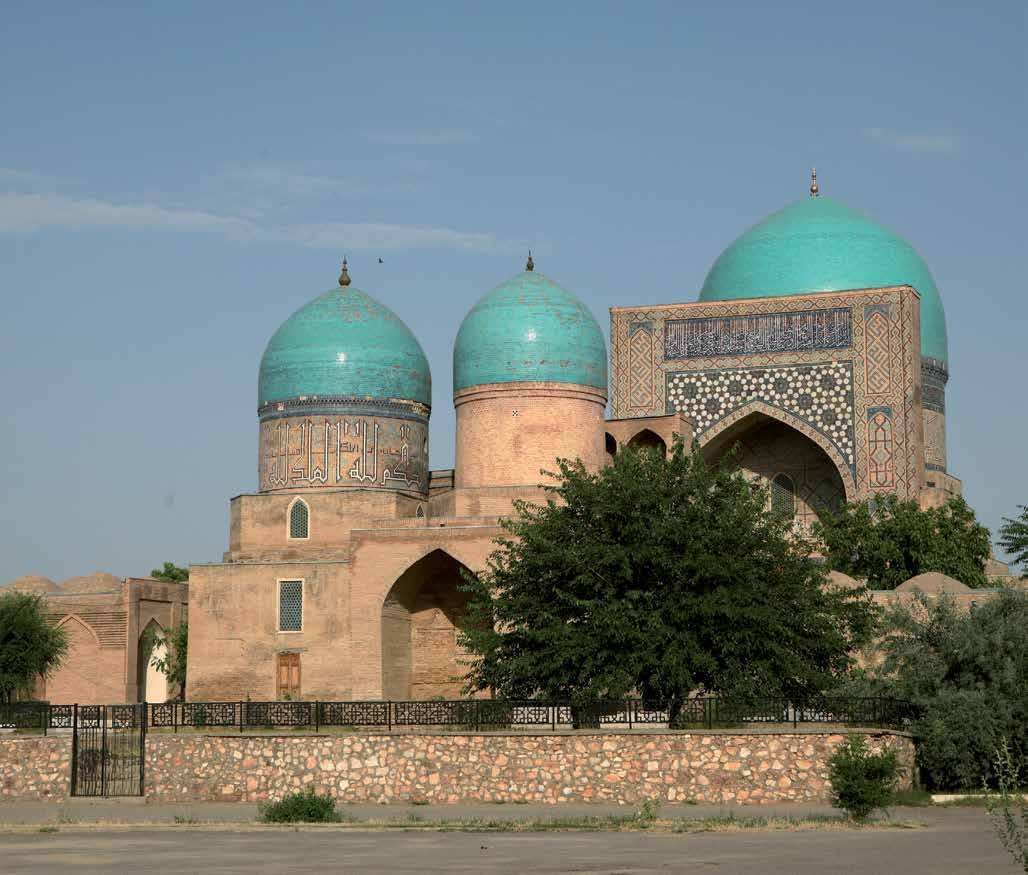
Shakhrisabz is known above all for the grand ruins of Ak-Saray, but the city's true depth reveals itself in its memorial quarters. Dorut-Tilovat is one of them: a calm courtyard in the historic center, gathering a mosque with a blue dome and old tombs. It's a place easy to miss in a hurry, but it's exactly this place that shows the other side of the Timurid era — not conquests, but faith, memory and the connection of generations.
What is Dorut-Tilovat?
Unlike the ceremonial Ak-Saray, Dorut-Tilovat is more intimate and quieter. It's not a palace demonstrating power but a place of family and spiritual memory of the Timurids. Here you feel a different side of the era: rulers famed for conquests also cared to honor their mentors and ancestors fittingly.
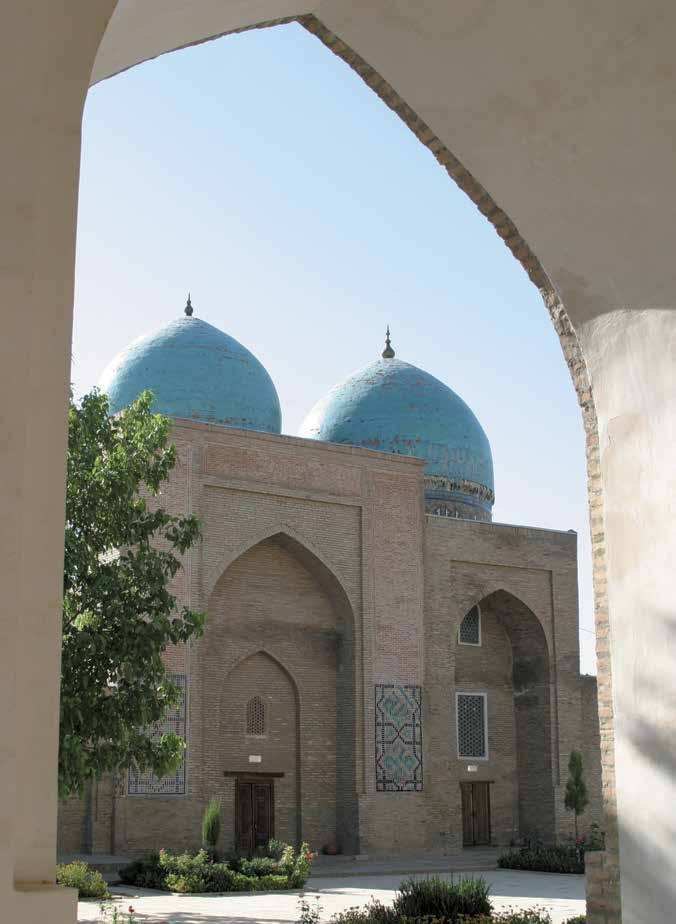
What does the name "Dorut-Tilovat" mean?
The complex's origins are tied to the figure of the Sufi sheikh Shamsiddin Kulyal — spiritual mentor of Taragay, the father of Amir Timur. After the sheikh's death, a mausoleum was raised on the old cemetery, and around this venerated burial the whole ensemble gradually took shape. So the memory of one man became the core around which a whole memorial quarter grew.
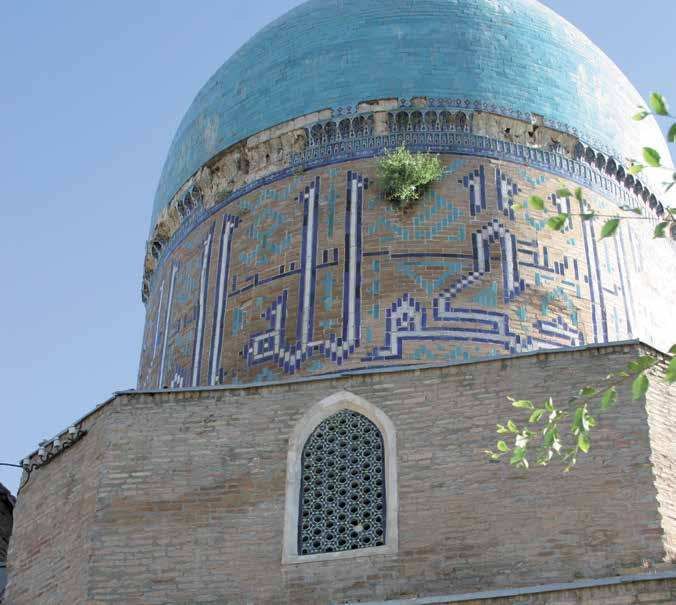
What is the Kok-Gumbaz mosque famous for?
The blue dome isn't merely decoration but a kind of calling card of the whole era: we see the same motif in Samarkand and other Timurid cities. In Shakhrisabz, Kok-Gumbaz links the name of Ulugh Beg with the home city of his grandfather, a reminder that the Timurids went on developing these places even after Timur himself.
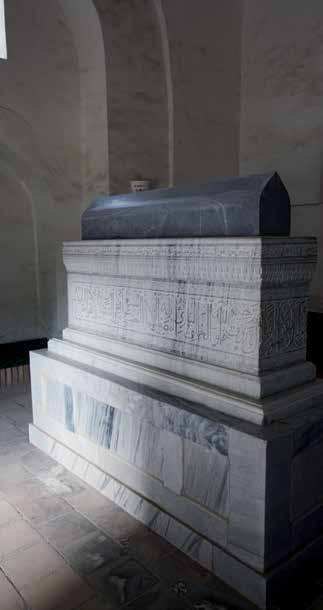
Who is buried in the tombs?
The proximity of these burials shows how closely power, faith and ancestral memory were intertwined for the Timurids. The veneration of spiritual mentors and descendants of the Prophet was an important part of the rulers' legitimacy. So Dorut-Tilovat is not only architecture but also a tale of the spiritual supports the dynasty leaned on.
If Ak-Saray spoke of the empire's might, Dorut-Tilovat speaks of those before whom that empire bowed its head.
Why step into this courtyard?
It's exactly in such places that history ceases to be a list of dates and battles and becomes human. The quiet courtyard, the blue dome, the old gravestones — all of it speaks of the people behind the figure of the great conqueror: his father, his mentors, his grandson Ulugh Beg. Dorut-Tilovat is worth not passing by.
How do you get to Dorut-Tilovat?
People most often come to Shakhrisabz from Samarkand — the road takes about an hour and a half over a mountain pass. Twenty to thirty minutes is enough for Dorut-Tilovat, and half a day for the whole city with Ak-Saray and Dorus-Saodat. It's a calm but substantial stop on the Timurid route.
Frequently asked questions about Dorut-Tilovat
What is Dorut-Tilovat?
A memorial complex of the 14th–15th centuries in the center of Shakhrisabz, formed around a venerated burial. It includes the Kok-Gumbaz mosque and several tombs. The name is translated as "House of Contemplation."
What is Kok-Gumbaz?
A congregational mosque with a blue dome within Dorut-Tilovat, raised in the first half of the 15th century under Ulugh Beg. "Kok-Gumbaz" means "Blue Dome."
Who is buried in the complex?
Sheikh Shamsiddin Kulyal — spiritual mentor of Timur's father — and members of the family of the Termez sayyids in the Gumbazi-Sayyidan mausoleum.
What does the name mean?
"Dorut-Tilovat" is translated as "House of Contemplation" or "House of Reflection," reflecting the spiritual purpose of the place.
Is it far from Ak-Saray?
No, about a kilometer to the south — roughly fifteen minutes on foot. All the main monuments of Shakhrisabz are gathered in the center.
How do you get to Shakhrisabz?
Usually from Samarkand — by car or with an excursion, about an hour and a half over a mountain pass.
Want to see Uzbekistan the way the people who live here see it?
Become a Kvazar Explorer →