This is probably the most common money fear before a trip: will my card be accepted. Old reviews paint Uzbekistan as a pure-cash country where a foreign card is useless plastic; newer promotional guides promise that "everything takes cards." The truth sits between them and depends on exactly where you're standing, card in hand. This guide doesn't answer "yes or no" but "where yes, where no, and what to keep in your pocket for the no."
Where can you pay by card in Uzbekistan?
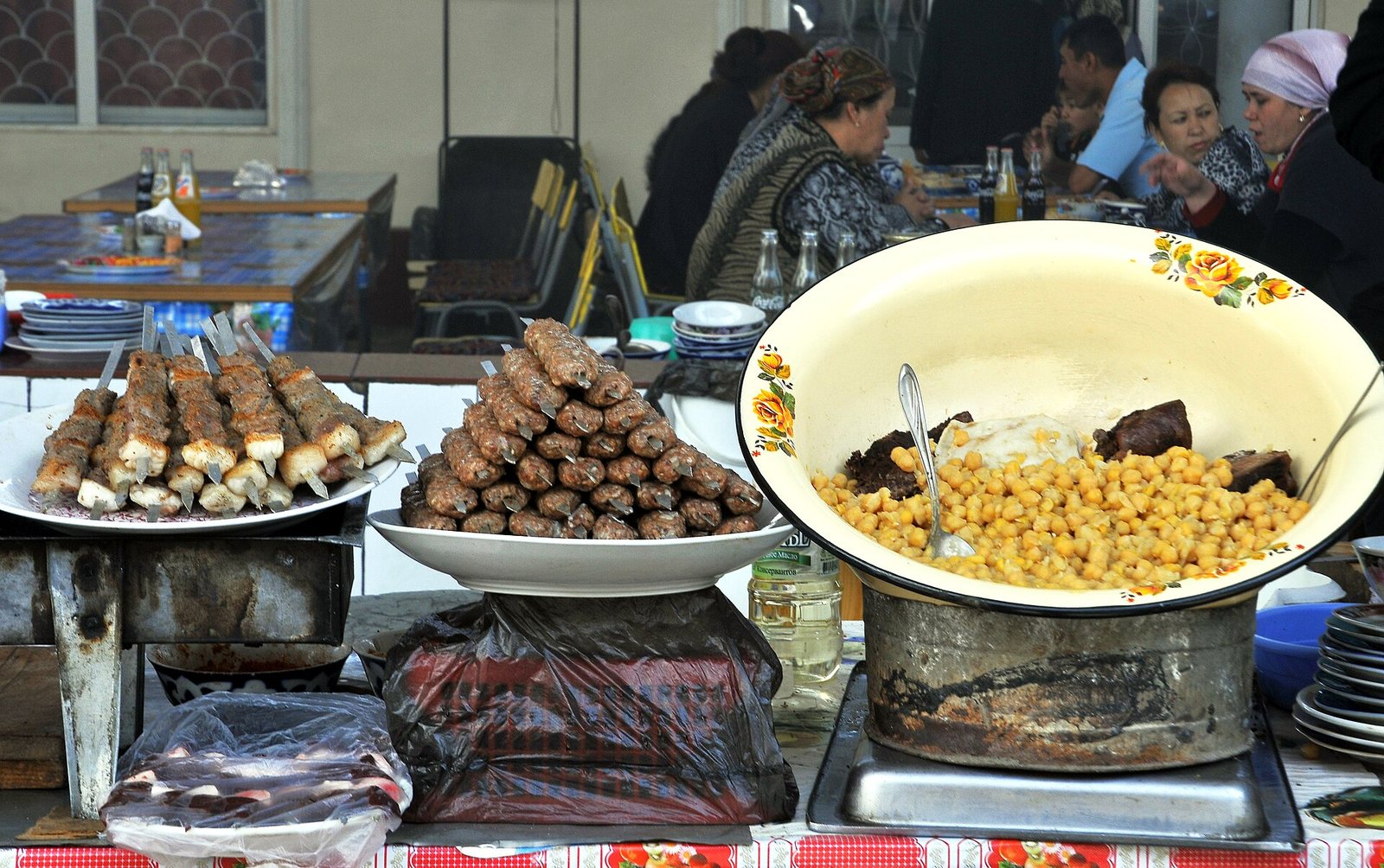
It's more useful to think in types of place than in cities. Everything "institutional" — a hotel, a restaurant with a sign, a supermarket, a museum till, an online train or plane ticket — will almost certainly take a card. Everything "human" — a bazaar stall, a courtyard teahouse, a taxi flagged on the street, a grandmother's guesthouse — almost certainly won't. This isn't backwardness; it's that local life runs on Humo and Uzcard and on cash, where foreign plastic simply isn't wired in. Connectivity, without which online payments and taxi apps don't work, is covered in the internet and SIM guide.
A card opens the country's institutions. Cash opens the country itself — the bazaar, the teahouse, the workshop, everything that actually is Uzbekistan.
Which is accepted better — Visa or Mastercard?
If you're choosing one card for the road, make it Visa: it meets "yes" more often at both the till and the ATM. But the ideal insurance is a Visa plus a Mastercard from different banks — then one ATM's refusal or one network's temporary glitch doesn't leave you stranded. Don't count on Amex or exotic networks; they work as a pleasant exception, not a foundation. This, incidentally, is one of those "hidden" budget vulnerabilities we write about in the trip-cost guide.
Can you withdraw cash from an ATM?
A few rules make withdrawing calm. Use ATMs attached to reliable bank branches, not standalone machines in dim corners. Withdraw less often and in larger amounts: the fee is usually a percentage, and five small withdrawals cost more than one big one, allowing for the per-transaction limit. Before heading to small towns or the desert, take out a reserve in advance — there may be no ATM there. And remember: ATMs dispense som only; you can no longer get dollars from them. The basics of exchange and withdrawal live in our money guide.
Is there a surcharge for paying by card?
The habit is simple: before paying by card in a small place, ask whether there's a surcharge — just as in a bazaar you agree the price before, not after. If a surcharge exists and it's noticeable, paying cash is sometimes the better deal. It's a trifle on one purchase, but over a trip such trifles add up to a visible line — exactly the "quiet leak" we warn about in the money guide.
How much cash should you actually carry?
The working setup: cash in som for everyday things (food, taxis, bazaar, minibuses, small items), and the card for big and institutional ones (hotel, museum, tickets, supermarket). Keep a day or two's reserve in cash on you, especially if you're heading beyond the major cities where an ATM may not appear. Clean dollar bills are easy to exchange locally at licensed exchange offices and banks — street exchange is unnecessary and illegal. You can't pay in foreign currency directly: settlement is in som everywhere. If you want it all in one spending plan, it's in our trip-cost guide.
Do Apple Pay and Google Pay work?
Phone contactless here is a nice bonus where it exists, not core infrastructure. In trendy Tashkent spots it's slowly taking hold, but a chip card stays more reliable than a phone, and cash more reliable than a card. Build your payment plan bottom-up: som in your pocket is the foundation, the card is the floor above, the phone is a roof that isn't everywhere.
Common questions about paying by card
Can I travel Uzbekistan with no cash at all?
No. A card covers hotels, restaurants and large city shops, but bazaars, minibuses, street taxis, small cafes and guesthouses run on cash. Without som in your pocket you'll be cut off from exactly the part of the country worth coming for. The card is a reserve, not a replacement for cash.
Which card is better to bring — Visa or Mastercard?
Both work, but Visa is accepted a little more widely — in both terminals and ATMs. Ideally bring both, from different banks: then one ATM's refusal or one network's glitch won't leave you stranded. Don't count on American Express and similar networks — they're rarely accepted.
Is there a fee for ATM withdrawals?
Yes, there's no fee-free network for foreign cards — banks charge a percentage to withdraw, and it varies between banks. So it's cheaper to withdraw less often and in larger sums within the per-transaction limit. Use ATMs at reliable bank branches and check the terms on screen before confirming.
Why do some places ask for more when I pay by card?
Some smaller venues add an acquiring surcharge — a small percentage on top. It's not a scam, and they'll usually name it if you ask first. In major hotels and restaurants it almost never happens. If the surcharge is noticeable, paying cash is sometimes the better deal.
Does Apple Pay work in Uzbekistan?
Only to a limited extent. Contactless phone payment appears in modern Tashkent venues but isn't widespread, and beyond the capital it's rare. It's a pleasant bonus where it exists, not a main payment method. A card is more reliable than a phone, and cash more reliable than a card.
Want to see Uzbekistan the way the people who live here see it?
Become a Kvazar Explorer →