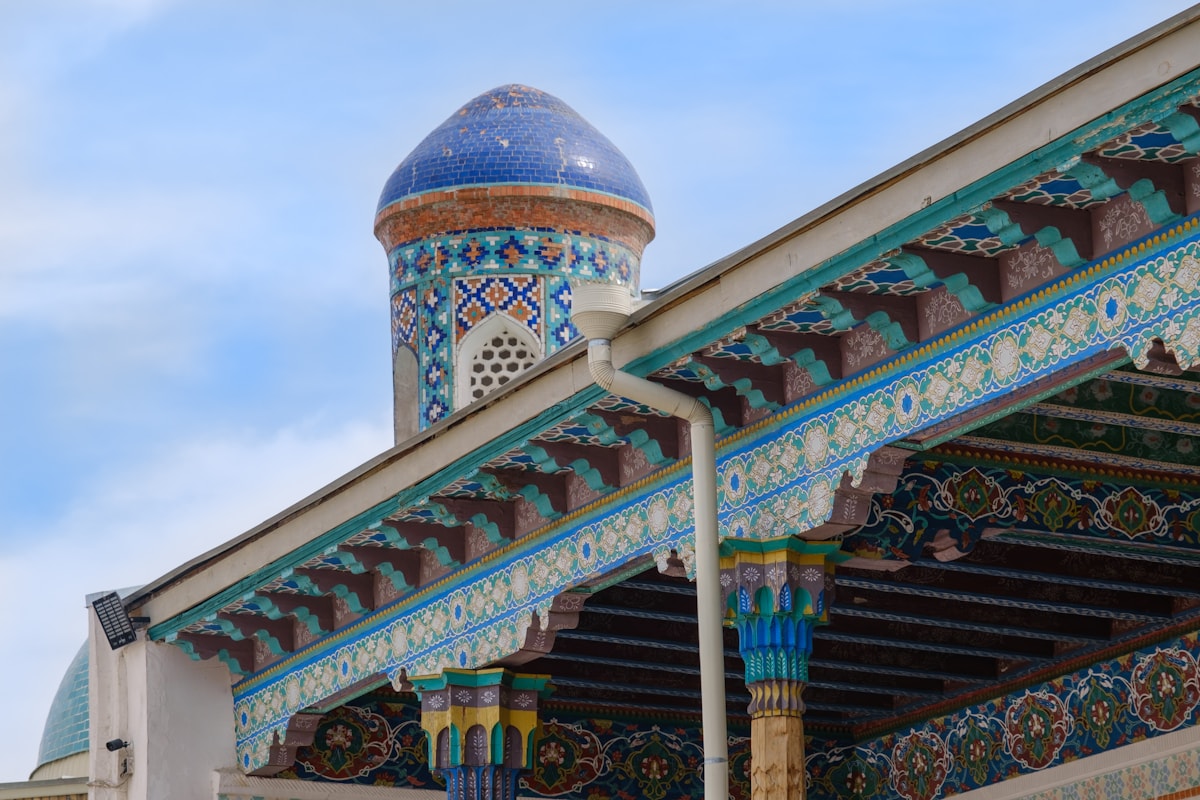
Kokand stands apart on Uzbekistan's tourist map. It's the gateway to the Ferghana Valley — the fertile, densely populated land in the east of the country that tourists often skip, hurrying along the Samarkand–Bukhara–Khiva line. That's a pity: Kokand was the capital of the Kokand Khanate, one of three Central Asian states of the 18th–19th centuries, and its architecture belongs not to the distant Middle Ages but to the comparatively recent era of the khans. This guide covers what to see here and why it's worth turning into the valley.
What makes Kokand interesting?
Here the architecture is younger, the history closer, and easier to follow — much of it happened literally a century and a half or two ago. Kokand was also an important spiritual and trade center of the valley, with dozens of madrasas and mosques. Today it's a quiet provincial city, but its center still holds the memory of times when it was the capital of its own state.
What is the Khudayar Khan palace?
The best masters of the Ferghana Valley and invited specialists worked on its decoration, and the result differs noticeably from the austere Bukhara or Khiva architecture: there's more brightness, pattern and eclecticism, with Eastern traditions and the currents of the time combined in the decor. An inscription with the khan's title survives over the main entrance. Only part of the original grand ensemble of many courtyards and rooms survives, but even it conveys the scale of the khan's court.
What was the Kokand Khanate?
Understanding this "trio" is the key to all the later history of Uzbekistan: Bukhara, Khiva and Kokand were separate states with their own courts, armies and intrigues, not a single country. Of them, Kokand is the most "eastern," turned toward Ferghana and the trade routes to China and the steppe. Its fate — a rise in the 18th–19th centuries and a swift decline — explains why there's so much architecture here specifically from that period.
What else is there to see in Kokand?
Kokand is good precisely because it isn't "polished" for the tourist: here you see the ordinary life of an Uzbek provincial city. That gives a more honest impression than glossy tourist centers. Allow time simply for a walk — the old streets, chaikhanas and bazaar will tell you about the city no less than the museum in the palace.
How is Kokand connected to the Ferghana Valley?
That's why Kokand is rarely seen "solo": it opens up a whole land of crafts. In Margilan they weave silk and ikat; in Rishtan they make turquoise-blue ceramics with vegetal pattern — the very crafts that underlie the visual code of all Uzbekistan. If you're interested not only in monuments but in living workshops, the valley with Kokand at its entrance deserves two or three days.
How much time do you need for Kokand?
The optimal scenario is to treat Kokand as the first point of a Ferghana route, not as a standalone trip. Then the journey pays off: you get the history of the khanate, the silk and the ceramics in one wing of the trip.
How do you get to Kokand?
The Kamchik pass is the only overland "door" into the valley from the rest of Uzbekistan, and the road over it is part of the experience. A car gives the flexibility to then move on through the valley (Margilan, Rishtan, Ferghana). Check the road conditions and the weather on the pass, especially in winter.
Frequently asked questions about Kokand
What is Kokand famous for?
It's the former capital of the Kokand Khanate and the gateway to the Ferghana Valley. The main sight is the Khudayar Khan palace with its rich carving and painting, now a regional museum.
What is the Khudayar Khan palace?
The ceremonial residence of the last powerful Kokand khan, completed in the early 1870s. Famed for its ganch carving, painting and majolica. Mainly the eastern ceremonial part survives, housing a museum.
Is it worth going to Kokand on its own?
Better in combination with the Ferghana Valley (Margilan, Rishtan). Kokand itself is seen in half a day, but the road into the valley is slow, so it's wiser to allow two or three days for the whole land.
How is Kokand different from Samarkand and Bukhara?
The era. Samarkand and Bukhara are about antiquity and the Middle Ages; Kokand is about the late khans' history of the 18th–19th centuries. The architecture here is younger, brighter and more eclectic.
How do you get to Kokand from Tashkent?
Over the Kamchik mountain pass — several hours by car or taxi. There are also trains and local flights to the cities of the Ferghana Valley.
Want to see Uzbekistan the way the people who live here see it?
Become a Kvazar Explorer →