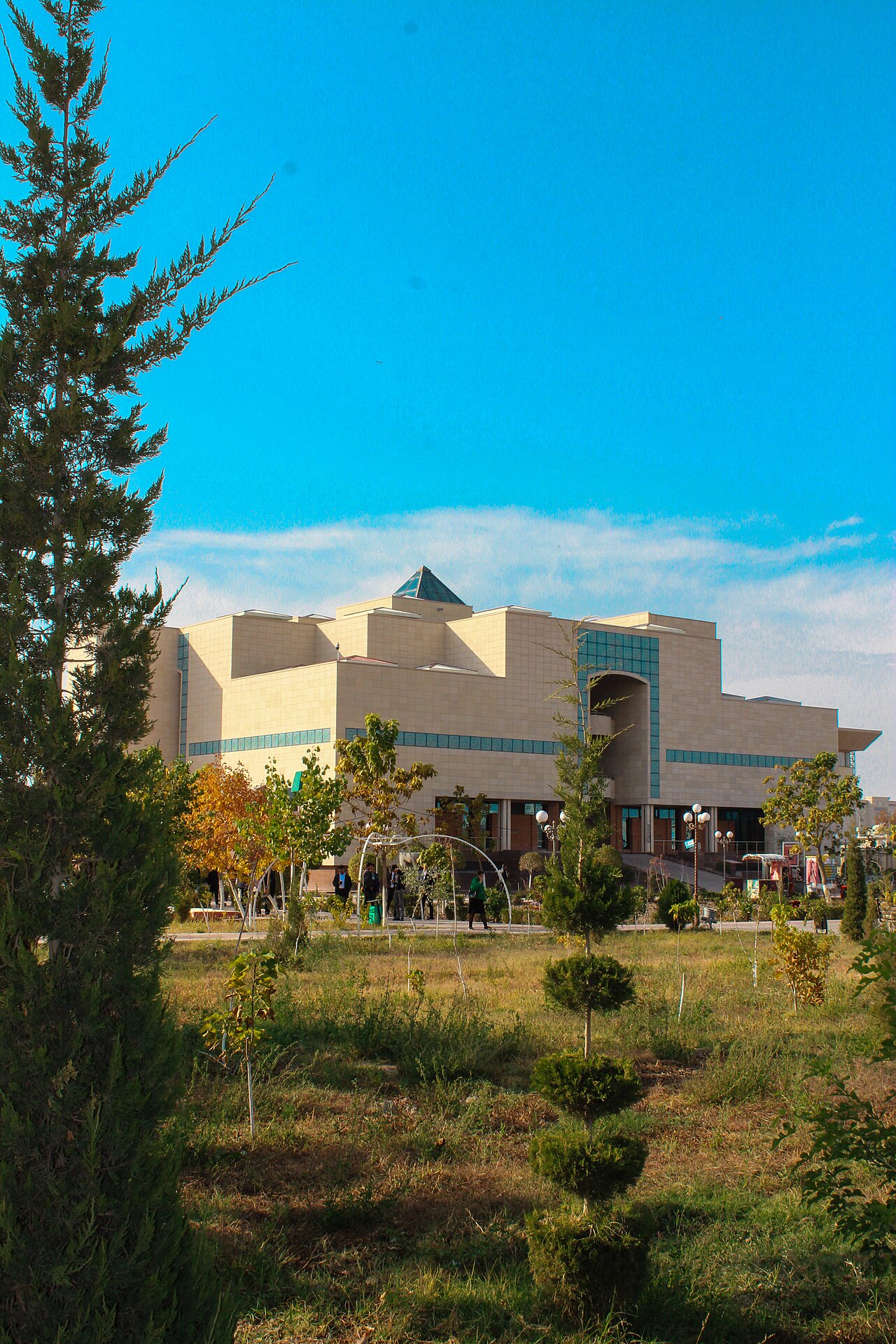
Nukus is the capital of Karakalpakstan, one of the most remote cities in Uzbekistan, standing on the edge of the former Aral Sea. No one passes through here on the way to somewhere else: people come to Nukus on purpose. And they come for one thing — the Igor Savitsky State Museum of Arts. It's a place where two almost incompatible things meet: a desert province on the edge of the USSR and one of the greatest collections of 20th-century avant-garde art. The story of how it ended up here is no less astonishing than the paintings themselves.
What is the Savitsky Museum?
Most of the holdings aren't displayed at once: the exhibition occupies two buildings, and only a small share of the collection is shown in the halls. But even that part makes an impression out of all proportion to the place: visitors often describe the visit as a culture shock — an encounter with first-rate art where you'd least expect it.
Who was Igor Savitsky?
Savitsky's logic was bold and precise: in a far-off desert region, a collection of "undesirable" art wouldn't attract Moscow's attention. He traveled the country, sought out paintings in studios and from artists' widows and heirs, bought them — often on credit and at his personal liability. Some artists brought him their works themselves, understanding that this was the only way their art would survive. So, year by year in Nukus, a collection took shape that would later become famous around the world.
What is kept in the collection?
It's exactly the combination of two layers that makes the museum unique: world-class avant-garde painting sits next to a deep ethnographic collection of the region. In the size of its avant-garde collection, Nukus is, by a common estimate, second in the former Russian space only to the Russian Museum — and that in a city more than a thousand kilometers from Tashkent.
To save forbidden art, it had to be hidden where no one would go. So the masterpieces ended up in the desert.
Why did a great collection end up in the desert?
This is the museum's central paradox. Art born in the capitals and rejected there found refuge on the distant periphery. Today that same remoteness has become part of the draw: the journey to Nukus has become a kind of pilgrimage for connoisseurs, and the museum itself proof that the cultural map of the world doesn't coincide with the map of distances.
How do you visit the museum?
The schedule, prices and the makeup of the exhibitions are worth checking before the trip: part of the exhibition periodically travels to temporary exhibitions abroad, and the halls are rotated. Before a visit, many recommend watching the documentary about Savitsky and his collection — it helps you understand at what cost what hangs on these walls was gathered.
Why is the Savitsky Museum so important?
Today the museum is known far beyond the region, its collection shown at exhibitions in Europe, and people come to Nukus specially to encounter it. Savitsky's story ties together the themes Kvazar explores separately: the fate of an artist, the memory of a place, and culture's ability to survive against the odds.
Frequently asked questions about the Savitsky Museum
Where is the Savitsky Museum?
In the center of Nukus — the capital of the Republic of Karakalpakstan in western Uzbekistan, more than a thousand kilometers from Tashkent, near the former Aral Sea.
Why is the museum called the "Louvre in the desert"?
Because of the combination of a world-class collection and a remote location in a desert land. The nickname underscores that first-rate art is kept where you'd least expect to see it.
What is the collection famous for?
Above all for its collection of Russian and Soviet avant-garde of the 1920s–1930s — by a common estimate, the second-largest after the Russian Museum. The museum also holds the archaeology and folk art of Karakalpakstan.
Who founded the museum?
The artist and collector Igor Savitsky (1915–1984), who moved to Karakalpakstan from Moscow. He spent years saving forbidden and forgotten art, and in 1966 secured the creation of the museum.
How many exhibits are in the museum?
The total holdings are estimated at around 90,000 items. Only a small part of the collection is on display in the halls at any one time.
Is it worth going to Nukus just for the museum?
Many travelers go precisely for it. The visit pairs conveniently with a trip to Muynak on the shore of the former Aral Sea and to the Mizdakhan necropolis.
Want to see Uzbekistan the way the people who live here see it?
Become a Kvazar Explorer →