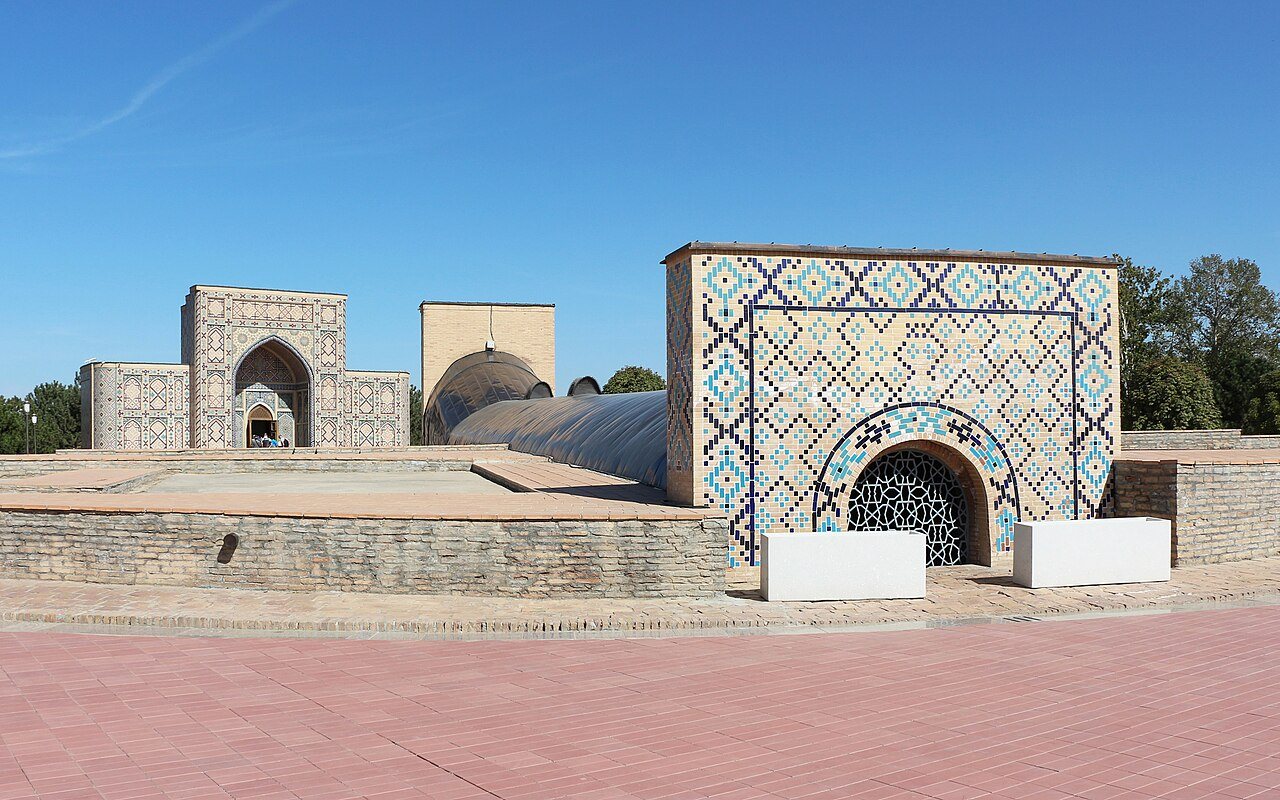
History rarely offers rulers remembered not for their conquests but for their scientific discoveries. Ulugh Beg is one of them. Grandson of Timur, lord of Samarkand, he turned his grandfather's capital from a military center into one of the scientific capitals of the 15th-century world. His observatory and the star catalog compiled there were ahead of their era by centuries, and his madrasa on the Registan still stands at the heart of Samarkand. But the same passion for knowledge that made Ulugh Beg famous led him to his death. This is a story of how science can be both greatness and a sentence.
Who was Ulugh Beg?
Ulugh Beg belonged to the third generation of the Timurids — the dynasty under which Samarkand reached its cultural peak. If Timur created an empire by force and his son Shahrukh maintained it, then Ulugh Beg turned the resources of power toward science and enlightenment. It's a rare case in history where a ruler's "administrative resource" was directed to the benefit of knowledge.
How did an astronomer end up on the throne?
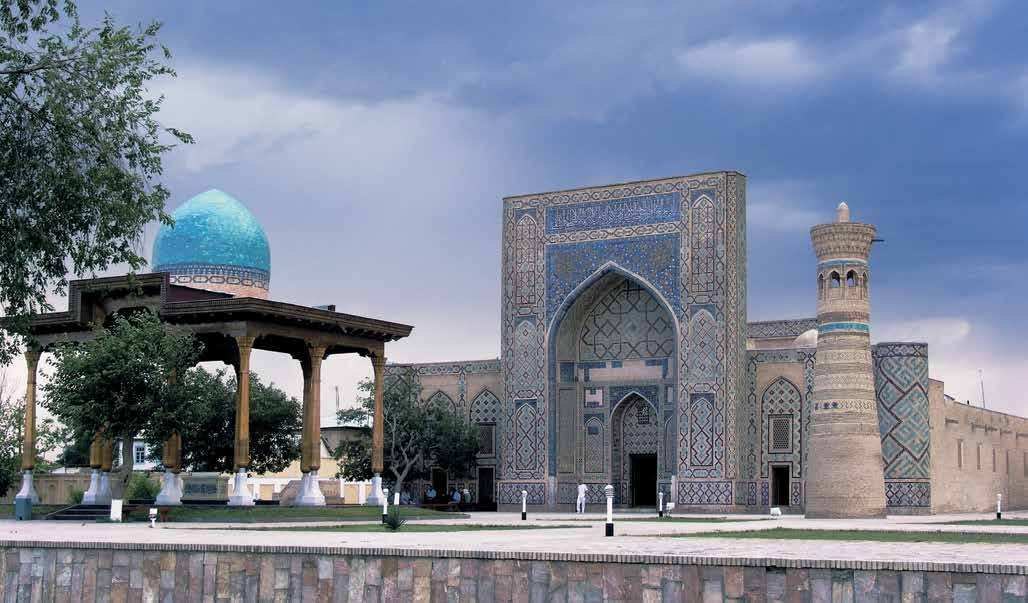
As a ruler, Ulugh Beg gave more attention to science and education than to wars and the expansion of his domains — and in this lay both his strength and his weakness. Samarkand under him became an intellectual capital to which scholars flocked. But the neglect of the "ordinary" affairs of power and the conflict with the influential clergy gradually undermined his position on the throne.
What is Ulugh Beg's observatory famous for?
The scale of the instrument was the key to its accuracy: the larger the measuring arc, the more precise the measurement of angles in the sky. Ulugh Beg's observatory became the peak of medieval observational astronomy. Later it was destroyed, and its traces were considered lost — the ruins were discovered only at the start of the 20th century and excavated in the middle of it. Today the surviving part of the underground sextant is one of the most impressive scientific monuments of Samarkand.
What is the "Zij-i Sultani"?
Ulugh Beg's catalog became known far beyond Central Asia and was later studied by European astronomers. It was one of the peak results of medieval science — a moment when Samarkand stood at the forefront of human knowledge of the sky. The "Zij" is the chief proof that the observatory was not a ruler's whim but a serious scientific institution of world level.
What did Ulugh Beg do for education?
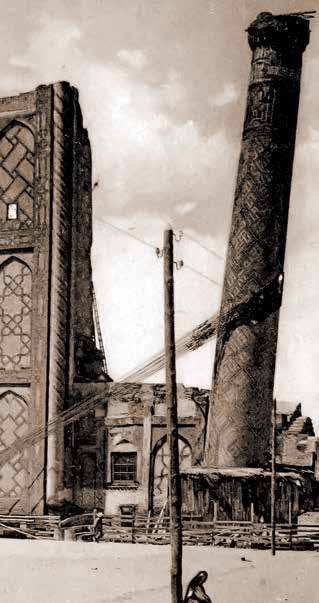
Over one of the madrasas, by tradition, was an inscription that the striving for knowledge is the duty of every person. Ulugh Beg gathered around himself the intellectual elite of his time and made Samarkand a place where the exact sciences were taught. This madrasa still stands today on the Registan — the most famous square in Uzbekistan — as a monument to an era when a ruler valued knowledge above conquest.
Why was Ulugh Beg killed?
The death of Ulugh Beg is one of the most tragic stories in the cultural memory of Uzbekistan: a ruler ahead of his time fell victim to the time he lived in. With Ulugh Beg's death the Samarkand scientific center faded too. But the memory of him outlived both the observatory and the dynasty itself: today his name is a symbol of the union of power and knowledge.
Ulugh Beg measured the stars more precisely than anyone in his century — and paid for it with his throne and his life.
What is Ulugh Beg's legacy?
Ulugh Beg's name is borne by institutions, streets and monuments throughout Uzbekistan, and his observatory and madrasa are among the chief sights of Samarkand. His figure ties together the history of the Timurids, the architecture of the Registan and the scientific heritage of the Islamic world — three themes that Kvazar explores separately and that converge in Ulugh Beg in a single person.
Frequently asked questions about Ulugh Beg
Who was Ulugh Beg?
Muhammad Taragay Ulugh Beg (1394–1449) was the ruler of Samarkand and an outstanding astronomer, grandson of Timur. He built the famous observatory and created the star catalog "Zij-i Sultani."
How was Ulugh Beg related to Timur?
Ulugh Beg was Timur's (Tamerlane's) grandson — the son of his son Shahrukh. He belonged to the third generation of the Timurid dynasty.
What is Ulugh Beg's observatory famous for?
Built around 1420 in Samarkand, it was one of the best in the medieval world. Its main instrument — a giant sextant partly going underground — gave the highest accuracy of measurement for the era.
What is the "Zij-i Sultani"?
A star catalog and astronomical tables created in the observatory. They contain the positions of hundreds of stars and refined values of astronomical quantities of outstanding accuracy for their time.
Why was Ulugh Beg killed?
Because of conflict with the conservative clergy, hostile to his passion for science, and a struggle for power with his son Abd al-Latif. In 1449 he was sentenced to death and killed near Samarkand.
Where is Ulugh Beg buried?
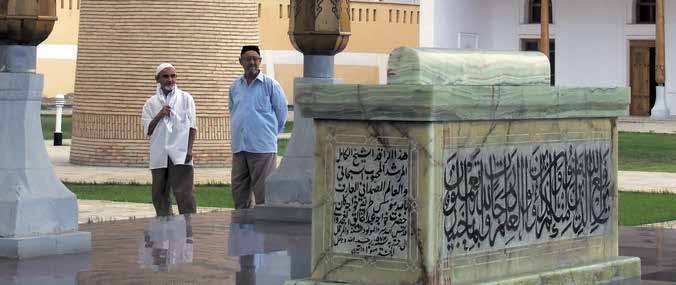
In the Gur-e-Amir mausoleum in Samarkand — the family tomb of the Timurids, beside Timur.
Want to see Uzbekistan the way the people who live here see it?
Become a Kvazar Explorer →