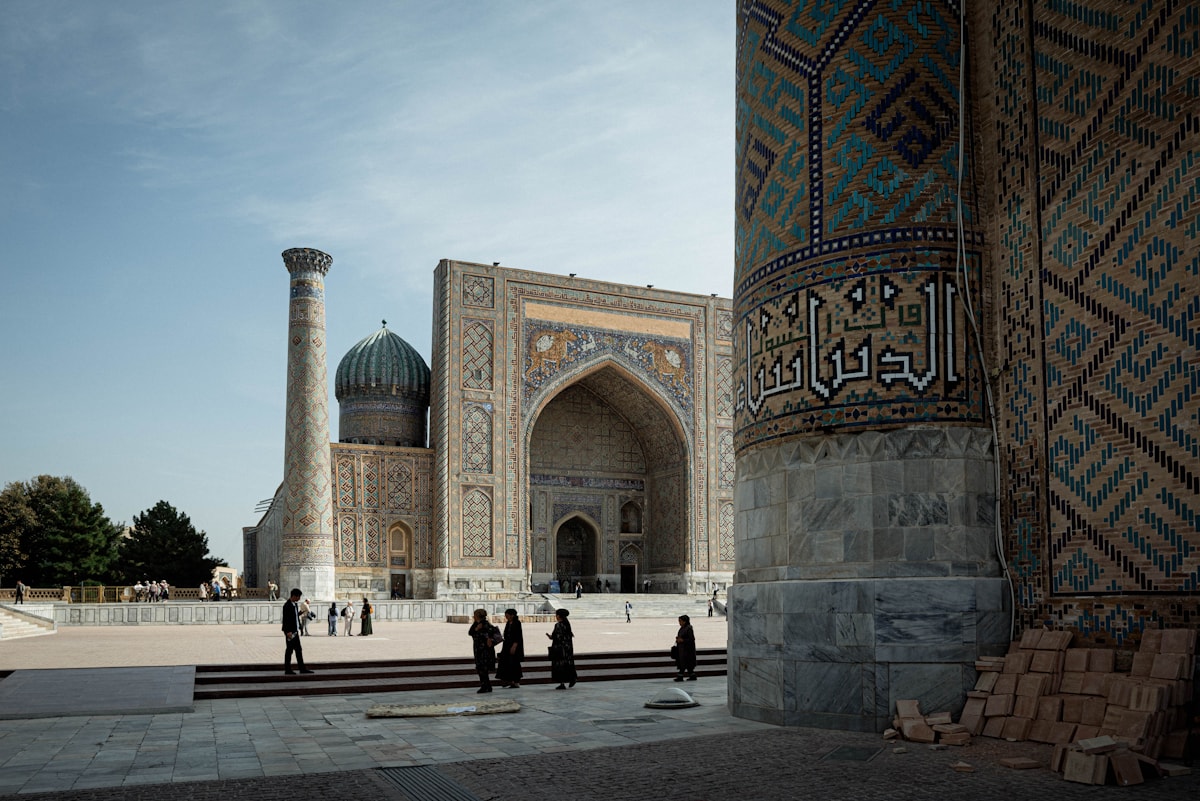
You can "see" Samarkand in a day, or you can understand it in a day — these are different trips. The city tempts you to grasp everything: there are many monuments, and you want them all. But in a single day the winner is the traveller who deliberately narrows the route to the core and walks it in its natural order. This guide shows what you can realistically reach, in what sequence, and where to pause so that you leave in the evening with a sense of the city rather than a folder of identical photographs.
What can you realistically see in Samarkand in one day?
One day in Samarkand is not a box to tick — it is a choice of depth over coverage. You can sprint through eight sights and remember none, or walk the core of the city in the order it unfolds and leave understanding why people come. This route follows the second idea: fewer stops, more meaning in each.
The logic is simple. Give the morning to the Gur-e-Amir, before crowds and while the light is soft. Midday is for the Registan, the heart of the city, which you will return to after dark anyway. Then walk through the Siab Bazaar to Bibi-Khanym and Shah-i-Zinda. If you arrive from Tashkent on the high-speed Afrosiyob (about two hours), you will have a full daylight day — and that is enough.
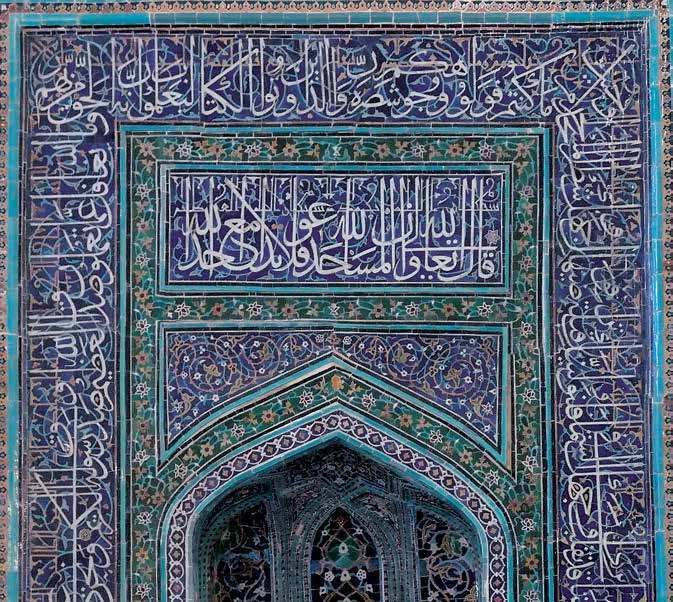
Should you start with the Gur-e-Amir or the Registan?
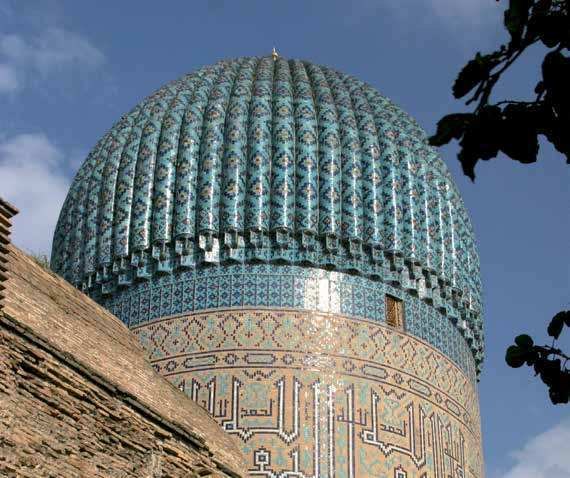
The Gur-e-Amir is not merely "Tamerlane's tomb" but the starting point of all Samarkand architecture: its proportions and dome were later echoed across Central Asia. Inside are a gilded ceiling and a dark jade slab over the conqueror's grave. Putting this monument first sets the scale against which you read the rest of the city.
How do you see the Registan without leaving with just one photo?
Most visitors photograph the Registan from one spot and leave. That is a loss: the ensemble was designed as a space to stand inside, not to view from outside. Ulugh Beg's madrasa is a reminder that Samarkand was a world centre of science — Timur's grandson lectured on astronomy here. The contrast of three eras on a single square is the Registan's real story.
The Registan is not something to "tour." It is something to enter and stand within — the square is built for the person inside it, not the lens outside.
Is the Siab Bazaar worth a stop on the way?
The bazaar matters not as a "sight" but as a change of register. After three mausoleums and a madrasa you step into ordinary life — and realise Samarkand is not an open-air museum but a city still living around its monuments. Try the local flatbread here: it is baked in a tandoor in front of you.
Bibi-Khanym or Shah-i-Zinda — which matters more in the afternoon?
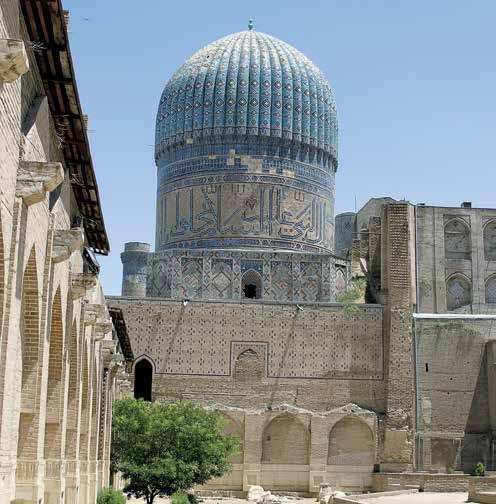
Shah-i-Zinda is a place of pilgrimage, so dress modestly and move calmly. The narrow lane between glazed tombs in every shade of blue is the strongest visual moment of the day; come towards evening, when low light wakes the mosaic. Bibi-Khanym shows another side of Timur: ambition that nearly brought down its own dome. Together they give a fuller portrait of the era.
What to do in the evening if you stay until dark?
The evening Registan is a different square: no daytime crowd, warm light on the tile. Even without the show it is worth returning simply to stand. How to continue is in our Samarkand in two days guide, and how to travel onward is covered in Samarkand to Bukhara.
Frequently asked questions about one day in Samarkand
Can you really see Samarkand in one day?
Yes, if you focus on the core: the Gur-e-Amir, Registan, Bibi-Khanym and Shah-i-Zinda sit close together, and walking between them fills a full daylight day. In a day you will understand the city but not reach the Ulugh Beg Observatory, Afrasiab or the modern districts — those need a second day.
In what order should you see Samarkand's sights?
Gur-e-Amir in the morning (soft light, few people), Registan at midday, then on foot through the Siab Bazaar to Bibi-Khanym and Shah-i-Zinda in the afternoon, with a return to the Registan after dark for the illumination. This order minimises walking and catches the best light at each site.
Do you need a guide for one day in Samarkand?
Not necessarily: all the main monuments are within walking distance and can be seen independently. A guide adds historical context that sharply changes how you read the Registan and Shah-i-Zinda. A middle path is a self-guided walk plus a little audio preparation beforehand.
How do you get to Samarkand for a day from Tashkent?
On the high-speed Afrosiyob train: about two hours each way, which leaves a full day in the city with an early departure. Tickets sell out, so book ahead at railway.uz. See our Tashkent to Samarkand guide for details.
What should you eat during a day in Samarkand?
Samarkand flatbread straight from the tandoor at the Siab Bazaar, and if possible Samarkand plov for lunch — it differs from the Tashkent style. The bazaar between the monuments is the natural place for a food pause.
Want to see Uzbekistan the way the people who live here see it?
Become a Kvazar Explorer →