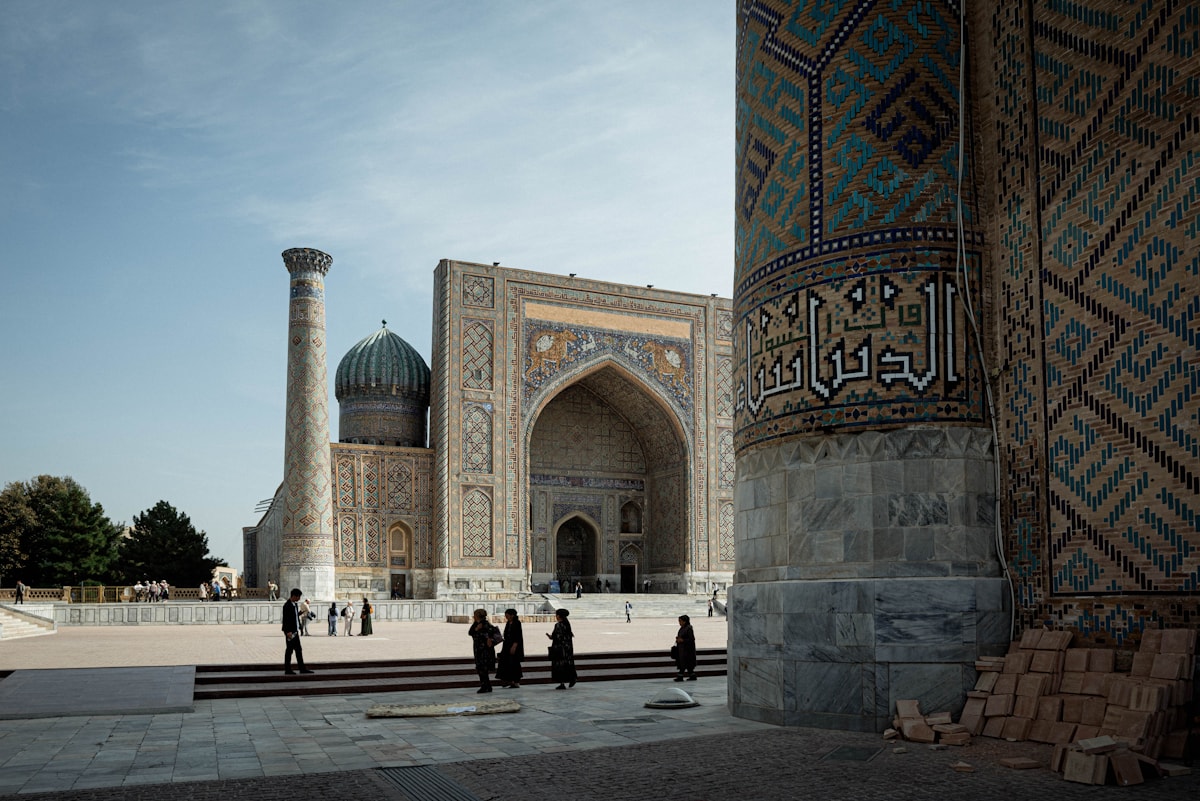
Samarkand in one day is a formal portrait. Samarkand in two days is an acquaintance. The second day does not "finish the list": it shifts the lens from "beautiful" to "here they measured the sky and made paper for half the Silk Road." This guide lays out both days by contrast — a dense core on the first and a dispersed, considered second — so the city has time to turn from a postcard into a place.
What does a second day in Samarkand give you?
In one day Samarkand presents itself as a postcard: great monuments packed into the centre. In two days it presents itself as an idea — a city that was a world centre of science, not only of architecture. The difference between those two trips is the point of a second day.
Build the two days on contrast. Day one is dense and ceremonial, across the core (its route is in our Samarkand in one day guide). Day two is dispersed: the observatory and Afrasiab to the north, crafts and quiet streets, time to sit in a teahouse without hurry. The second day is usually when people fall for the city.
How should you spend the first day?
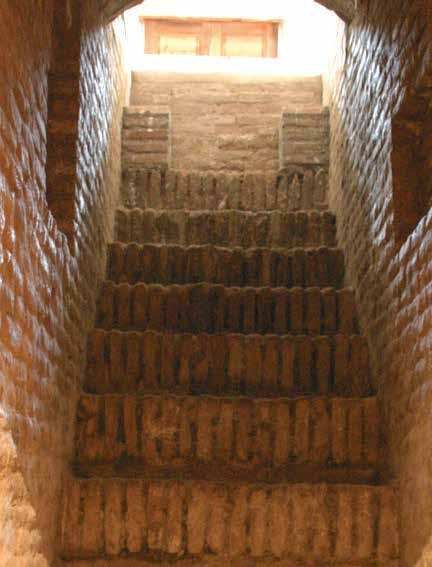
We have put the detailed first-day logic — order, light, pauses — in a separate guide to avoid repeating it. One thing matters here: do not stretch the first day onto secondary sights. Leave them for tomorrow, or both days become a race.
Is the Ulugh Beg Observatory worth the trip?
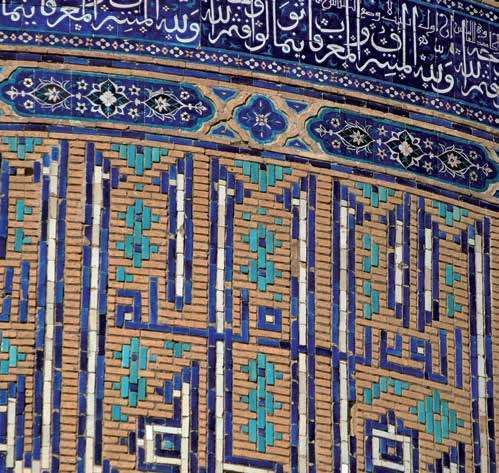
Ulugh Beg was Timur's grandson who chose science over conquest and compiled a star catalogue used in Europe centuries later. The surviving arc of the sextant, sunk into the ground, is not Samarkand's most spectacular object but its most eloquent: here they measured the sky. After a ceremonial first day, the observatory shifts the lens from "beautiful" to "people thought here."
The Registan shows how Samarkand looked. The Ulugh Beg Observatory shows what it thought with. Without the second, the city is only half understood.
What is there to see at Afrasiab and nearby?
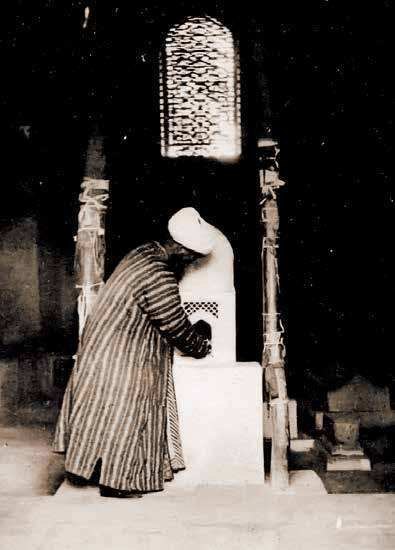
Afrasiab gives a depth of time the ceremonial centre lacks: beneath the grassy hills lies a city fifteen hundred years older than Timur. The Sogdian frescoes in the museum are the main reason to come — they show envoys from different lands, direct proof that Samarkand was a crossroads of civilisations long before its golden age.
Where can you see living craft — Konigil and paper?
Samarkand paper was a Silk Road commodity: the paper-making technology travelled west from here. At Konigil it is made by hand, by water mill, without electricity — and it is worth watching not as an attraction but as a living link to the very civilisation the central domes proclaim. Other craft sites across the country are touched on in our crafts of Uzbekistan guide.
How to end the second day?
Samarkand plov for dinner is itself a reason to stay: it differs from the Tashkent style in preparation and serving. After two days, do not chase "one more sight" — let the city settle. Where to go next is covered in Samarkand to Bukhara, and how to fit both cities into a trip is in the 7-day itinerary.
Frequently asked questions about two days in Samarkand
Are two days enough for Samarkand?
Two days are enough to see both the core and the second layer of the city. Day one is the Registan, Gur-e-Amir, Bibi-Khanym and Shah-i-Zinda on foot; day two is the Ulugh Beg Observatory, Afrasiab with its Sogdian frescoes, the Daniel mausoleum and the Konigil paper workshop. It is a comfortable pace without a rush.
What to see on the second day in Samarkand?
The Ulugh Beg Observatory (the surviving sextant and museum), the Afrasiab settlement and museum with 7th-century frescoes, the mausoleum of the Prophet Daniel, and the silk-paper workshop at Konigil. The second day is spread across the outskirts, so a taxi between sites is convenient.
Do you need a car or taxi for the second day?
It helps: the second-day sites (observatory, Afrasiab, Konigil) are dispersed and outside the walkable centre. City taxi apps work and are inexpensive. The first day, by contrast, is entirely on foot.
Is the Ulugh Beg Observatory worth a separate trip?
Yes, if you care why Samarkand is called great and not only beautiful. The underground sextant survives — the instrument used to compile one of the most accurate star catalogues of the medieval world. It is the intellectual counterpoint to the ceremonial architecture of the centre.
What should you eat over two days?
Samarkand plov (different from the Tashkent style), Samarkand flatbread from the Siab Bazaar, and local dried fruit. The second evening is a good time for an unhurried plov dinner, once the main programme is behind you.
Want to see Uzbekistan the way the people who live here see it?
Become a Kvazar Explorer →