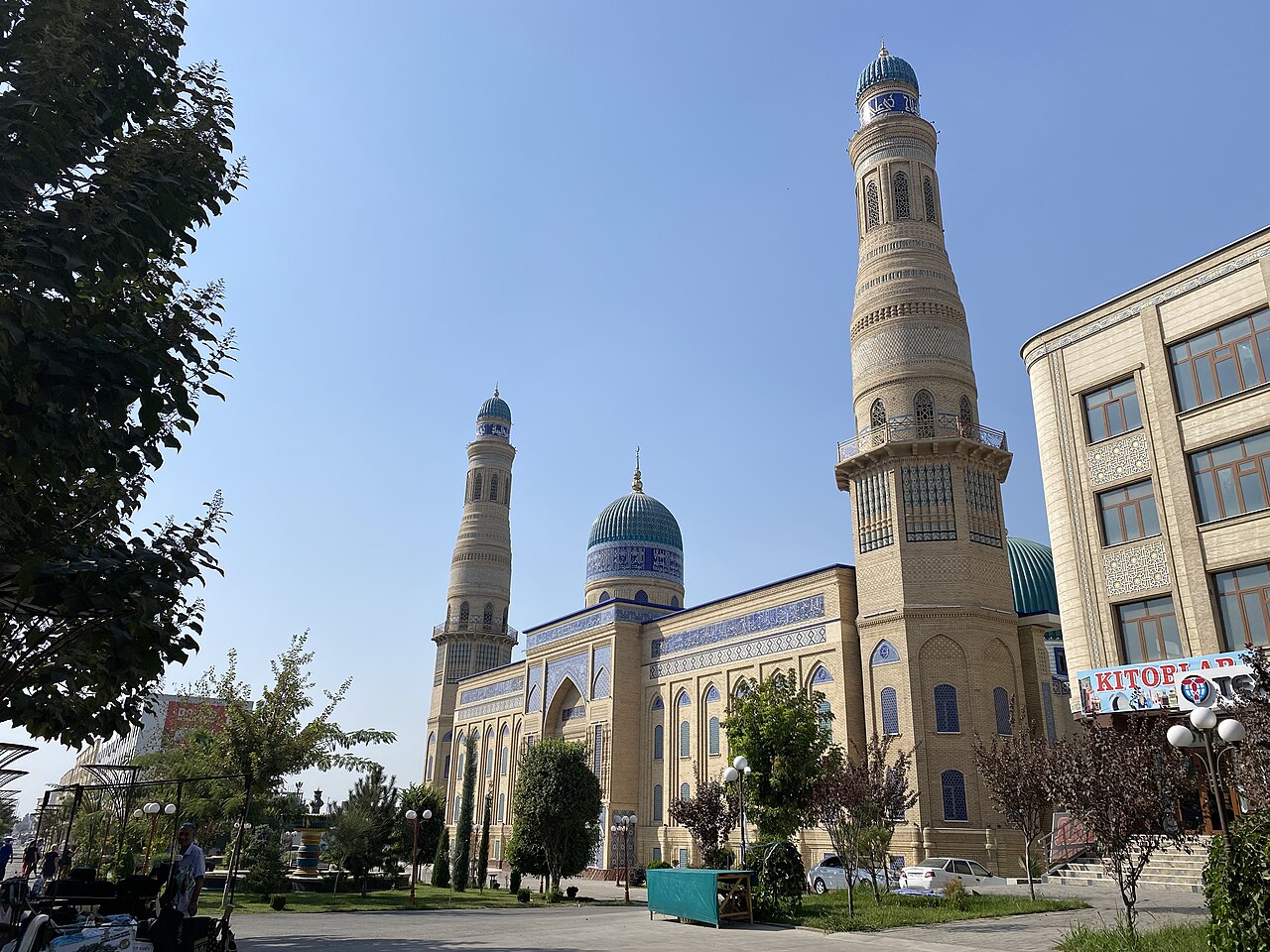
Andijan is one of the oldest cities of the Ferghana Valley, but it entered history above all as the birthplace of Zahir-ud-din Muhammad Babur: poet, commander and founder of the Mughal Empire. The chief place of his memory is the memorial park on the Bagh-i-Shamol hill, with a house-museum. It's not just a sight but a moving monument to the fate of a man who conquered India yet longed all his life for his native valley and never returned.
What is the Babur memorial park?
The Babur park isn't an ancient monument but a modern memorial, an expression of national memory of a great compatriot. For Andijan, the figure of Babur is a matter of special pride, so the place is made with respect and on a grand scale: shaded alleys, views over the valley, a museum, and a symbolic "particle" of his remains, returned to his homeland after centuries.
Who was Babur?
Babur's fate is the story of an exile who became an emperor. Deprived of his native domain, he didn't break but built a new state far from home. And in his writings he recalled his native Ferghana Valley with aching warmth. We tell the fuller story of his life and legacy in a separate piece — and the park in Andijan shows that story from its most human, nostalgic side.
What's special about the Bagh-i-Shamol hill?
The name Bagh-i-Shamol can be translated as "garden of winds" — on the rise a light breeze always blows, with views over the city and the valley. A walk through the park on this hill lets you feel the bond with the land that Babur wrote of: the view he saw before parting from his homeland is, in many ways, preserved to this day.
What is the earth kept in the park?
This gesture is the heart of the whole memorial. It turns the park from an ordinary rest area into a place of strong emotional charge: the homeland that Babur lost while young, and to which he could never return alive, after centuries received at least a handful of earth from his final resting place. For many visitors, this is the most memorable moment.
He conquered India but longed for his native valley — and came home only as a handful of earth, centuries later.
What is shown in the house-museum?
The museum helps you see Babur not only as a warrior but as one of the major figures of culture — a poet, memoirist, and progenitor of a brilliant literary dynasty. The exhibition spans the legacy of the Baburids right up to the era of the Mughals in India, linking the small Andijan hill with the history of a vast empire on the other side of Asia.
How do you get to the park?
It makes sense to combine the Babur park with Andijan's other sights — above all the grand Jami complex in the city center. And all of Andijan fits conveniently into a route through the Ferghana Valley together with Ferghana, Margilan and Kokand. For anyone interested in the history of Babur and the Timurids, this place is an essential stop.
Frequently asked questions about the Babur park
Is Babur buried in this park?
No. Babur died in Agra and, by his will, is buried in Kabul. The Andijan park holds only symbolic earth brought from Agra and Kabul.
Who was Babur?
Zahir-ud-din Muhammad Babur (1483–1530) — a native of the Andijan region, a descendant of the Timurids, a poet and the founder of the Mughal Empire in India. Author of the memoir the "Babur-nama."
Why is the memorial on the Bagh-i-Shamol hill specifically?
Because, by Babur's own words in the "Babur-nama," this was his favorite garden for walks, and by tradition it's where he came to say farewell before leaving his native city.
When was the park opened?
The memorial park was opened in 1993, when symbolic earth from the places connected with Babur was brought to the hill.
What is in the museum?
The house-museum holds rare exhibits on the life of Babur and the Baburids: literary works, manuscripts, miniatures and documents, including works by his descendants.
How do you get there?
The park is about seven kilometers from the center of Andijan, easiest by taxi; a lift runs to the top of the hill. Andijan itself is reached from Ferghana or Tashkent.
Want to see Uzbekistan the way the people who live here see it?
Become a Kvazar Explorer →