The Ferghana Valley is the jewel and flowering garden of Uzbekistan, the most fertile and densely populated part of the country. And this valley has a convenient "capital" — the city of Ferghana. It looks nothing like Samarkand or Bukhara: there are no thousand-year-old madrasas or blue domes here, but there are green avenues, parks and the special atmosphere of a quiet, well-kept town. Ferghana is interesting both in itself and as the ideal base for a journey through the valley with its ancient neighbors — Kokand, Margilan and Andijan.
What is Ferghana?
Unlike its ancient neighbors, Ferghana can't boast medieval monuments. Its value is different: it's a comfortable, green and convenient city that serves as the natural center and starting point for getting to know the whole valley. The hotels, transport and infrastructure are concentrated here, lacking in the older but less tourist-ready towns.
Why is Ferghana so young?
Ferghana is called the "general's city" precisely because of its origin: it was built as a governor's center from scratch, on a regular plan. While Kokand, Margilan and Andijan were already ancient cities with centuries of history, Ferghana arose as a modern administrative and commercial hub. That explains its unlikeness to the rest of Uzbekistan.
How is Ferghana unlike other cities?
Ferghana's sights fall roughly into two groups: old buildings in the colonial style and modern structures in the Eastern spirit. Such a combination is a direct consequence of the "general's city" history. For a traveler who's already seen plenty of classic Central Asian architecture, Ferghana becomes a curious change of scenery.
Why is Ferghana the best base for the valley?
This logistics makes the valley accessible even in a couple of days: based in Ferghana, you can take a day trip to silk-weaving Margilan, and another to Kokand with the Khudayar Khan palace. The valley is a journey through many villages, gardens and kishlaks, and a convenient "headquarters" in Ferghana greatly simplifies the route. It's in this role that travelers value the city.
People come to Ferghana not for antiquities but for convenience: it's the key that opens the whole valley.
What is there to see in Ferghana itself?
Don't expect monumental monuments from Ferghana — its charm is in the atmosphere: greenery, calm, the mix of eras and styles. The city is good for an unhurried walk and a breather between busy trips around the valley. And gastronomically, Ferghana and the whole valley are a pleasure of their own, for this is one of the most fertile lands in Central Asia.
How do you get to Ferghana?
It's most convenient to treat Ferghana as a base: arrive, settle in, and explore the valley radially. Such a route — Ferghana plus Margilan, Kokand and Andijan — gives a complete picture of one of the most distinctive regions of Uzbekistan, noticeably different from the classic Samarkand–Bukhara–Khiva line.
Frequently asked questions about Ferghana
How old is the city of Ferghana?
Less than a century and a half: the city was founded in 1876. For Uzbekistan it's a very young city compared to ancient Kokand, Margilan and Andijan.
Why is Ferghana unlike other cities of Uzbekistan?
It was built from scratch as an administrative center on a regular plan: straight wide streets, green avenues and colonial-style buildings instead of narrow Eastern lanes.
What does the name "Ferghana" mean?
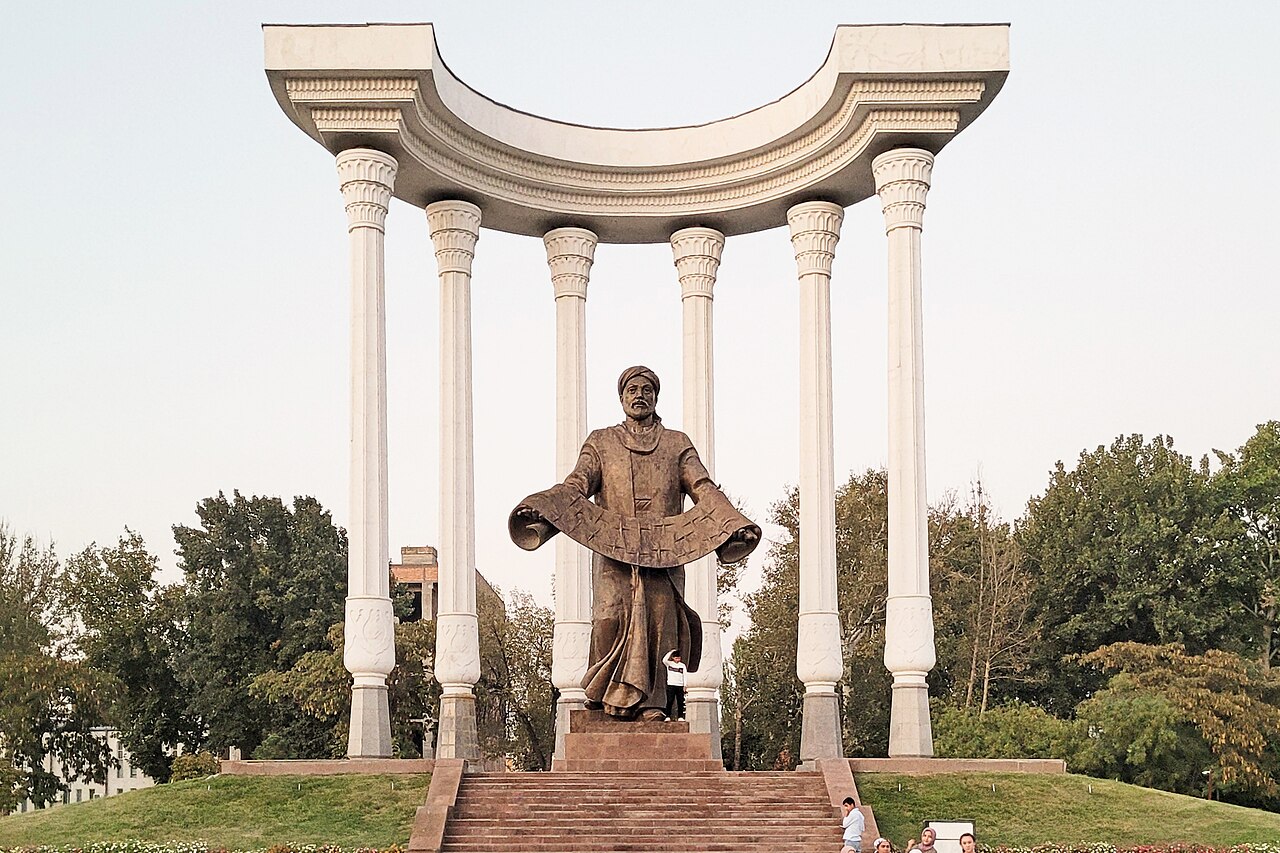
The city is named after the Ferghana Valley, whose name is linked to the medieval scholar al-Farghani. The city's earlier names were New Margelan and Skobelev.
Is Ferghana worth visiting?
Yes, above all as a convenient base for trips around the valley. The city itself is calm and green, but without monumental ancient monuments.
What can you see in the valley from Ferghana?
Margilan with its silk factory, Kokand with the Khudayar Khan palace, and Andijan — the birthplace of Babur. All are within day trips.
How do you get to Ferghana?
From Tashkent by plane, train or the road over the Kamchik pass. The city has an airport and rail service.
Want to see in Ferghana not a "city without sights" but the gateway to the country's richest valley?
Become a Kvazar Explorer →