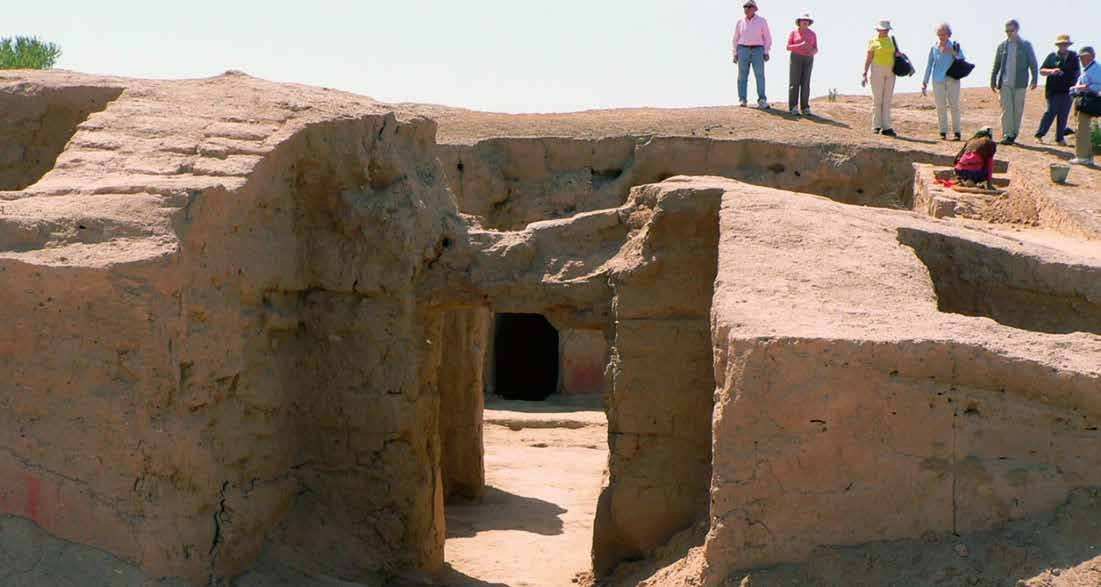
Termez is the southernmost city of Uzbekistan, standing on the bank of the Amu Darya, along which runs the border with Afghanistan. Here, at the crossroads of ancient routes, Buddhism flourished in the first centuries CE — long before Islam came to these lands. The surviving monasteries of Fayaz-Tepa and Kara-Tepa are a rare testimony for Central Asia to that era and one of the most unexpected pages in Uzbekistan's history.
Why were there Buddhist monasteries in Uzbekistan?
This overturns the familiar idea of Uzbekistan. Long before mosques and madrasas, this land was multi-faith: different beliefs coexisted side by side, and Buddhism was one of the region's leading religions. Termez is vivid proof that Central Asia was always a crossroads of cultures, where East met the even farther East.
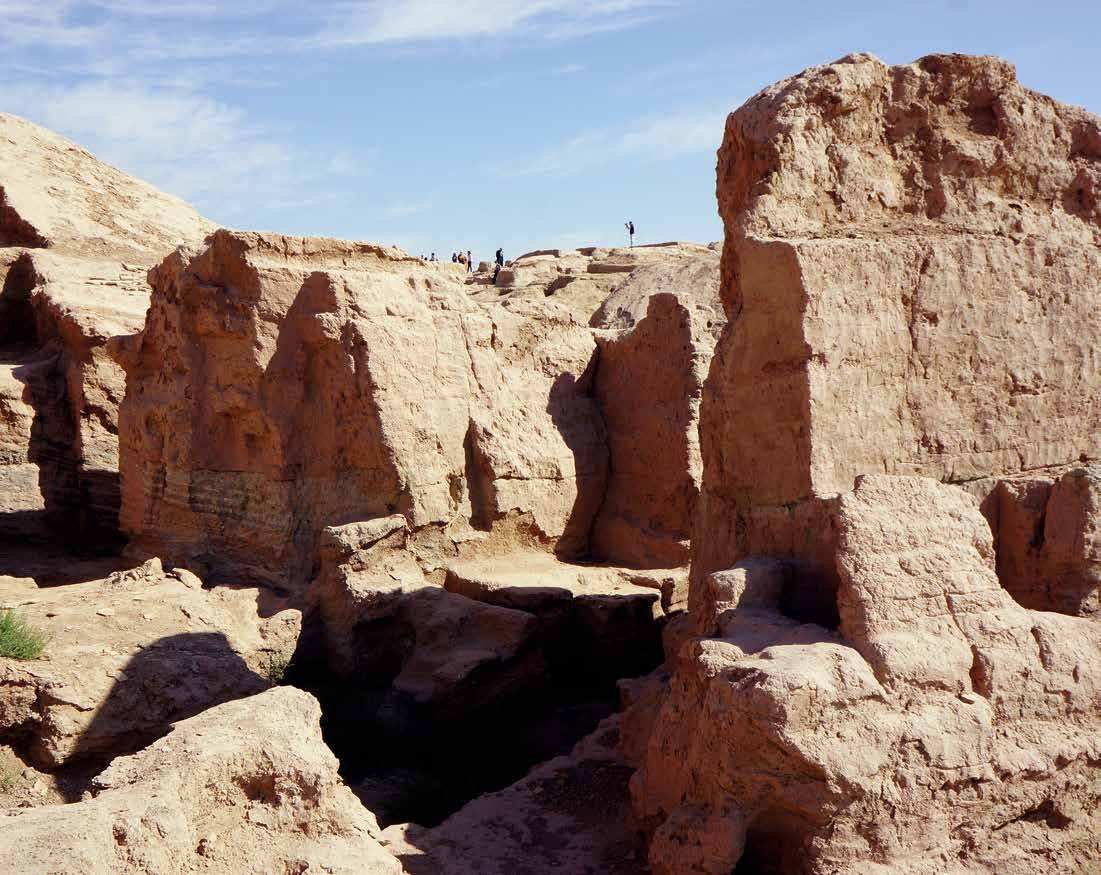
What is Fayaz-Tepa famous for?
Coins of the Kushan kings found here helped date the monument: its existence is placed roughly between the 1st century BCE and the 6th century CE. Among the finds are images of the Buddha, figures of donors in Kushan dress, and shards with inscriptions in Brahmi and Bactrian. Of particular interest is the stupa: inside a large structure, an earlier small stupa of the 1st century BCE was "walled up."
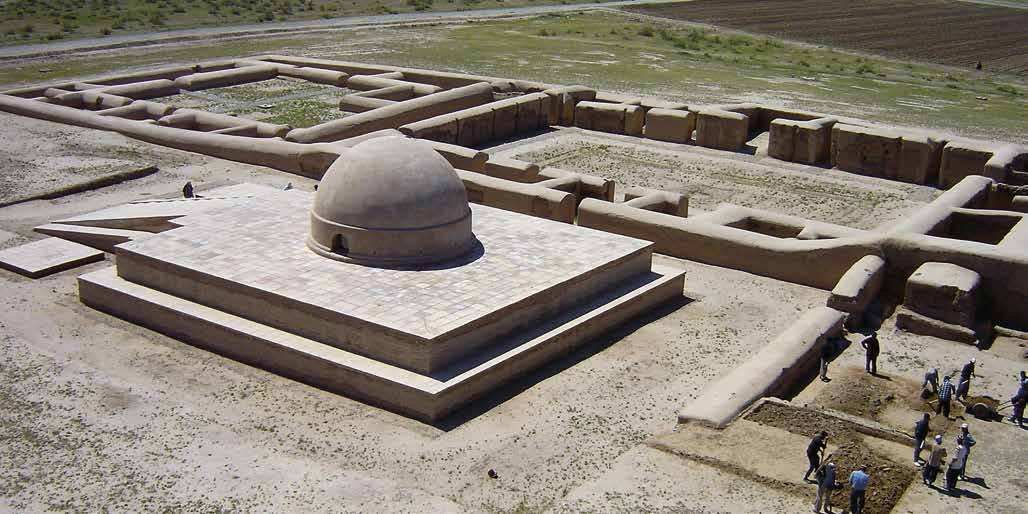
What is Kara-Tepa?
The combination of caves and surface buildings makes Kara-Tepa especially interesting: the monks used the coolness of the underground cells for solitary practice, escaping the hot climate. Excavations turned up staircases that led to vanished upper floors, as well as fragments of paintings and inscriptions. Kara-Tepa and neighboring Fayaz-Tepa together form a single Buddhist landscape of ancient Termez.
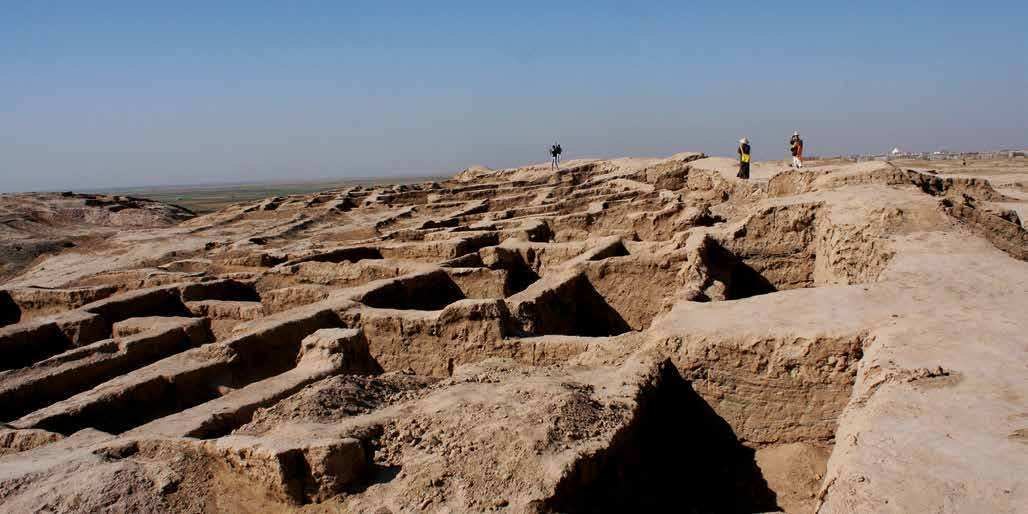
What was the Kushan Empire?
It was under the Kushans that Buddhist art flourished, fusing Indian, Hellenistic and local traditions. The Termez monuments are part of this cultural synthesis: in their sculpture and paintings you can see the mingling of the artistic languages of different peoples who met on the trade routes. The Kushan era explains why Buddhist monasteries ended up here, in the south of present-day Uzbekistan.
A thousand years before the blue domes, here by the Amu Darya, people prayed to the Buddha. Termez remembers both eras.
Why did Buddhism vanish here?
So one religious era replaced another, but the traces of the past didn't vanish without a trace. Curiously, the later Sufi complex of Al-Hakim at-Termizi was, by researchers' accounts, built on the site of a ruined Buddhist temple — a vivid symbol of the continuity of holy places. Termez keeps the memory of all its eras at once.
How do you visit the Buddhist monuments?
Some of the finds from Fayaz-Tepa and Kara-Tepa are kept in museums — in Termez itself and in Tashkent — so it makes sense to complement an acquaintance with the Buddhist heritage by visiting the Termez Archaeological Museum. A trip here is for those interested not in the ceremonial but in the deep history of Uzbekistan, reaching back two thousand years.
Frequently asked questions about Buddhist Termez
Were there Buddhists in Uzbekistan?
Yes. In the first centuries CE the south of present-day Uzbekistan was part of the Kushan Empire, and Buddhism was one of the region's leading religions. Termez was a major Buddhist center on the Great Silk Road.
What is Fayaz-Tepa?
A Buddhist temple complex on the edge of Old Termez with a temple, a monastery and a stupa. Discovered in 1963, it's known for its paintings and sculptures of the Kushan era.
How is Kara-Tepa different?
It's a monastery on three hills, combining surface clay structures and cave cells carved into the rock. A Buddhist monastic community lived here.
How old are these monuments?
They're placed roughly between the 1st century BCE and the 3rd–4th (some finds, the 6th) century CE — about two thousand years old.
Why did Buddhism vanish here?
With the spread of Islam, Buddhist culture gradually faded, the temples were abandoned, and over time the complexes ended up underground, to be rediscovered by archaeologists in the 20th century.
Can you visit these places freely?
The monuments are in the border zone by the Amu Darya, so a permit or a guide may be required. The conditions of visiting are worth checking in advance.
Want to see Uzbekistan the way the people who live here see it?
Become a Kvazar Explorer →