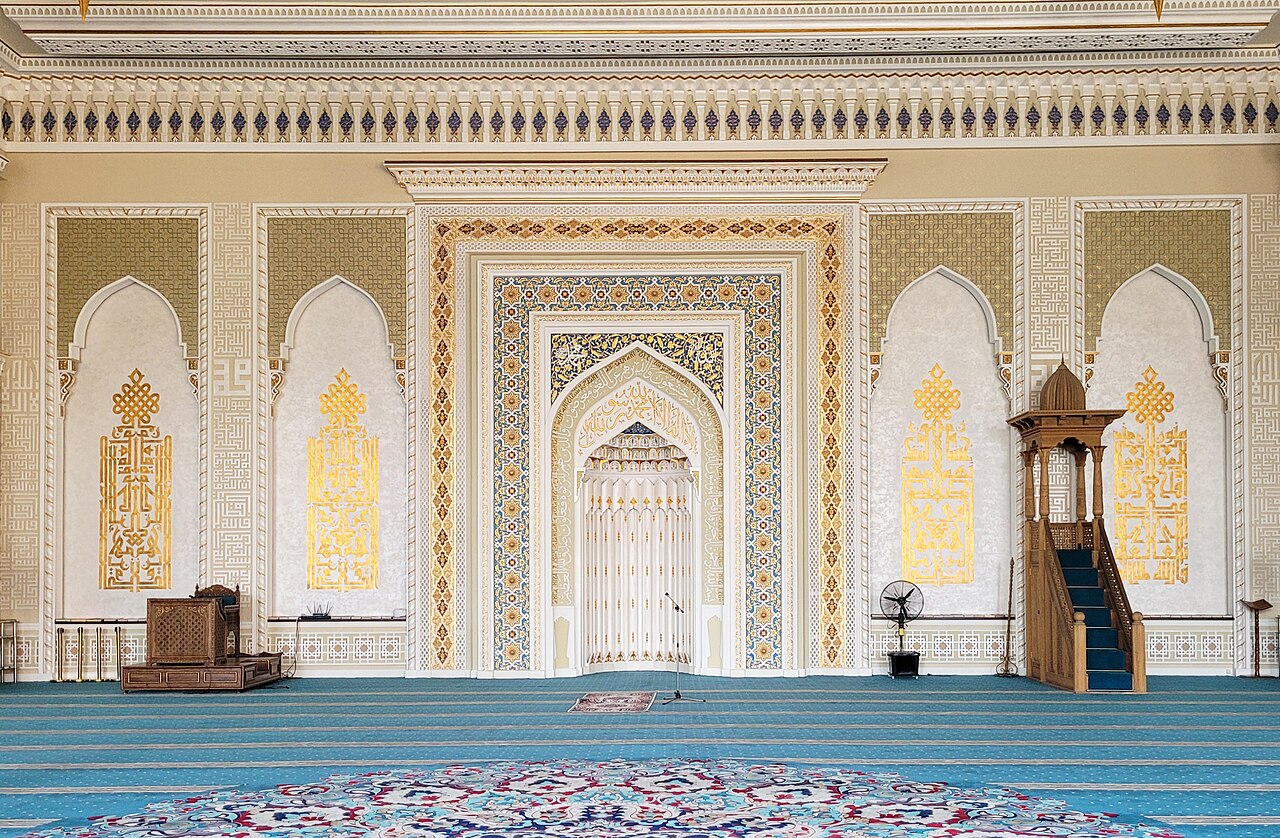
Tashkent in three days is a full portrait rare for a capital: an ancient Islamic core, a Soviet 20th-century showcase, and the Tian Shan mountains in one trip. The first two days reveal the city itself by contrast of eras. The third leads beyond it — to where Tashkent's own residents go on weekends: Chimgan, Charvak, Amirsoy. This guide focuses on the out-of-town day that turns a city visit into a fuller acquaintance with the region, and briefly links it to the first two.
What does a third day in Tashkent give you?
Two days let you understand Tashkent as a city. The third explains why it is pleasant to live here at all: an hour and a half to two hours from the dusty capital, mountains begin, with snow-capped peaks, a turquoise reservoir and alpine meadows. For locals, Chimgan and Charvak are the weekend escape. A third day in Tashkent is a change of rhythm from urban to natural.
The logic of three days is simple: day one the old town and Islam, day two the Soviet capital, day three the mountains. We covered the first two in detail in our Tashkent in two days guide; here we focus on the out-of-town day that defines a three-day trip.
What do the first two days look like?
These two days cover the city itself by contrast of eras — the ancient Islamic core and the Soviet showcase after the 1966 earthquake. The detailed route is in a separate guide to avoid repetition. One thing matters here: do not stretch the city programme onto the third day — the mountains need a whole day and an early start.
What are Chimgan, Charvak and Amirsoy?
The three points form one logical circuit: a cable-car ride for the panoramas, photo pauses above Charvak's turquoise water, a walk through alpine meadows. In winter Amirsoy is skiing and snow, in summer Charvak is beaches and water, in the shoulder seasons the slopes are green and the air clean. The route is flexible: the driver changes the order by weather and season.
Samarkand and Bukhara are about stone and time. Tashkent's third day is about altitude, water and air — what the city's own residents drive out for.
How do you reach the mountains, and how much time to allow?
The most practical option is to arrange a driver for the whole day: they know the order of the sites by season and will wait at each point. Take cash — in the mountains and at the cable cars, cards are not accepted everywhere. Leave in the morning to return to the city by evening; if there is a train to Samarkand the next day, allow a buffer.
What replaces the mountains if it is off-season or you have no car?
The mountains are the best but not the only third-day scenario. In the heat of July or the depth of winter, the city museums and modern spaces can be more comfortable. And if you are drawn further and have spare days, Tashkent is a logical launch point into the country — the train to Samarkand takes about two hours, see Tashkent to Samarkand.
How to end three days in Tashkent?
Three-day Tashkent is a full portrait of the place: the Islamic core, the Soviet showcase and the Tian Shan mountains. Most travellers move on from here to Samarkand and Bukhara; how exactly is in our Tashkent to Samarkand guide, and how to fit the whole country is in the 7-day itinerary.
Frequently asked questions about three days in Tashkent
Is three days too much for Tashkent?
No, if the third day goes to the mountains. Two days cover the city itself (old Tashkent and the Soviet capital), and the third adds the nature of the western Tian Shan — Chimgan, Charvak and Amirsoy. It changes the rhythm of the trip and shows why locals drive out of the city. If the mountains do not interest you, two days are enough.
What to see on the third day in Tashkent?
A mountain trip into the Ugam-Chatkal National Park: Chimgan with its chairlift, the turquoise Charvak Reservoir and the modern Amirsoy resort with its cable car. Usually the three points are combined into one circuit by taxi or with a driver, returning to the city by evening.
How do you reach Chimgan and Charvak from Tashkent?
About 80 km and one and a half to two hours each way. There is almost no public transport — people go by Yandex Go taxi, with a hired driver, or on a day tour combining Chimgan, Charvak and Amirsoy. It is a full-day trip with an early start; cable cars are paid on site, so bring cash.
When is the best time to go to the mountains near Tashkent?
It depends on your goal: April–June for green slopes and fresh air, July–September for the warm water of Charvak and beaches, December–February for snow and skiing at Amirsoy. At peak weekends the sites can be crowded, as they are popular with locals too.
What to do on the third day if it is off-season for the mountains?
Keep the day in the city: more museums, modern Tashkent City with its park and fountains, the TV tower viewpoint, or a trip to Charvak just for the views without the lifts. In strong heat or cold, city spaces can be more comfortable than a mountain trip.
Want to see Uzbekistan the way the people who live here see it?
Become a Kvazar Explorer →