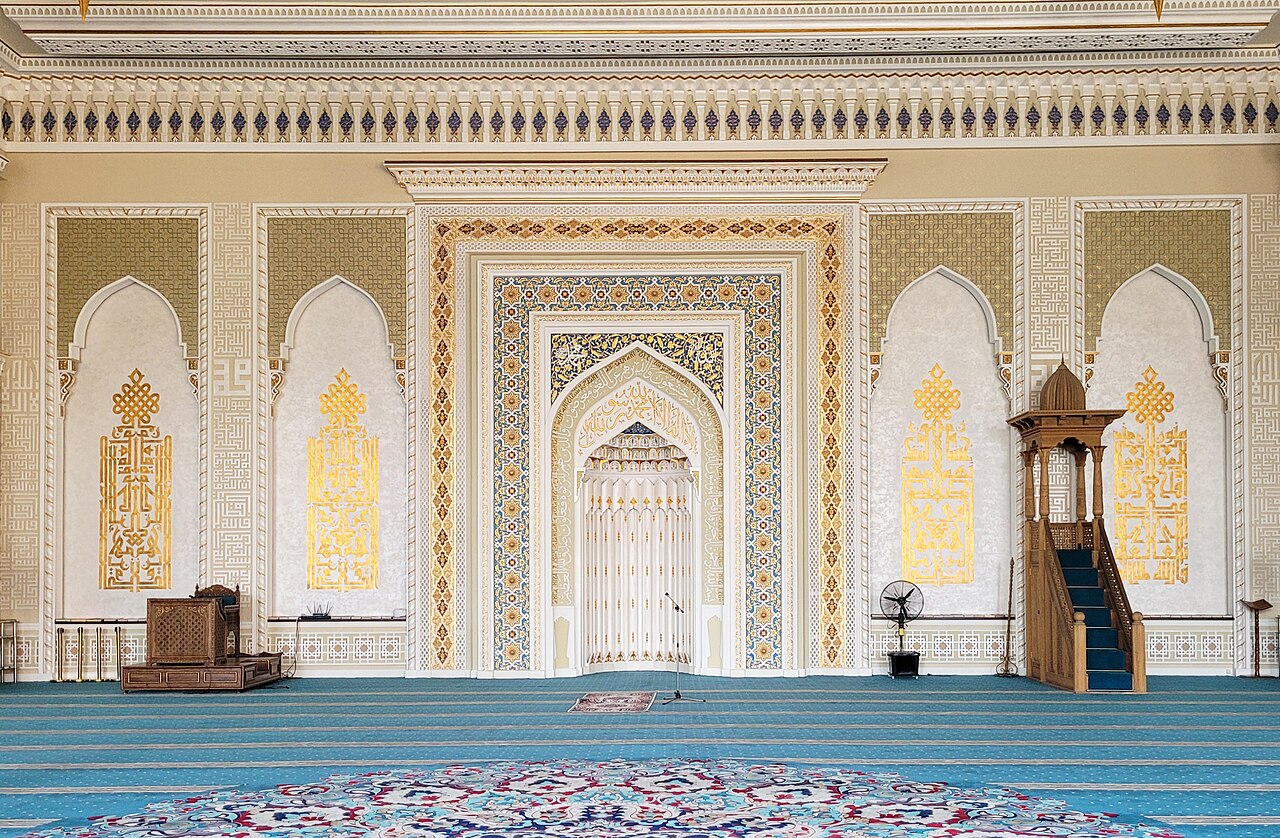
Tashkent in a day is a transit with a tick. Tashkent in two days is an acquaintance with a capital that has a face of its own. The second day does not finish a list of sights but switches the lens: from the old town and bazaar to the newest Center of Islamic Civilization and the ceremonial Soviet centre. This guide lays out both days by a contrast of eras, so the city stops being merely a point of arrival.
What does a second day in Tashkent give you?
To almost everyone Tashkent feels like a mere gateway to Samarkand and Bukhara. One day cements that image: you land, glance at the bazaar and the metro, and move on. A second day breaks the template — it shows that the capital is built from three mismatched layers (ancient Shash, Soviet modernism, the new Uzbekistan), and is most interesting exactly where they meet.
Build the two days on a contrast of eras. The first is the old town and bazaar (its logic is in our Tashkent in one day guide). The second is the newest and the Soviet: the Center of Islamic Civilization beside Hazrati Imam in the morning, Amir Timur Square with its museums by day, parks and fountains in the evening. The metro runs as the axis of movement and is a sight in itself.
How should you spend the first day?
We have put the detailed first-day logic in a separate guide. One thing matters here: do not try to add the Center of Islamic Civilization to the first day — it is vast (allow 3–4 hours) and logically opens the second day, when you have time for it.
Is the Center of Islamic Civilization worth visiting?
The centre is arranged as a journey through the golden age of science: interactive galleries present the work of al-Khwarizmi, Ibn Sina and other scholars — world figures born on the lands of modern Uzbekistan. Entry is usually by timed slot and often as part of a roughly two-hour guided tour; the ticket allows no re-entry, and you cannot bring your own water — it is bought on site. It is open late, and the illuminated dome in the evening is a sight of its own. A full breakdown is in our Center of Islamic Civilization guide.
Hazrati Imam is living faith, centuries old. The Center of Islamic Civilization beside it is an attempt to gather the whole intellectual history of the region into one building. Standing between them, you understand Tashkent better than from any bazaar.
What to see in Soviet Tashkent?
After the old town, the Soviet centre reads as a change of civilisation: avenues instead of mahallas, concrete and marble instead of clay. The 1966 earthquake almost erased old Tashkent, and the present centre is largely an answer to that catastrophe, rebuilt from scratch. The Museum of Applied Arts is the best small stop: it explains the crafts you then recognise across the country.
Why is the Tashkent metro a sight in itself?
The metro is Soviet Tashkent at its best: grandeur without officialdom, art in a public space. Make a mini-route around two or three landmark stations between the second day's errands — a free museum you are travelling through anyway. Which stations deserve a dedicated stop is in our Tashkent metro guide.
How to end the second day?
The contrast is the point of the two days: ancient Shash, Soviet modernism and a glassy new city in one route. If Samarkand is next, the convenient Afrosiyob leaves on the morning of the third day. What to add if you stay another day is in our Tashkent in three days guide, and how to fit the capital into the wider plan is in the 7-day itinerary.
Frequently asked questions about two days in Tashkent
Are two days enough for Tashkent?
Two days are enough to see all three layers of the capital. Day one is the old town (Hazrati Imam, Chorsu, the metro, plov); day two is the newest and Soviet Tashkent (the Center of Islamic Civilization, Amir Timur Square, museums, parks). It is a comfortable pace in which the vast Center of Islamic Civilization gets its 3–4 hours.
What to see on the second day in Tashkent?
The Center of Islamic Civilization beside Hazrati Imam (allow 3–4 hours), Amir Timur Square with the Temurids Museum, the Museum of Applied Arts or of the History of Uzbekistan, the striking metro stations and the evening parks with fountains. The second day is built around the contrast of the new and Soviet city.
Should you book tickets for the Center of Islamic Civilization in advance?
It is advisable: entry is by timed slot, often as part of a roughly two-hour guided tour, and at peak hours there are many visitors. A ticket is valid for one person with no re-entry. You cannot bring your own water — it is bought inside. Check the format and timing locally or with a tour operator.
Can you combine the Center of Islamic Civilization and Hazrati Imam?
Yes, and it is logical: they stand side by side in the old town and together give the fullest 'Islamic' layer of Tashkent — the living shrine of Hazrati Imam and the museum-form intellectual history in the Center. Allow most of a morning and day for both together.
Is it worth riding the metro separately?
Worth it if you care about architecture: the Tashkent metro is a set of underground palaces with marble, chandeliers and themes of space and poetry. On the second day it is convenient to combine the useful and the pleasant — travel by metro between sites and step out at two or three of the most striking stations.
Want to see Uzbekistan the way the people who live here see it?
Become a Kvazar Explorer →