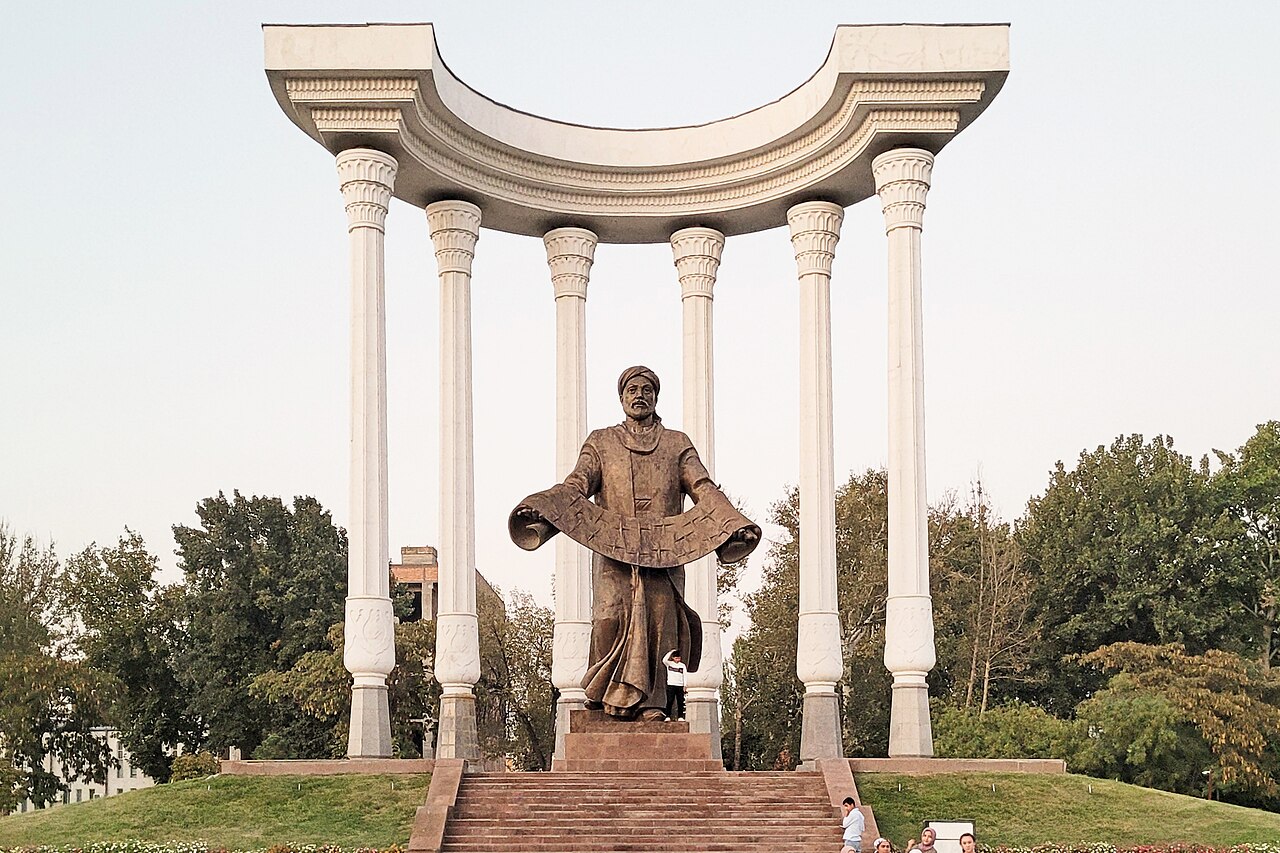
Ferghana confuses those who expect ancient madrasas and blue domes from an Uzbek city. There are none here — and that's not an oversight but the essence of the city: Ferghana is young, not yet a century and a half old, and was built on a completely different logic from Samarkand or Bukhara. Once you understand that, you stop looking for "antiquity" in it and start valuing it for what it's actually good at — its role as the convenient gateway to the country's most fertile valley. Let's look closer.
How is Ferghana different from other cities?
It's the same logic that sets Tashkent apart from the museum-cities: what you should look at isn't "antiquity" but the character of the place. Ferghana is a calm, green city with a center pleasant for walking, and it's more honest to see it as a comfortable base rather than a destination in itself.
Samarkand was built over centuries, Ferghana over decades. It's not a museum-city but a crossroads-city: from here it's convenient to travel to everything else.
Why is Ferghana under 150 years old?
Hence the appearance: Ferghana was designed from the start as a regular city with straight streets and green boulevards, rather than growing up over centuries around bazaars and mosques. The valley itself is ancient — this is its young administrative "newcomer." The name goes back to the Iranian root "marg" — "meadow, glade," which precisely describes the fertile green land.
What is there to see in Ferghana itself?
Don't expect a "wow effect" of ancient ensembles from Ferghana — its pleasure is different: unhurried walks through the green colonial center, cafes, a calm rhythm. And everything brightest in the region is in the neighboring cities, all a stone's throw away.
Where do you go from Ferghana?
The typical scenario: stay in Ferghana and make radial trips — a day for Margilan, a day for Kokand and Rishtan, a day for Andijan. For the region's cuisine — Ferghana plov, devzira rice, Kokand halva — see the piece on the food of the Ferghana Valley. Practical topics (how to enter the valley, transport, season) are in the Atlas section.
Frequently asked questions about Ferghana
Is Ferghana worth visiting?
Yes — but above all as a convenient base for the whole Ferghana Valley. The city itself has few ancient sights, but from here it's easy to reach Margilan (silk), Rishtan (ceramics), Kokand (palace) and Andijan. Ferghana itself is a calm, green city for unhurried walks.
Why are there no ancient monuments in Ferghana?
Because the city is young: it was founded by the Russians only in 1876–1877 as a military-administrative center. It was built on a regular plan with wide streets and boulevards, rather than growing over centuries like Samarkand or Bukhara.
What was Ferghana called before?
At its founding — New Margelan (after neighboring Margilan); in 1907 renamed Skobelev after General Skobelev; and in 1924 it received its present name, Ferghana, after the valley.
What is there to see around Ferghana?
Margilan with its silk workshops (12–15 km), Rishtan with its ceramic workshops, Kokand with the Khudayar Khan palace, and Andijan — the birthplace of Babur. Ferghana is ideal as a starting point for these trips.
Want to see in Ferghana not a "city without sights" but the gateway to the country's richest valley?
Become a Kvazar Explorer →