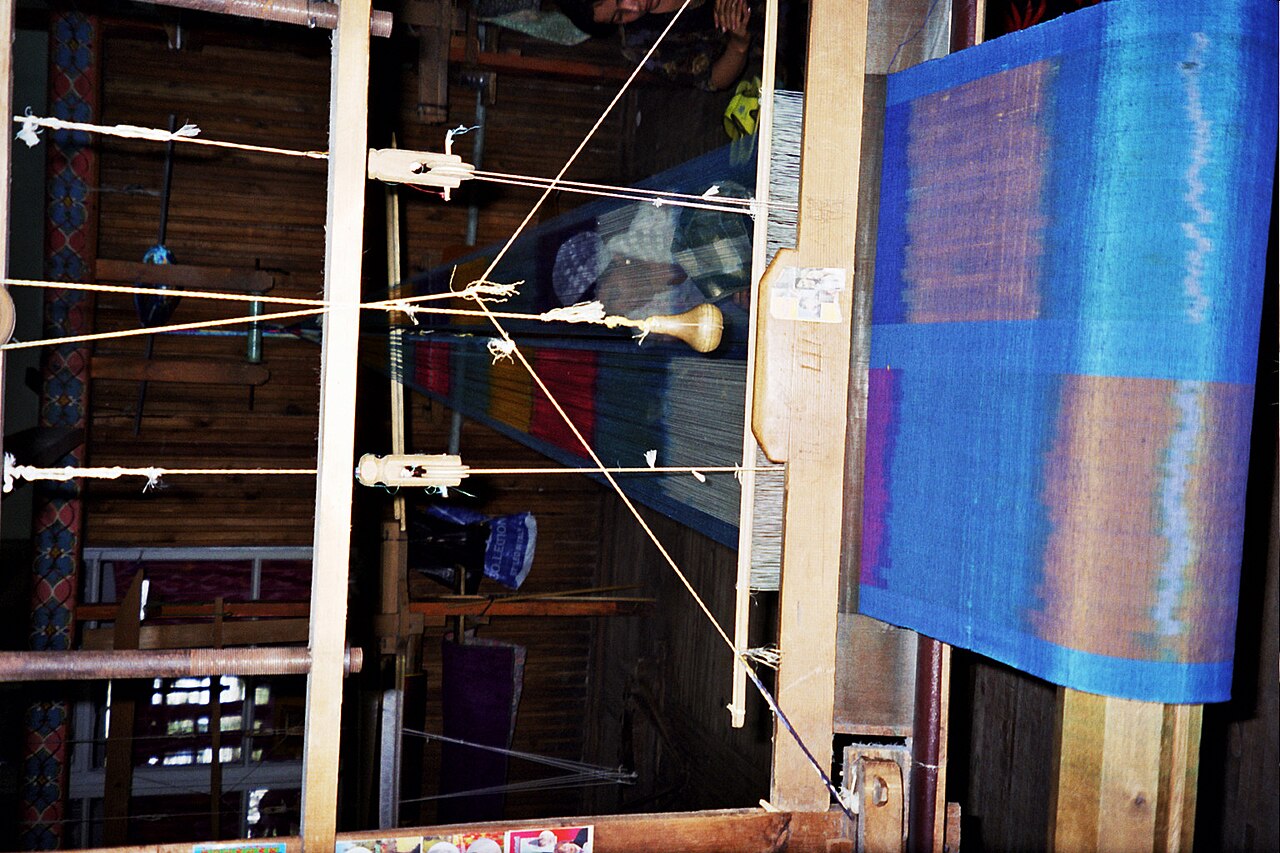
Margilan is one of the oldest cities of the Ferghana Valley and the main center of silk-weaving in Uzbekistan. People come here not for mosques and mausoleums but for the craft: to see with their own eyes the whole path of silk — from the cocoon of the silkworm to a glowing length of khan-atlas. This is a "living" workshop-city, and it should be read through the hands of its masters, not through a list of sights. Let's look at what to see here.
How is Margilan different from other cities?
This craft identity is so strong that neighboring Ferghana, when founded in the 19th century, was given the name "New Margelan" — after the old silk city next door. So Margilan is the "original" that gave its name to a whole region. We also write about the symbolism of silk and pattern in Uzbek culture in our piece on ornament.
Samarkand and Bukhara show what the Silk Road was traveled for — stone and domes. Margilan shows the silk itself.
What are ikat, khan-atlas and adras?
The blurriness of the design isn't a flaw but the signature of the ikat technique: the dye lands on the threads with a slight shift, and the outline comes out soft, "breathing." Uzbek khan-atlas, with its bright waves of color, is one of the country's most recognizable images, and the home of these fabrics is Margilan. You can buy a length or a finished item here straight from the masters.
What is there to see at the Yodgorlik factory?
Nearby is the Margilan Crafts Development Centre, which also demonstrates the making of abr fabrics and the work of the weavers; many of the masters belong to artisan dynasties. To see how a pattern is born from threads is an impression you can't get in any museum: it's craft in action, not behind glass.
What else is there to see in Margilan?
The Kumtepa bazaar is good for feeling the everyday rhythm of the valley and, of course, for pricing fabrics and local produce. For the cuisine of the region — Ferghana plov and sweets — see our piece on the food of the Ferghana Valley.
How much time do you need, and how do you get there?
It makes sense to link Margilan in one route with Ferghana, Andijan and Kokand. The best time is spring and autumn. Practical topics (transport, money, season) are in the Atlas section.
Frequently asked questions about Margilan
What is Margilan famous for?
Margilan is the ancient capital of Uzbek silk and one of the oldest centers of silk-weaving on the Silk Road. Khan-atlas and adras are made here by hand; the art of making these abr fabrics was inscribed by UNESCO on the list of intangible heritage in 2017.
What is there to see in Margilan?
The main things are the Yodgorlik silk factory and the Margilan Crafts Development Centre, which show the full cycle of silk production. It's also worth seeing the Kumtepa bazaar and the old Khonakhokh mosque. Half a day to a day is enough for the city.
What is khan-atlas?
Khan-atlas is a shimmering silk fabric made in the ikat technique: the threads are dyed to a marking before weaving, and the pattern "assembles" on the loom. Its signature is bright waves of color with soft, slightly blurred outlines. The home of khan-atlas is Margilan.
How do you get to Margilan?
Margilan is 12–15 km from the city of Ferghana, so the most convenient thing is to base yourself in Ferghana and visit Margilan for half a day. The Ferghana Valley is usually entered from Tashkent over the pass; there's also air service.
Want to see not "silk in a display case" but a living craft more than a thousand years old?
Become a Kvazar Explorer →