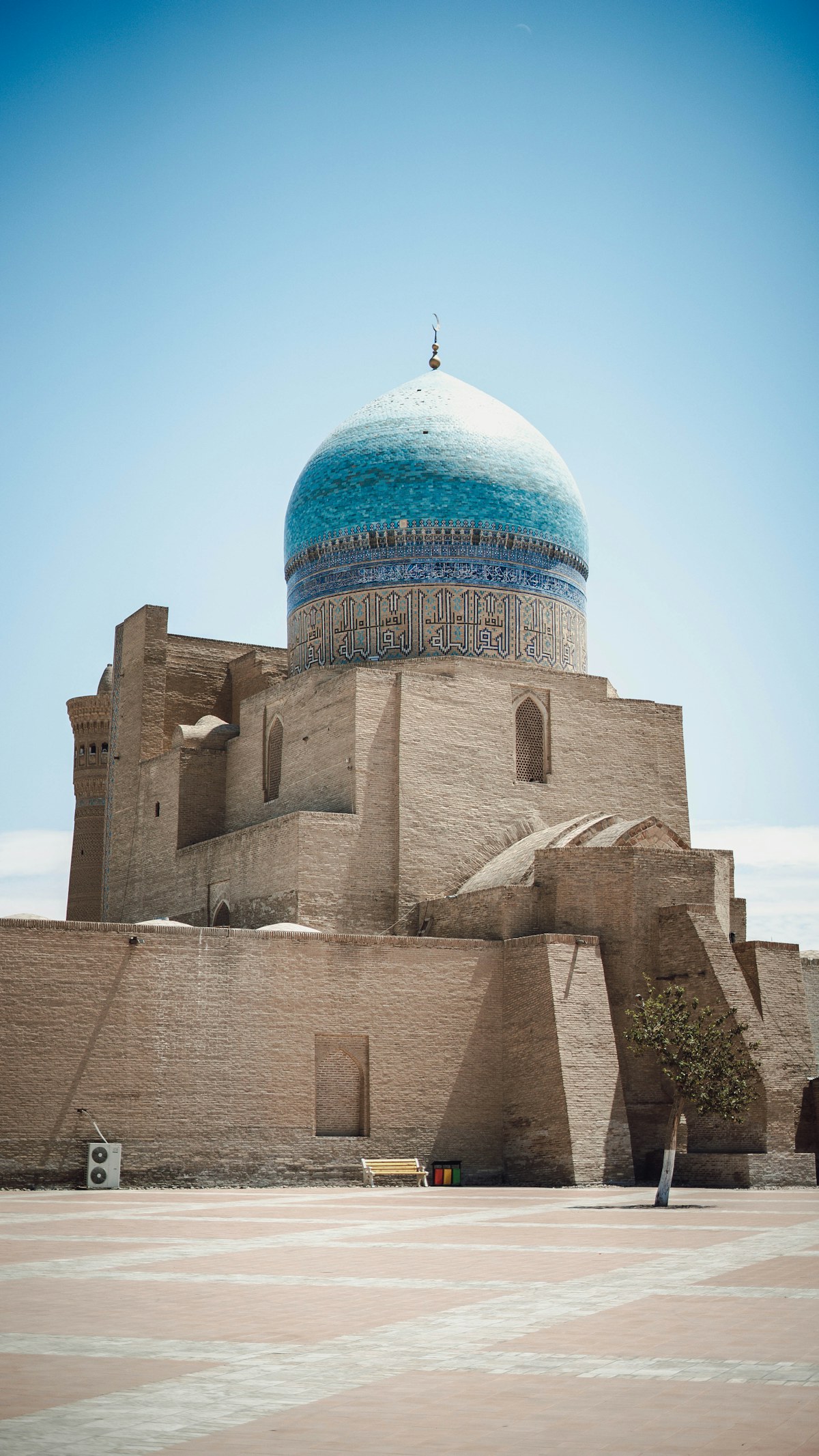
Until now the route carried you from city to city by high-speed train in a couple of hours. Bukhara–Khiva breaks that rhythm: this is where the real Silk Road begins — the Kyzylkum desert, which the train crosses in five or six hours, often at night. It isn't hard, but it's unfamiliar, and most people get lost not on the road but at the deciding stage: overnight train, daytime classic train, the new high-speed line, or a car across the sands. This guide lays out every option honestly and says who each one suits.
Which option should you choose?
Here, unlike the first two transfers, there's no single "right" answer — there's a deliberate choice by priority. The classic desert train is the Silk Road itself, slow and real: in the open carriage locals pull out tea and food, and the Kyzylkum stretches to the horizon out the window. The new high-speed line is the modern alternative for those who'd rather spend an extra day in Khiva itself than on the road. And a car earns its place if you want to see the desert fortresses of Khorezm on the way, otherwise unreachable. What to see once you arrive is in the Khiva guide.
The first transfers you pass through. This one you live through. The Kyzylkum out the window turns the road from logistics into part of the journey.
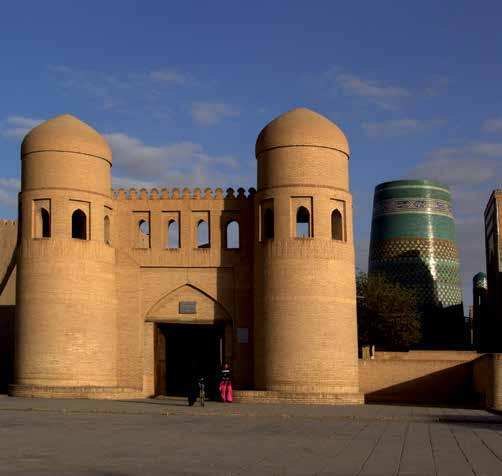
What's the overnight train across the desert like?
This is the most atmospheric and budget option, but it's worth preparing for honestly. The main price of the romance is summer: platskart has no air conditioning, and the train crosses the desert all night, so in the heat it can get stuffy and dusty, especially when the airflow dies at stops. If you travel in summer, take a kupe or SV with air conditioning, or schedule the transfer for a cooler season. Every carriage has a samovar of hot water: locals bring tea and brew the whole way — it's part of the experience. Trains don't run every day and sometimes leave in the afternoon, so check the schedule against your dates in advance.
Is the new high-speed line worth it?
The geography matters here: the new high-speed line is above all a Tashkent–Khiva express, not a direct replacement for the overnight Bukhara–Khiva train. If your route ends in Khiva and you return to Tashkent, the high-speed line saves enormous time on the way back. But if you're strictly heading west, Bukhara→Khiva, the classic desert train remains the most direct option, and the high-speed line makes sense to plan for the return. Many do exactly this: out on the atmospheric overnight train, back on the fast new one. How to build this into an itinerary is in the 10-day and 14-day guides.
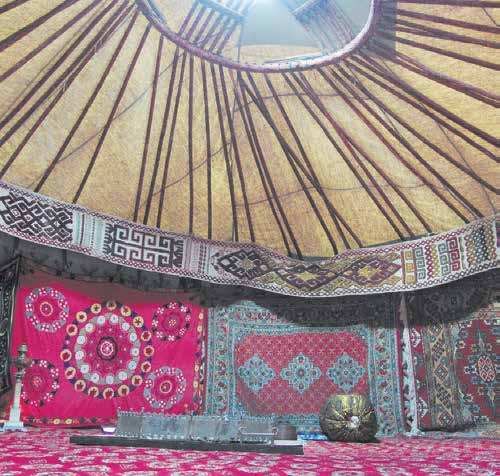
When to choose a private car transfer?
A car turns a leg that's dull by train into a route in its own right: along the way between Bukhara and Khiva (more precisely, in the Khorezm area closer to Khiva) lie ancient fortresses in the sands, and only a car lets you see them. Train schedules on this direction can be awkward, and a transfer solves the "no suitable train on my date" problem. The honest downside is hours along a desert highway. If you don't need the fortresses and just need to get there, the train is simpler and cheaper. The fortresses and desert routes are the subject of a separate guide to Khiva and Khorezm.
What to pack for the desert crossing?
Even a short transfer by Uzbek standards across the Kyzylkum is worth kitting out in advance. Bring water and snacks — in platskart it's handier to have your own, though the train has both a buffet car and vendors. Pack tea or coffee sachets and a mug: every carriage has a samovar with free hot water, and it's part of the ritual. In summer, in carriages without air conditioning, a portable fan and wet wipes earn their place — the dust and heat are real. Download offline entertainment: there's no signal in the desert, mobile internet drops out for long stretches, so a book or downloaded podcasts will save the trip. And keep your ticket until the end of your time in the country: Uzbekistan has registration by place of overnight stay, and a night on the train counts in lieu of it — proof can come in handy. More on connectivity is in the internet and SIM guide, and on registration in the safety guide.
How and where to book?
As with all Uzbek trains — on the official eticket.railway.uz or the Uzbekistan Railways app: there's an English version, foreign cards usually go through, and the ticket arrives with a QR code. If payment fails, the intermediary 12go.asia works for a small markup. For this direction it's critical to check the running days: Bukhara–Khiva trains don't run every day and sometimes only in the afternoon, so pick your date to fit the schedule, not the other way round. The booking window is 45–60 days, and a passport is needed to buy and to board. If you take the new high-speed line via Tashkent, it books the same way and sells out fast.
Common questions about the transfer
How long does the trip from Bukhara to Khiva take?
By the classic train across the Kyzylkum desert — roughly 5.5–6.5 hours, often overnight. The new high-speed "Jaloliddin Manguberdi" line links Tashkent and Khiva in ~7 hours (via Tashkent, not directly from Bukhara). A private car transfer is several hours along a desert highway, with the option of stops.
Is there a direct high-speed train Bukhara–Khiva?
There's no direct Afrosiyob Bukhara–Khiva — between them lies the desert and classic trains. The new high-speed "Jaloliddin Manguberdi" line (from 2026) runs Tashkent–Khiva, so it's handier on the return via Tashkent, while strictly westward Bukhara→Khiva remains the train across the Kyzylkum.
Is the overnight desert train hard going?
Not hard, but unfamiliar. The main difficulty is summer: platskart has no air conditioning, and the train crosses the desert all night, so it can get stuffy and dusty. Take a kupe or SV with air conditioning in the heat, and stock up on water and wipes. An overnight departure saves a hotel night and is considered atmospheric.
Is a car worth it for the Khorezm fortresses?
Yes, if the desert fortresses (Toprak-Kala, Ayaz-Kala) are part of your goal — the train can't reach them, only a car can. A private transfer gives date flexibility and stops, but it's a long drive and costs more than the train for one or two. For a group the cost divides and the option makes more sense.
Will there be mobile signal on the way?
In the Kyzylkum desert — almost none: the signal drops out for long stretches and mobile internet doesn't work. Download offline maps and entertainment in advance. There's no Wi-Fi in the old carriages; the Afrosiyob has it but it needs a local SIM. More on coverage and carriers is in our internet and SIM guide.
Want to see Uzbekistan the way the people who live here see it?
Become a Kvazar Explorer →