
Most fourteen-day Uzbekistan plans make the same quiet mistake: they take the perfect ten-day route and pad it with more time in the same four cities. That's not wrong, but it wastes the gift two weeks actually gives you — the chance to leave the famous circuit entirely. Beyond Tashkent, Samarkand, Bukhara and Khiva lies the Uzbekistan that separates a curious traveler from a checklist tourist: the artisan valley in the east, the ghost sea in the west, the desert in between. This guide builds the trip around that choice.
Should you add the Fergana Valley or the Aral Sea?
This is the real decision a two-week trip forces, and it's a good one. The Fergana Valley sits east of Tashkent, so it slots naturally at the start or end without disturbing the westward city line. The Aral Sea sits at the far western end, so it extends the Khiva finale. They pull in opposite directions geographically and emotionally — one is about human craft surviving, the other about a sea that didn't.
The cities show you what the Silk Road built. The valley and the sea show you what's still being made — and what was lost.
What's the 10-day core that both routes share?
If you've read the 10-day route, you know the core: the modern capital, then Timurid Samarkand, then medieval Bukhara, then the walled city of Khiva, linked by the Afrosiyob and one western leg toward Khiva. The fourteen-day question is simply which end to extend — east into the valley, or west into the desert.
How do you add the Fergana Valley?
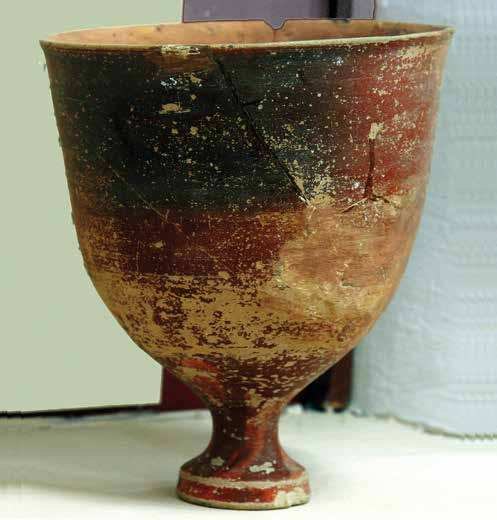
The Fergana Valley is the country's artisan heart, and the one region that rewards travelers who care how things are made. In Margilan, the Yodgorlik factory still produces hand-woven khan-atlas silk on traditional looms; in Rishtan, potters work the distinctive blue-green glaze that has defined Uzbek ceramics for centuries; Kokand adds the Khudayar Khan palace. It's a fertile, lived-in landscape — the antidote to monument fatigue. Full detail is in the Fergana Valley route.
How do you add the Aral Sea and the desert?
The western extension is for travelers drawn to landscape and history's harder edges. The Aral Sea excursion crosses the Kyzylkum desert to Moynaq, where rusting fishing ships sit on sand the sea abandoned decades ago — a vast, sobering monument to one of the 20th century's worst ecological disasters. A night in a yurt under desert stars, then the Savitsky Museum in Nukus, whose improbable hoard of forbidden Soviet avant-garde art is one of the great collections anywhere.
Is there a third option for two weeks?
For a second trip, or for travelers who've had their fill of monuments, the south is Uzbekistan at its most surprising. Termez holds the country's Buddhist heritage — Fayaz-Tepa and Kara-Tepa — a reminder that long before Islam, this was a Buddhist crossroads. The Boysun mountains add highland culture and landscape. It's a different rhythm, and not an easy add-on to the city line, but for the right traveler it's the most memorable two weeks of all.
How should you pace a 14-day trip?
The most common two-week regret isn't missing a sight — it's never having an hour that wasn't planned. Give yourself permission to return to a square you liked, to linger over a meal, to do nothing in a teahouse. Logistically: lock in train tickets first (they sell out), arrange the 4×4 Aral Sea tour in advance, and keep the heaviest travel days at the start or finish so the middle stays gentle. The transport guide covers the mechanics.
Frequently asked questions about 14 days in Uzbekistan
Is 14 days too long for Uzbekistan?
Not if you use the time to go beyond the four cities. Two weeks spent only on Tashkent, Samarkand, Bukhara and Khiva would feel slow. Add the Fergana Valley or the Aral Sea and fourteen days feels full and varied — and you'll still leave with a list of reasons to return.
Can I see both the Fergana Valley and the Aral Sea in two weeks?
Technically yes, but it's a stretch — they're at opposite ends of the country, and doing both means rushing the cities in between and spending a lot of time in transit. For a satisfying trip, pick one. Save the other for a return visit, which the country tends to inspire anyway.
Which extension is better for a first-timer?
The Fergana Valley is the gentler, more accessible add-on and pairs naturally with Tashkent. The Aral Sea is more demanding — long drives, basic facilities — but unforgettable for travelers drawn to remote landscapes and history. First-timers who want comfort lean to Fergana; those chasing the extraordinary lean to the Aral Sea.
How many days do I need for the Aral Sea?
Reaching the actual shoreline needs two days with an overnight yurt stay, because of the long desert drive. A one-day trip from Nukus reaches Moynaq's ship graveyard but not the current shore. Either way, it's the kind of remote that can't be rushed — that remoteness is exactly what you go for.
Should I fly any legs on a 14-day trip?
Flying is worth it for the long western leg out of Nukus back to Tashkent (about 1.5–2 hours), which saves a very long overland return. The core city legs are better by train. Domestic flights also help if you're short on time at either end, but they're rarely necessary on the railway-served cities.
Want to see Uzbekistan the way the people who live here see it?
Become a Kvazar Explorer →