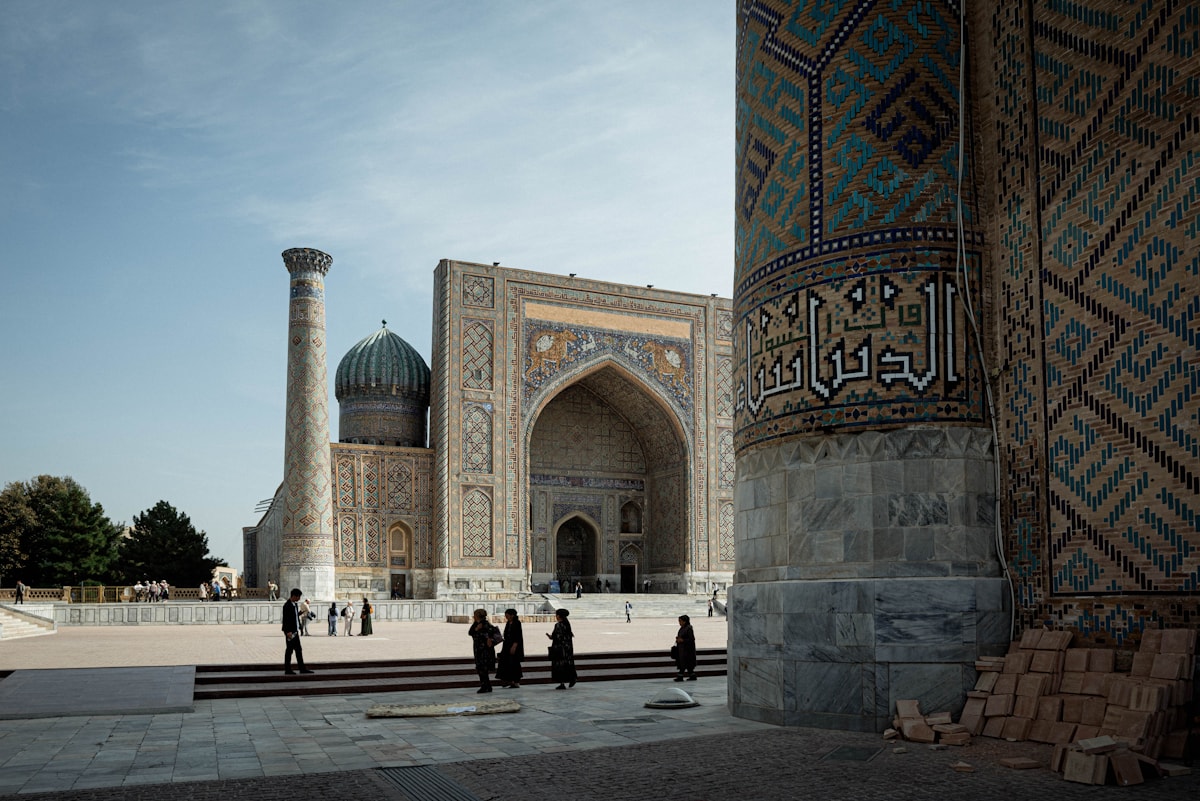
Bukhara and Samarkand are two peaks of the "golden triangle", and the transfer between them has long been turned into a short, comfortable ride. This is the reverse of the Samarkand–Bukhara route: the distance is the same, but in real itineraries the order of the cities is often exactly this — western Bukhara first, then Samarkand on the way back toward Tashkent. This guide compares the ways — the high-speed Afrosiyob, the Sharq train and a car — and suggests what to do if tickets are sold out.
How do you get from Bukhara to Samarkand?
Bukhara and Samarkand are two peaks of the "golden triangle", and the transfer between them has long been turned into a short, comfortable ride. This is the reverse of the Samarkand–Bukhara route, and although the distance is the same, in many real itineraries the order of the cities is exactly this — western Bukhara first, then Samarkand on the way back toward Tashkent.
We break down the ways by time and convenience. Where to go on arrival is in our Samarkand in one day and two days guides.
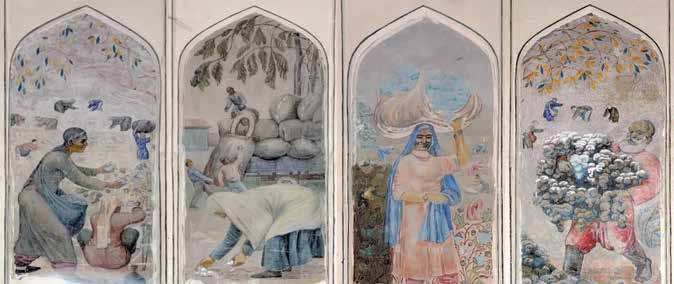
The high-speed Afrosiyob train
An hour and a half instead of a long drive is why almost everyone chooses the Afrosiyob on this section. The train is modern, quiet, with power sockets and service. The only difficulty is its popularity: tickets for convenient daytime services go quickly. Book ahead at railway.uz. The reverse direction (Samarkand–Bukhara) is symmetrical and covered in a separate guide.
An hour and a half between two capitals of the Silk Road — and you move from the living medieval city-organism of Bukhara to the imperial sweep of Samarkand, barely noticing the road.
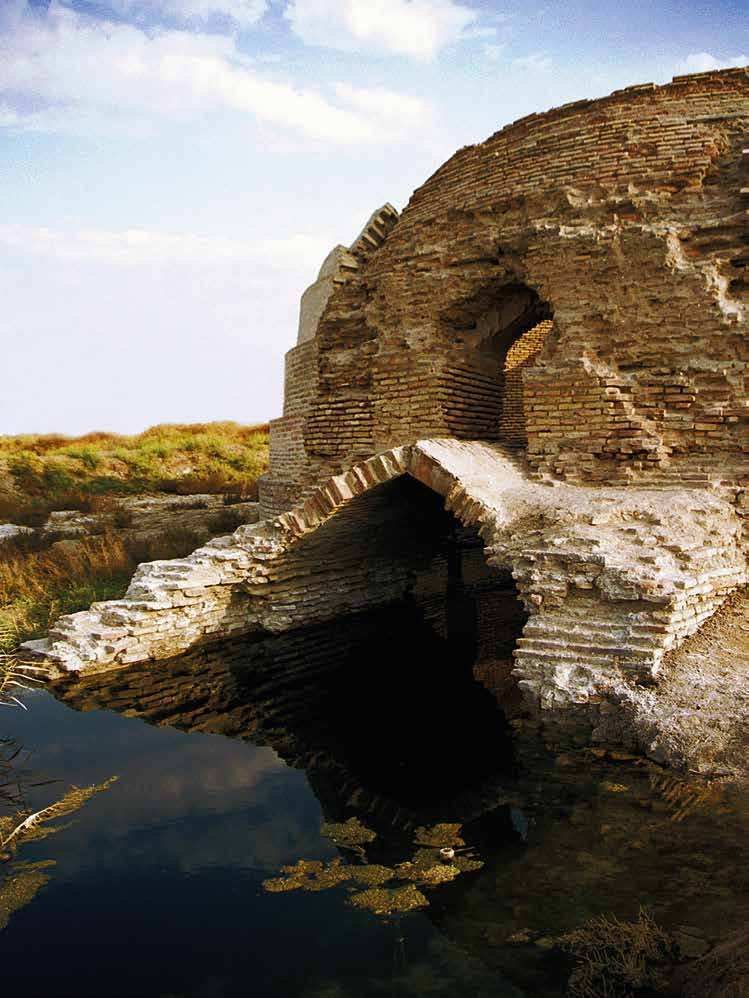
The Sharq train and others
The Sharq is chosen for budget or when the high-speed train is sold out. The time difference on the Bukhara–Samarkand section is not critical for many, and the price is about half. For a flexible traveller it is sensible insurance: if the Afrosiyob is full for your date, the Sharq saves the route.
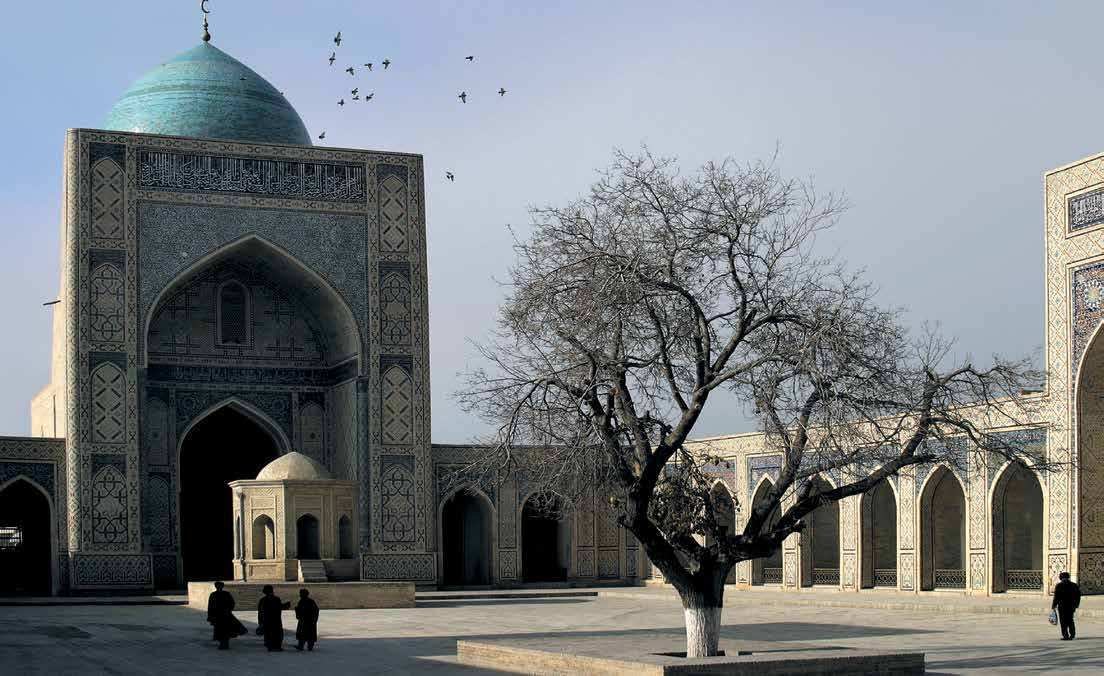
Car and taxi
A car makes sense if you want to turn the transfer into a mini-route — for example, a stop in Gijduvan for ceramics (covered in our Bukhara in three days guide). Otherwise the train is faster and more comfortable. A taxi for the whole way is more expensive than the train and more tiring, so it is taken mainly for flexibility and stops.
Which way to choose?
On the classic country circuit the Bukhara–Samarkand section is one of the easiest: an hour and a half by high-speed train against the long hauls in the west toward Khiva. How the whole circuit works and in what order to take the cities is in our golden triangle of Uzbekistan guide.
Frequently asked questions about the Bukhara–Samarkand route
How long is the train from Bukhara to Samarkand?
On the high-speed Afrosiyob, about an hour and a half. On the slower Sharq, longer but cheaper. By road, about four to five hours. For most, the Afrosiyob is optimal: fast, comfortable and on schedule. Book tickets ahead at railway.uz, especially in high season.
Does the Afrosiyob run between Bukhara and Samarkand?
Yes, the Afrosiyob links Bukhara and Samarkand with several services a day, covering the section in about an hour and a half. It is Uzbekistan's flagship high-speed train with Economy, Business and VIP classes. Tickets for convenient daytime services sell out ahead, so booking weeks in advance is wise.
What if the Afrosiyob tickets are sold out?
Take the Sharq train: slower and older, but comfortable, air-conditioned and with power sockets, and noticeably cheaper. The Sharq also runs on the Tashkent–Samarkand–Bukhara line and serves as a good backup when the high-speed train is full for your date.
Is it worth driving from Bukhara to Samarkand?
Usually not — the train is faster and more comfortable (an hour and a half against four to five by car). A car makes sense only if you want stops along the way: the Rabat-i-Malik caravanserai, the Vabkent minaret or the craft town of Gijduvan for ceramics, which can be combined with the transfer.
Is this the same as the Samarkand–Bukhara route?
The distance and the ways are the same, but the order of the cities is reversed, and in an itinerary these are often different stages: Samarkand–Bukhara is a move west, while Bukhara–Samarkand is usually the return toward Tashkent. Schedules are symmetrical; choose the direction for your route and check tickets at railway.uz.
Want to see Uzbekistan the way the people who live here see it?
Become a Kvazar Explorer →