If Kokand is about the history of power, Margilan and Rishtan are about what is made by hand. It is the Fergana Valley's most craft-focused day: Rishtan's blue-and-green ceramics and Margilan's handmade silk, two different crafts of two different schools that complement one another in a single day. This guide shows how to combine them into one route, how they differ, and why it is worth buying here directly from the masters.
Can you see Margilan and Rishtan in one day?
If Kokand is about the history of power, Margilan and Rishtan are about what is made by hand. It is the valley's most "craft" day: not museums but working workshops where an object is born in front of you. We have separate detailed guides to both Margilan silk and Rishtan ceramics; here is how to combine them into one route.
The logic of the day depends on where you set out from. From Kokand it is convenient to stop first in Rishtan (it lies between Kokand and Fergana), then in Margilan. Both crafts are family-run and living, so allow time to talk with the masters, not only to look at the displays.
What to see in Rishtan — ceramics?
The Rishtan school differs fundamentally from, say, the Gijduvan ceramics near Bukhara: Rishtan has a distinctive turquoise and blue, Gijduvan a warm earthy palette. These are different schools and should not be confused. Rishtan's value is that the tradition here has run unbroken: most of the ceramics sold across the country come from here, from working workshops rather than factories.
Rishtan is blue and turquoise on white, born of desert plants and fire. Margilan next door is silk and the shimmer of ikat. One day, two crafts, not a single repetition.
What to see in Margilan — silk?
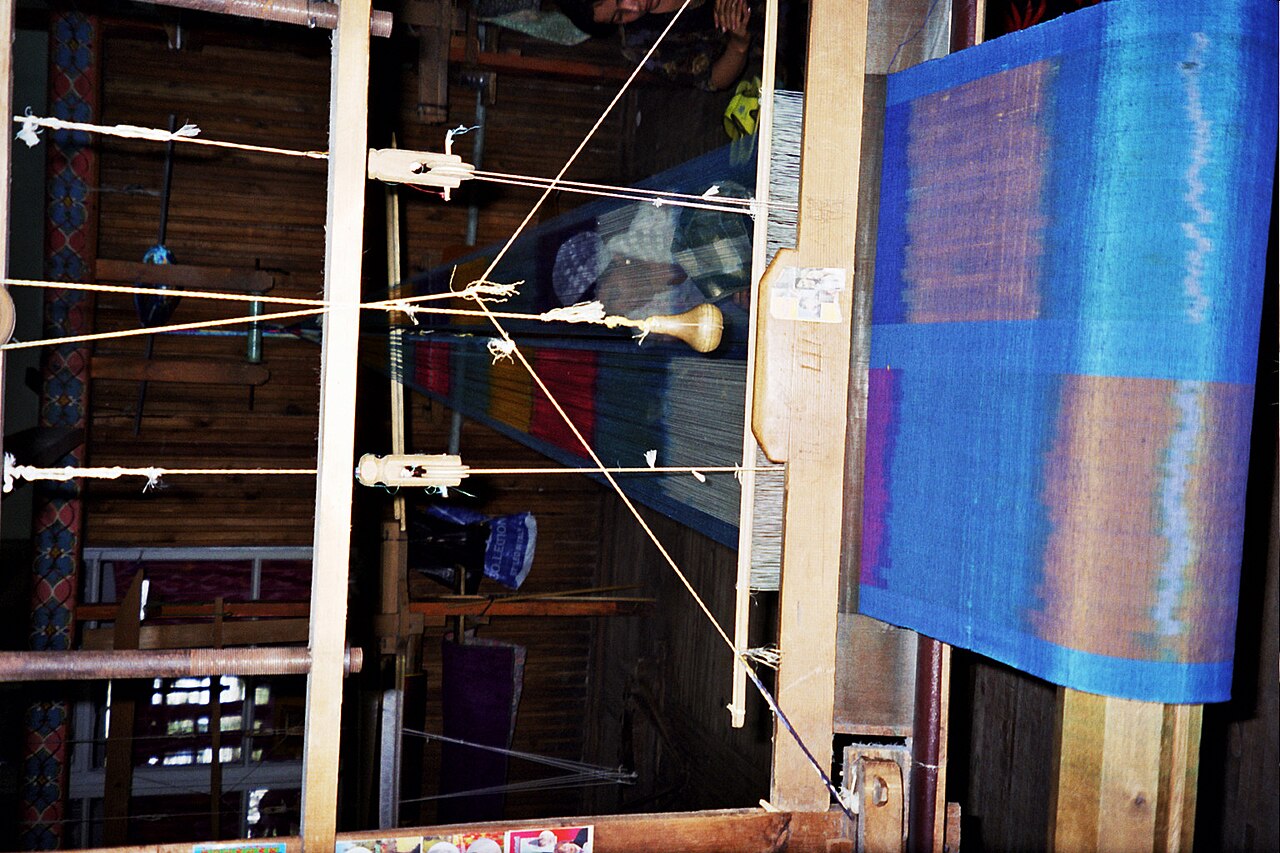
Ikat is a technique where the threads are dyed before weaving to a pre-calculated pattern, giving the design its characteristically "blurred", shimmering look. Khan-atlas is the valley's famous multicoloured silk fabric. At the factory they also explain how to tell real silk from artificial. After Rishtan's ceramics, Margilan's silk is a perfect contrast: a different material, a different colour, a different technology.
How to build a Rishtan–Margilan route in a day?
It is practical to fit this day as the second in a two-day valley route: day one is Kokand and an overnight, day two is Rishtan and Margilan with an evening departure. That way you are not rushed and reach both ceramics and silk without haste. How the whole route works is in our Fergana Valley in two days guide.
Is it worth buying ceramics and silk directly from the masters?
The valley's craft rests on the direct link between master and buyer, and your interest is part of what helps the tradition live. Which of the country's crafts truly merit attention and how the schools differ is in our crafts of Uzbekistan guide. It is in Rishtan and Margilan that you understand why people travel over the pass for these things.
Frequently asked questions about Margilan and Rishtan
Can you see Margilan and Rishtan in one day?
Yes, they lie close together, and in a day you can realistically see both crafts — Rishtan ceramics and Margilan silk. From Kokand it is convenient to stop first in Rishtan, then in Margilan, from where an evening train runs to Tashkent. This is the classic second day of a two-day valley route.
How does Rishtan differ from Margilan?
They are two different crafts: Rishtan is the oldest ceramics centre in Central Asia, with blue-and-green ware on the natural ishkor glaze, while Margilan is the silk centre, where ikat and khan-atlas are made by hand. They combine well in a single day precisely because they complement one another.
What are the ishkor glaze and khan-atlas?
Ishkor is a natural alkaline glaze that in Rishtan is obtained from local plants; it gives the ceramics their distinctive blue-and-green palette. Khan-atlas is Margilan's famous multicoloured silk fabric, made by the ikat technique, where the threads are dyed before weaving, giving the pattern its 'blurred', shimmering look.
How do you reach Rishtan and Margilan?
The easiest way is by taxi or with a driver from Kokand: Rishtan first (about an hour), then Margilan (another hour or so). From Margilan an evening train runs back to Tashkent. There is public transport, but for a day with workshop stops a car is more convenient.
Is it worth buying ceramics and silk directly at the workshops?
Yes, it is one of the main reasons to come: you take a piece directly from the master and see the process of its making. It is more meaningful than the souvenir rows in other cities, where the same Rishtan ceramics are merely resold. Bargaining is appropriate, but calmly and with respect for the work.
Want to see Uzbekistan the way the people who live here see it?
Become a Kvazar Explorer →