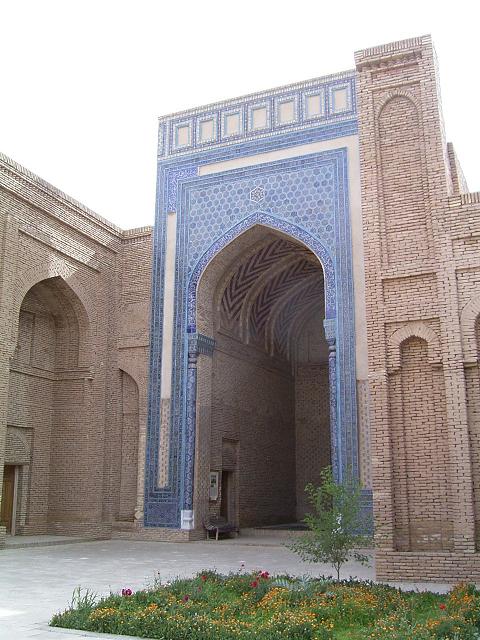
In one day you read Termez as a city of layers — Buddhist and Islamic. In two days you understand it is a whole region at the meeting of civilisations and the borders of three countries. The second day leads out of the city into Surkhandarya: to the Hellenistic fortress of Kampyr-Tepe, a medieval minaret and southern landscapes found nowhere else in Uzbekistan. This guide lays out both days — the archaeological core in the city and the living geography of the south around it.
What does a second day in Termez give you?
In one day you "read" Termez as a city of layers. In two you understand it is a whole region at the meeting of civilisations and the borders of three countries. The second day leads out of the city into Surkhandarya: to Hellenistic fortresses, medieval minarets and southern landscapes found nowhere else in Uzbekistan. It is a shift from archaeology to the living geography of the south.
The logic of the two days: the first is the city and the Buddhist core (its route is in our Termez in one day guide), the second is trips around the surroundings by car with a driver. The region is hot and the distances are long, so the second day's sites are best grouped into one or two circuits rather than darting between them.
What does the first day look like?
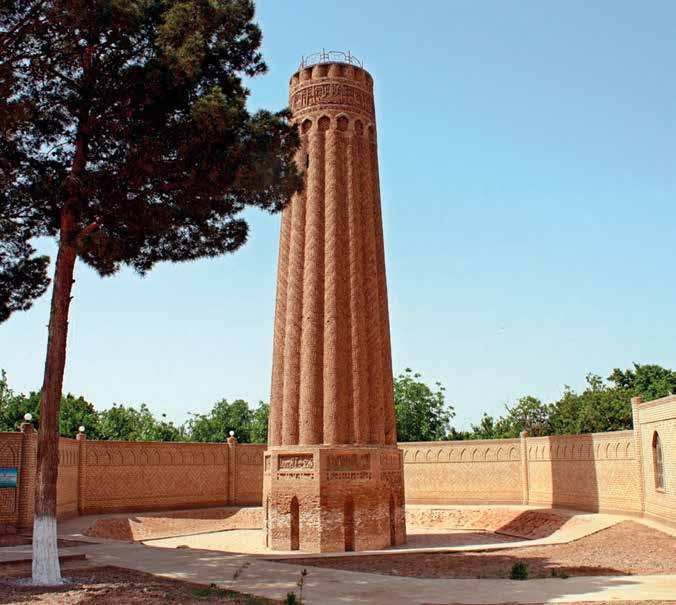
The detailed first-day route is in a separate guide. One thing matters here: by the second day you already understand Termez's Buddhist and Islamic layers, so the surroundings read more deeply — Kampyr-Tepe and the minaret fall into an already-assembled picture of southern civilisation.
What is Kampyr-Tepe — 'Alexander's port'?
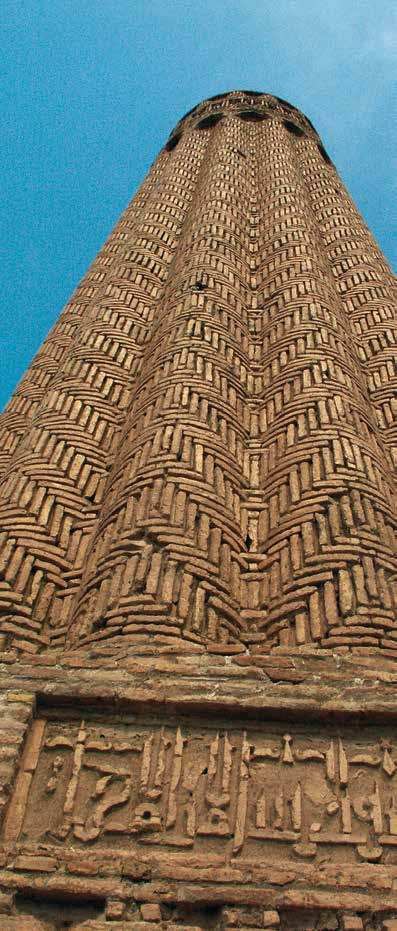
Kampyr-Tepe gives what the restored centres cannot: pure archaeology, with excavations going on in front of you. The fortress stood by a crossing of the Amu Darya and was a Silk Road node at the very edge of the Hellenistic world. To stand on its walls is to feel physically how far east the legacy of antiquity reached, long before the turquoise domes.
Samarkand is Islam at its peak. Kampyr-Tepe is Alexander the Great at the edge of the world. Between them lie not just centuries but different civilisations on the same land.
Is the Jarkurgan minaret worth the trip?
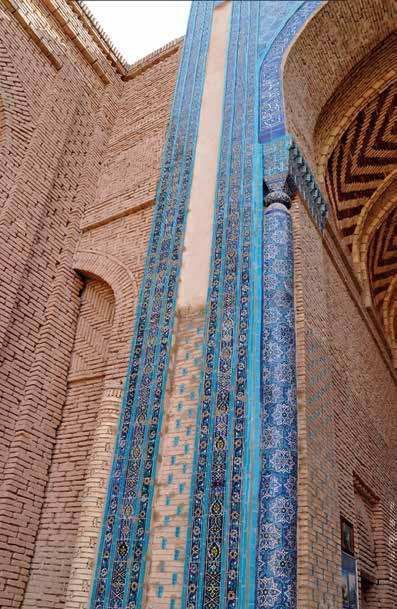
The minaret is valuable not for its size but for its age and brickwork: its ribbed surface is a rare example of the pre-Mongol school that has survived the centuries. Combined with the first day's Buddhist antiquities, it shows the whole vertical of the region's history — from the Kushans to early Islam. Because of the distance it is logical to make it a separate point of the second day rather than squeeze it into the first.
What else is in Surkhandarya — nature and mountains?
The nature part is a reason not to fly back from Termez but to travel overland through the Derbent canyon: the "Iron Gates" were for centuries the main gateway between central and southern Uzbekistan. Baysun, with its mountains and springs, is a distinctive world of its own, recognised by UNESCO for its intangible cultural heritage. How to build the return road is in our Samarkand to Termez guide.
How to end two days, and where next?
The choice of road is a choice of finale: the plane saves time but cuts the southern chapter off abruptly; the overland route through the "Iron Gates" closes it logically, linking the south with the centre of the country as the caravans once did. How to fit Termez into the wider route is in our Samarkand to Termez and Uzbekistan in 14 days guides.
Frequently asked questions about two days in Termez
Do you need two days in Termez?
The city with its Buddhist core fits into a day; a second day is justified if you want to see the surroundings of Surkhandarya — the Greco-Bactrian fortress of Kampyr-Tepe, the 12th-century Jarkurgan minaret and the nature of the south. It is a shift from urban archaeology to the living geography of a region at the meeting of three borders.
What to see on the second day in Termez?
Trips around the surroundings: the Kampyr-Tepe fortress (about 35 km, the era of Alexander and the Kushans), the 12th-century Jarkurgan minaret (about 36 km) and, if time allows, the natural points of Surkhandarya — the Derbent canyon, Baysun. The sites are spread out, so a car with a driver and grouping into one or two circuits is more convenient.
What is interesting about the Kampyr-Tepe fortress?
It is one of Uzbekistan's oldest settlements, linked to the era of Alexander the Great and the Greco-Bactrian kingdom. Buddhist, Zoroastrian and Hellenistic buildings have been found here — a trace of the time when several religions coexisted under Kushan rule. It is a living archaeological site rather than a restored museum.
Is it better to leave Termez by plane or overland?
The plane to Tashkent (about an hour) saves time; the overland route north through the Derbent canyon and Karshi is longer but adds the 'Iron Gates' and the Baysun landscapes. If time allows, the overland road more logically closes the southern chapter of the trip, linking the south with the centre of the country.
Is it worth staying overnight in Termez?
Worth it if you want to see not only the Buddhist core but the region. One overnight turns Termez from a quick stop for the stupas into a full acquaintance with the south: day one the city and archaeology, day two the surroundings and nature of Surkhandarya. For the core city alone, a day is enough.
Want to see Uzbekistan the way the people who live here see it?
Become a Kvazar Explorer →