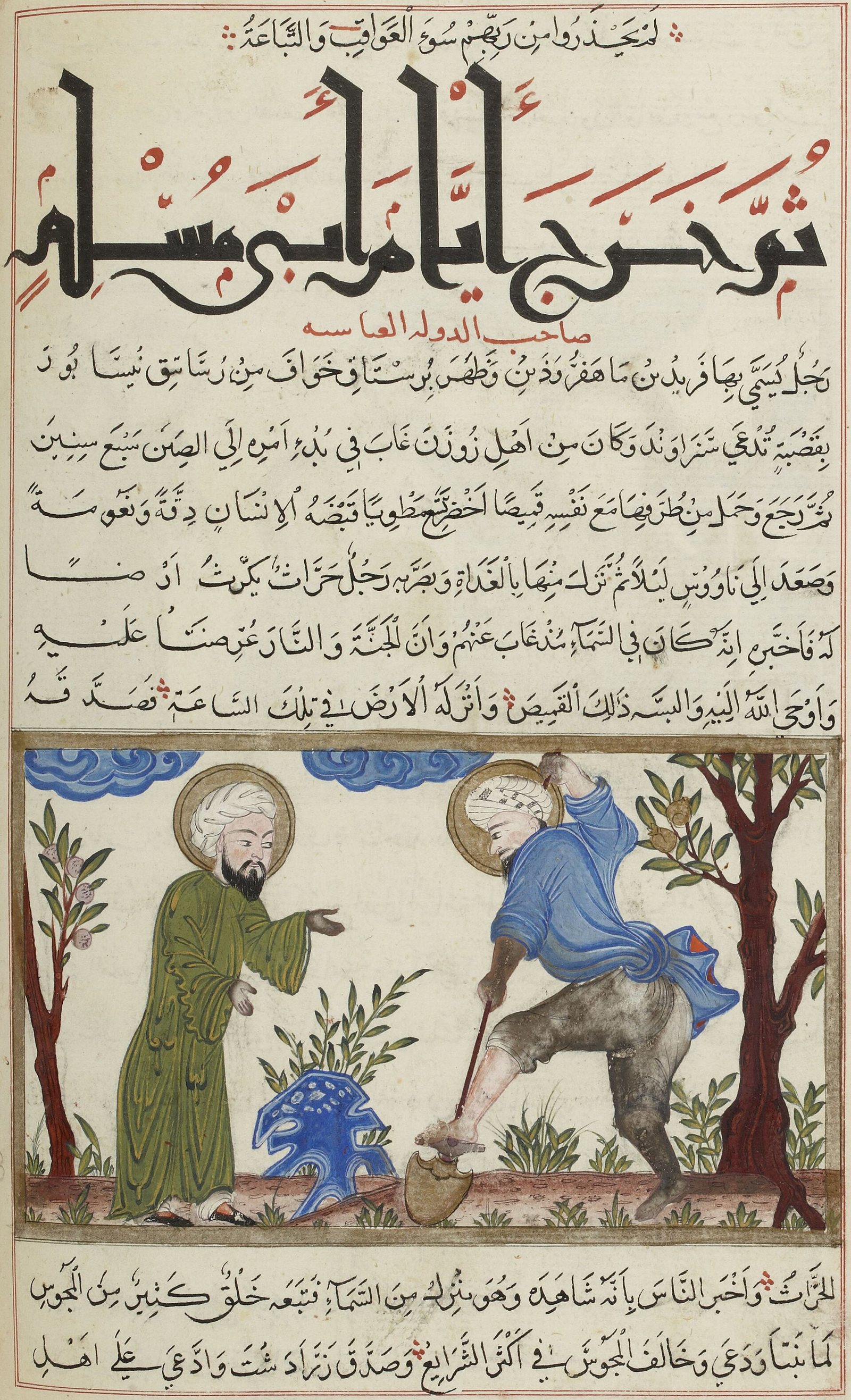
Among the scholars born on the lands of present-day Uzbekistan, Al-Biruni stands out even against names like Avicenna and Al-Khwarizmi. He was an encyclopedist in the fullest sense — a man for whom no science was foreign. Astronomy and mineralogy, geography and history, mathematics and pharmacology, languages and ethnography — all of it fell within the circle of his interests and works. Born in Khwarazm, he lived a life full of scientific discoveries and dramatic turns, and became one of the greatest minds of his era. His story is the culmination of Kvazar's account of the scientific heritage of this land.
Who was Al-Biruni?
Where many geniuses specialize, Al-Biruni amazed precisely by his breadth. He didn't merely know different sciences — he joined them, applied the methods of one field to the problems of another, and treated knowledge with an almost modern rigor: he verified, measured, compared sources. For this he's sometimes called a "superman" of the science of his era.
Where was Al-Biruni from?
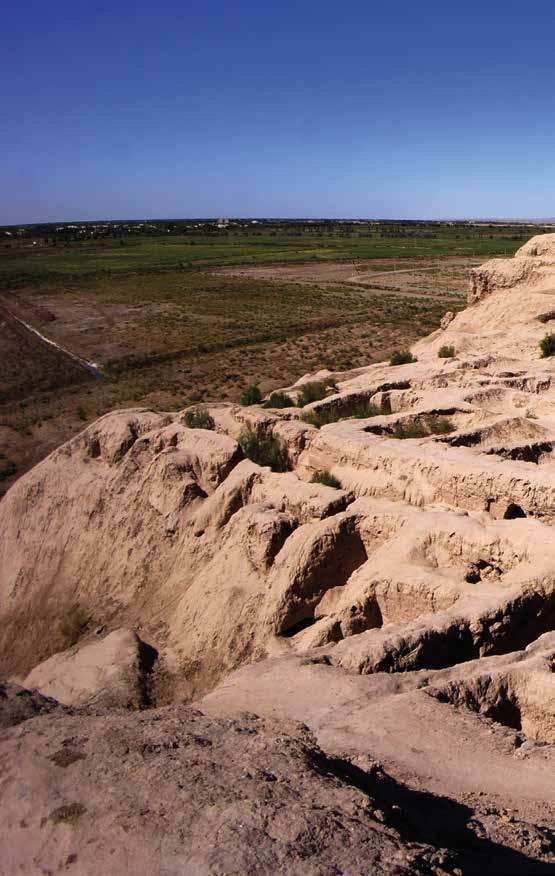
Khwarazm at the turn of the millennium was a developed scientific and craft region, and here formed the environment in which such a mind could grow. Later a kind of scientific academy operated in Khwarazm where, according to the sources, both Al-Biruni and Ibn Sina worked. The scholar's fate was dramatic: after the seizure of Khwarazm by Sultan Mahmud of Ghazni in late 1017, Al-Biruni found himself effectively a captive and was taken to the conqueror's court — which, however, opened his path to India.
How did Al-Biruni measure the size of the Earth?
It's one of the most impressive scientific episodes of the Middle Ages: a man determined the size of the whole planet by climbing a mountain and applying geometry. In the same work Al-Biruni refined the tilt of the Earth's axis, described lunar and solar eclipses, analyzed the solar corona and put forward the idea of the fiery nature of the stars and the Sun, in contrast to the planets. This was science based on observation and measurement, not on speculation.
What is his book on India famous for?
For its era this was a strikingly modern approach. Al-Biruni described Indian philosophy, the caste system, science and beliefs with an impartiality rare for the Middle Ages, comparing them with Greek and Islamic ideas. This work is valued not only as a source of knowledge about the India of that time but as a monument to the very idea of intercultural understanding — a theme especially close to a brand exploring the dialogue of civilizations.
In how many sciences did he work?
Especially telling is his work in mineralogy: he measured the specific gravity of various substances with high precision — long before this entered scientific practice. Such a combination of theoretical breadth and experimental rigor makes Al-Biruni a figure who in many ways was ahead of his time and anticipated the scientific method in its modern sense.
Al-Biruni measured the Earth from a mountaintop and understood India without ever leaving the role of a scholar — it was the science of the future, a thousand years early.
What is Al-Biruni's legacy for Uzbekistan?
Together with Ibn Sina and Al-Khwarizmi, Al-Biruni closes the golden constellation of Central Asian scholars. These three names prove that the lands of Uzbekistan were not only a crossroads of trade but one of the world's hearths of thought. For Kvazar, Al-Biruni is the ideal embodiment of the brand: an explorer of civilizations for whom knowledge knew neither borders nor prejudices.
Frequently asked questions about Al-Biruni
Who was Al-Biruni?
Abu Rayhan al-Biruni (973–1048) was a medieval encyclopedic scholar born in Khwarazm (on the territory of modern Uzbekistan). He worked across dozens of sciences: astronomy, geography, mathematics, mineralogy, history and others.
Where was he born?
In the city of Kath, the capital of ancient Khwarazm, on October 4, 973. He was educated by the astronomer Ibn Iraq and knew several languages, including Sanskrit.
How did Al-Biruni measure the Earth?
He measured the angle of the horizon's dip from the top of a mountain of known height and, using trigonometry, calculated the planet's radius. The result was close to modern values — centuries before circumnavigations.
What is his book on India famous for?
Having lived several years in India and learned Sanskrit, he wrote a fundamental work on Indian culture, religion and science — one of the first examples of an objective, respectful study of a foreign civilization.
In how many sciences did he work?
In nearly all of his time: astronomy, mathematics, geography, geodesy, mineralogy, pharmacology, history, philology. In all he created more than a hundred works.
Was he connected with Ibn Sina?
Yes, they were contemporaries and conducted a scientific correspondence. According to the sources, both were connected with a scientific academy that operated in Khwarazm.
Want to see Uzbekistan the way the people who live here see it?
Become a Kvazar Explorer →