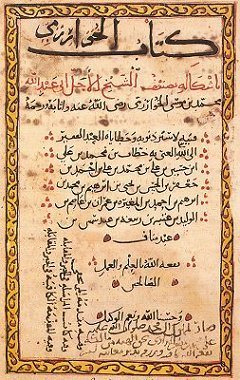
There are scholars whose influence is so great that their names dissolve into the very language of science. Al-Khwarizmi is exactly such a case. A mathematician born in Khwarazm — a historical region on the territory of modern Uzbekistan — he worked in Baghdad in the age of the flowering of Islamic science and did what changes civilizations: he created a new branch of mathematics and systematized a way of computing. Today, without two concepts that grew from his legacy, neither the school curriculum nor computer code would be conceivable. This is the story of a man whose name you say more often than you think.
Who was Al-Khwarizmi?
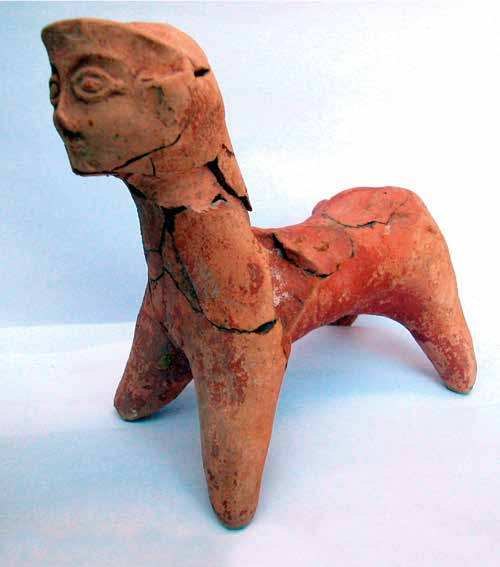
The very byname "al-Khwarizmi" means "from Khwarazm" — it points directly to the scholar's homeland. Few detailed facts of his life survive, but the scale of his work speaks for itself: he worked at the junction of mathematics, astronomy and geography, and in each of these fields he left a foundational contribution. He's a figure with whom mathematics in its modern sense largely begins.
Where was Al-Khwarizmi from?
Around 813 Al-Khwarizmi became part of the "House of Wisdom" — a kind of academy of sciences where scholars from across the Islamic world gathered, the richest of libraries was kept and an observatory operated. It was an age of intensive translation and development of Greek, Indian and Persian knowledge. In such an environment the man from Khwarazm made his main discoveries — joining the Eastern tradition of computation with the accumulated knowledge of the world.
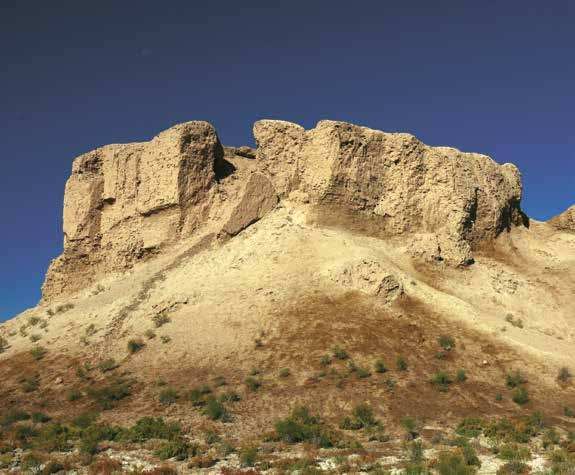
Why is Al-Khwarizmi called the father of algebra?
The genius of the approach lay in its generality: Al-Khwarizmi gave not scattered solutions to individual problems but universal methods applicable to whole classes of equations. He also stressed the practical use — algebra, he said, is needed by people in dividing inheritances, in trade, in measuring lands and building canals. So an abstract science immediately acquired a practical meaning.
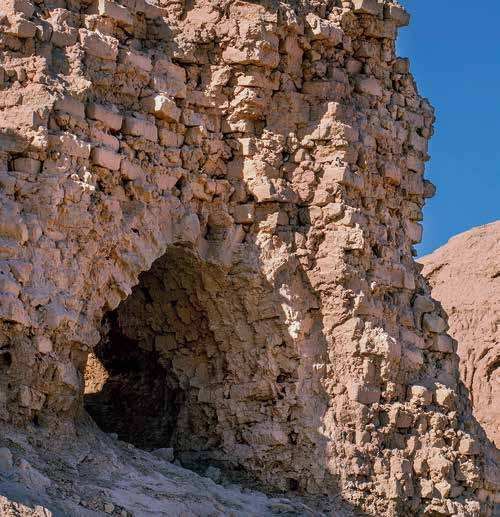
How did his name turn into the word "algorithm"?
The connection is direct and astonishing: the foundation of the computer age bears the name of a man who lived twelve centuries ago and came from Khwarazm. It was through his works that Europe became acquainted with the decimal positional system and the Indian numerals (which by a misunderstanding we call "Arabic"). So a scholar from the lands of Uzbekistan wrote himself twice into the very lexical core of modern science.
What else did Al-Khwarizmi do?
He was a scholar of broad profile, for whom mathematics, the stars and the map of the world were parts of a single knowledge. His geographical coordinates refined ancient ideas, and his astronomical tables served practical purposes — from the calendar to navigation. Universality was a characteristic trait of the scholars of this era, and Al-Khwarizmi is a vivid example of it.
Twice the scholar from Khwarazm wrote himself into the language of science: with one word, "algebra," and with another, "algorithm."
What is Al-Khwarizmi's legacy for Uzbekistan?
Together with Ibn Sina and Al-Biruni he forms a constellation of minds who glorified Central Asia in an age when it was one of the world's centers of knowledge. Al-Khwarizmi's legacy is a reminder that the scientific tradition of this land is as real and significant as its famous domes and minarets, and that its influence reached the very heart of modern civilization.
Frequently asked questions about Al-Khwarizmi
Who was Al-Khwarizmi?
Abu Abdallah Muhammad ibn Musa al-Khwarizmi (c. 783–850) was a mathematician, astronomer and geographer of the Islamic Golden Age, from Khwarazm. The founder of algebra as a science; from his name came the word "algorithm."
Where was he from?
From Khwarazm — a historical region of Central Asia corresponding today to the Khorezm region of Uzbekistan and the adjacent territories. He later worked in Baghdad, at the "House of Wisdom."
Why is he called the father of algebra?
His treatise "Kitab al-jabr wa-l-muqabala" became the first systematic exposition of algebra and gave it its name (from the word "al-jabr"). He developed general methods for solving linear and quadratic equations.
How did the word "algorithm" come from his name?
The name "al-Khwarizmi" in Latin transcription sounded like "Algorizmi." His work on decimal computation was popular in Europe, and from the Latinized name came the word "algorithm."
What else did he do?
He contributed to astronomy (he compiled tables) and geography (one of the first works on mathematical geography, with a map and coordinates), and introduced the decimal positional number system to the Islamic world.
When did he live?
In the late 8th and the first half of the 9th century. His year of birth is conventionally taken as around 783, and his death around 850.
Want to see Uzbekistan the way the people who live here see it?
Become a Kvazar Explorer →