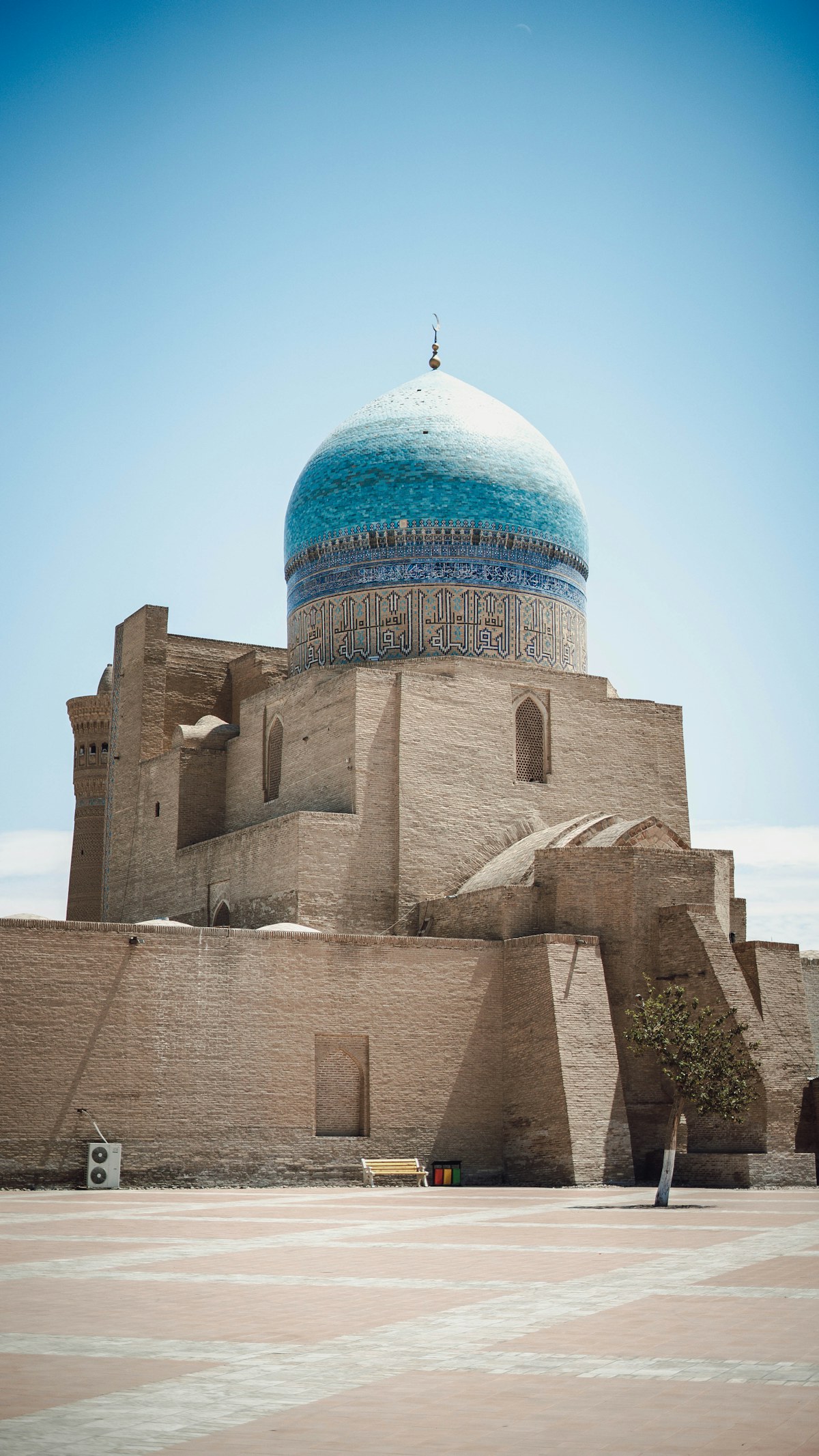
Bukhara cannot be "toured point by point" — it is not built for that. Unlike Samarkand with its free-standing giants, Bukhara survived whole: streets, domes and madrasas flow into one another, and the old town works as a single space. So a day here is not a list of ticks but a long walk through living medieval fabric. This guide lays it out from west to east, so the day comes together without backtracking or rush.
What can you fit into Bukhara in one day?
Bukhara is built differently from Samarkand. There, separate giant monuments stand apart, and you travel between them. Here is a whole medieval city preserved as an organism: streets, domes and madrasas flow into one another. So Bukhara in a day is not a list of stops but one long walk through a living old town.
The route unfolds logically from west to east. Morning: the Samanid Mausoleum and the Ark fortress at the edge of the old town. Midday: Poi-Kalyan and the trading domes in the centre. Evening: Lyabi-Hauz, where everyone gathers. If you arrive from Samarkand (about one and a half to two hours by train), you have a full day; how to get there is in our Samarkand to Bukhara guide.
Why start with the Samanid Mausoleum?
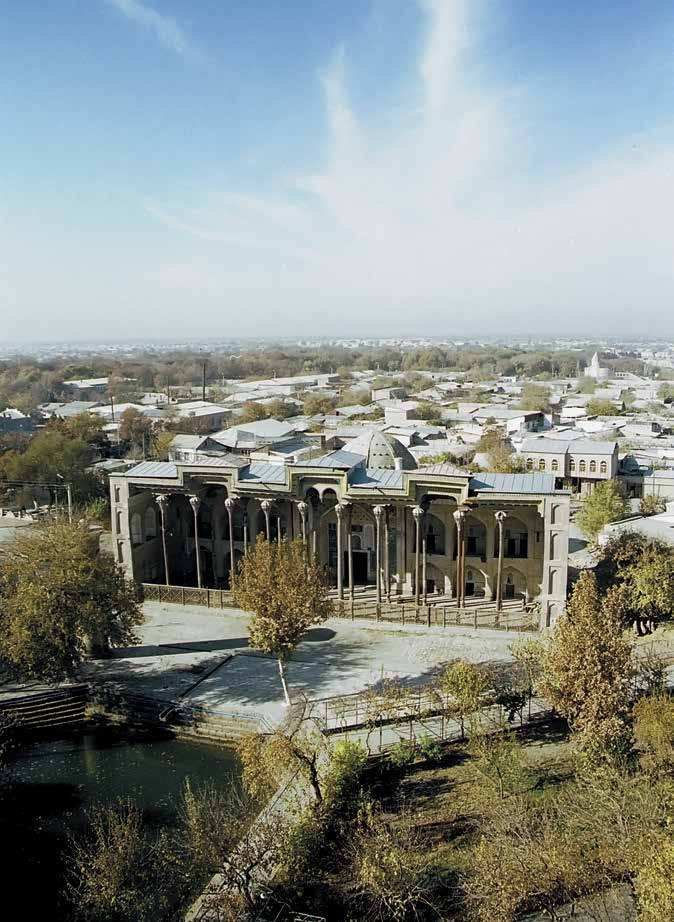
People rush past the Samanids, which is a mistake: this building is older than almost everything you will see later, and it explains the local school — the play of light on brick instead of glaze. Beside it, in the park, the first calm hour of the day passes easily. From here it is natural to walk to the Ark.
Is it worth going inside the Ark fortress?
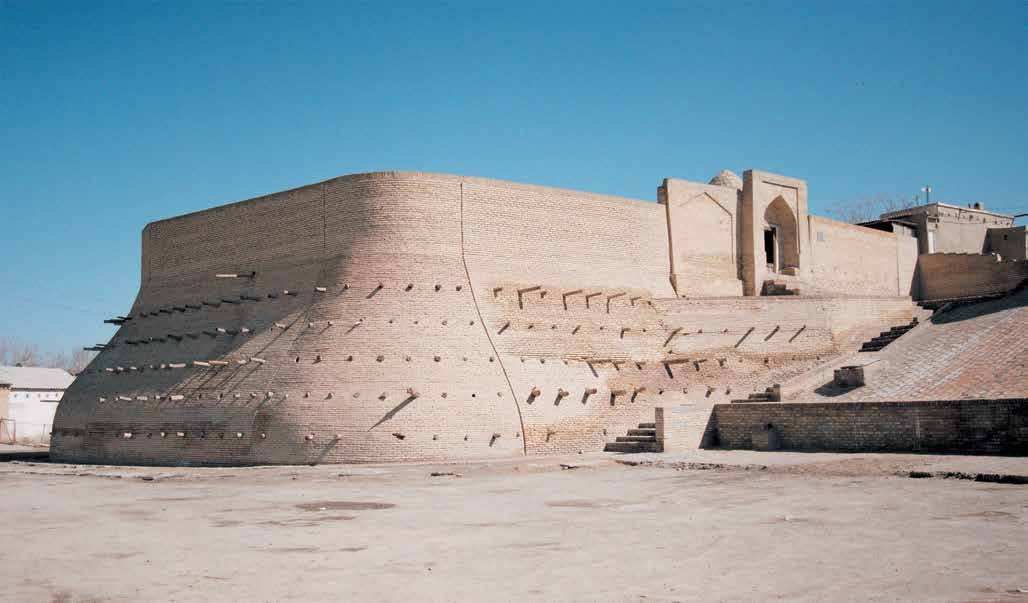
The Ark is Bukhara's power in brick and clay: the emirs ruled from here, and kept the treasury and the prison here too. Inside is less palatial luxury than a fortress-city, and its value is in context — you grasp how the emirate worked barely a century ago. From the upper points you see Poi-Kalyan, where you are heading next.
How should you see the Poi-Kalyan ensemble?
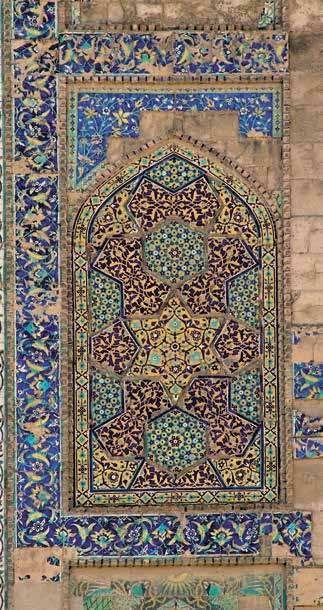
The Kalyan Minaret was the city's beacon and symbol for eight centuries; its brick bands of ornament never repeat. Miri-Arab is a working madrasa, so the interior is usually closed, but its facade opposite the mosque forms the very square worth coming for. This is the point in Bukhara where the medieval world feels physical.
Samarkand stuns with the scale of single monuments. Bukhara works differently — it survived whole, and you do not walk it point to point, you live in it for half a day.
What to look for in the trading domes?
The domes are not a "souvenir row" but a working medieval trading infrastructure still in use. The chain of domes is strung along the main axis of the old town, so you will pass through them anyway between the Ark and Lyabi-Hauz. Which crafts truly merit attention is in our crafts of Uzbekistan guide.
How to end the day at Lyabi-Hauz?
Lyabi-Hauz is a rare open pool for Bukhara: city life once grew around such ponds, most were filled in over disease, and this one was kept. An evening teahouse by the water is the best way to end the day. Chor-Minor stands a little aside in the residential lanes — finding it is a small adventure in itself. What to add if you stay longer is in our Bukhara in two days guide.
Frequently asked questions about one day in Bukhara
Is one day enough for Bukhara?
For the core of the old town, yes. Bukhara is compact and walkable: in a day you cover the Samanid Mausoleum, the Ark fortress, Poi-Kalyan, the trading domes and Lyabi-Hauz with Chor-Minor. The out-of-town sites (Sitorai Mohi-Hosa, Bahauddin Naqshband, Chor-Bakr) and unhurried museums need a second day.
In what order should you see Bukhara in a day?
From west to east: the Samanid Mausoleum and the Ark fortress at the edge in the morning, Poi-Kalyan and the trading domes in the centre at midday, Lyabi-Hauz and Chor-Minor in the evening. The old town is strung along one axis, so the route avoids backtracking.
Is Bukhara walkable or do you need transport?
The core of Bukhara is almost entirely walkable — the main monuments are linked by the old town's pedestrian streets. Transport is needed only for out-of-town sites on a second day. For one day, no car is required.
If you have only one day — Bukhara or Samarkand?
They are different impressions: Samarkand is the power of single monuments, Bukhara is a whole, living medieval town. If the scale wow matters most, choose Samarkand; if you want to live inside an old town and its atmosphere, choose Bukhara. Logistically they are usually combined into one trip.
Can you climb the Kalyan Minaret?
Access to the minaret opens irregularly and not always for tourists — check locally. The main value of Poi-Kalyan is not the climb but the square itself between the minaret, the Kalyan Mosque and the Miri-Arab Madrasa, which is worth studying from the ground.
Want to see Uzbekistan the way the people who live here see it?
Become a Kvazar Explorer →