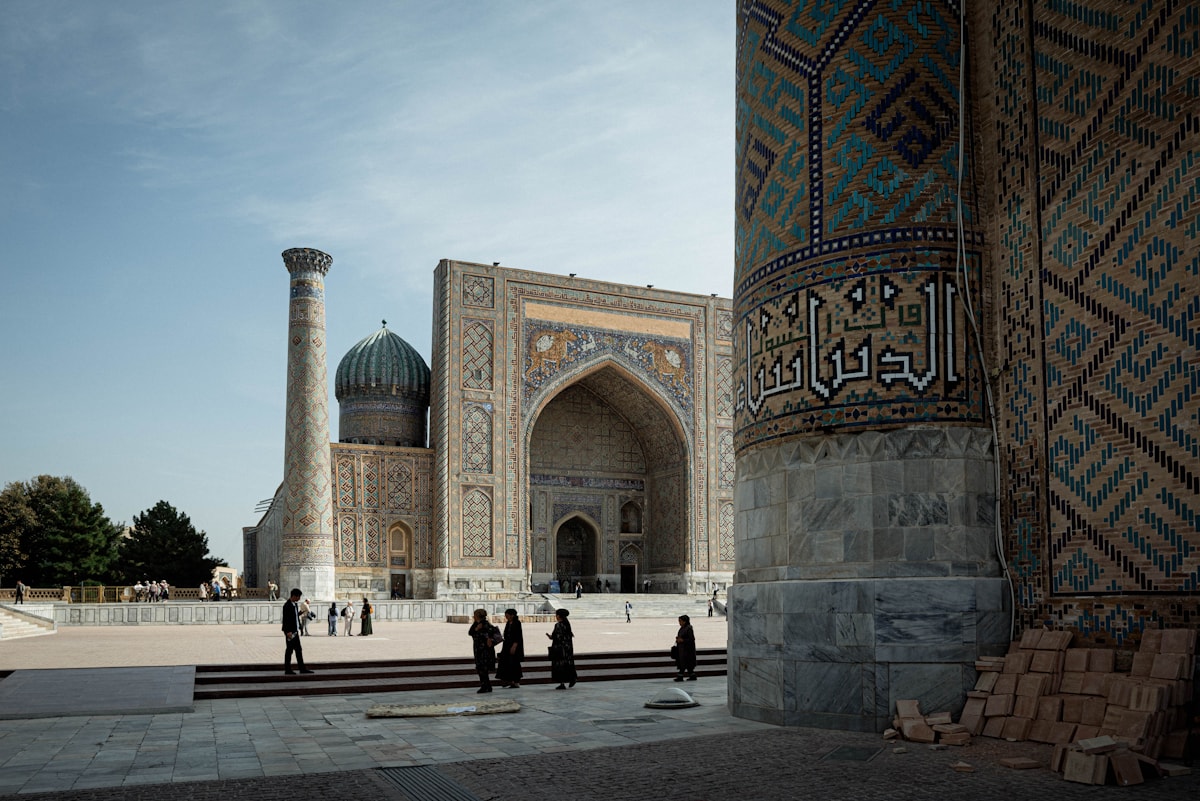
Two days cover Samarkand itself — both the ceremonial and the scholarly. The third day poses a choice: either drive over the pass to Shakhrisabz, to Timur's roots, where the ruins of his giant palace stand, or stay in the city and live it slowly — crafts, mahallas, a return to a favourite spot without crowds. This guide lays out both scenarios, so the third day does not become a list to finish but adds either depth or breathing room to the trip.
What does a third day in Samarkand give you?
Two days explain how Samarkand looked and what it thought with. The third day is a choice of direction: either deeper into Timurid history, back to its source in Shakhrisabz, or wider across Samarkand itself, to what people usually skip — workshops, mahallas, minor but living places. Both are good, and the choice depends on whether you have had your fill of architecture.
The logic is simple: the first two days are Samarkand itself (their routes are in our one day and two days guides), the third is either a day trip to Shakhrisabz or an unhurried city day. The Shakhrisabz trip fills a whole day with the drive over the pass, so it is planned separately.
What do the first two days look like?
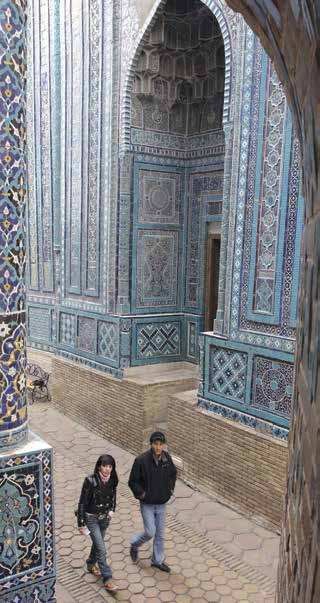
The detailed routes for the first two days are in separate guides. One thing matters here: by the third day you have seen both the ceremonial and the scholarly Samarkand, so the third works as a contrast — either a change of city (Shakhrisabz) or a change of pace (a slow day).
Is Shakhrisabz worth the trip?
Ak-Saray astonishes precisely by what is gone: only two colossal gate pylons survive, but they show how gigantic the plan was. The inscription on the portal declared that the builder's power should be judged by his buildings. Shakhrisabz shows Timur from a personal side — not the conqueror, but the man who returned to build in his home town and prepared a family tomb there.
Samarkand is Timur at the peak of his power. Shakhrisabz is Timur at his roots, returned to build homes. Between them lie one mountain pass and a whole biography.
How do you reach Shakhrisabz, and what to keep in mind?
It is practical to take a car with a driver from your hotel: they will wait at each site, and Shakhrisabz itself is compact and done in a few hours. Leave in the morning to return to Samarkand by evening — then the sunset Registan or Shah-i-Zinda makes a good end to the day. On the way out of the city you can stop at the mausoleum of Imam al-Bukhari, the greatest collector of hadith — a world figure born on the lands of modern Uzbekistan.
And if you stay in the city — how to fill the third day?
A third day in Samarkand itself is good precisely because it removes the rush: you can return to Shah-i-Zinda in the morning light when it is empty, sit in a teahouse, step into a workshop and talk to a craftsman. Which crafts merit attention across the country is in our crafts of Uzbekistan guide. This is a day for those who have understood that Samarkand is not about the number of sights.
Where to go next from Samarkand?
Samarkand is the heart of the "golden triangle", so three days here link conveniently with its neighbours. How to travel onward is in our Samarkand to Bukhara guide, and how to fit the city into the wider plan is in the 7 and 10-day itineraries.
Frequently asked questions about three days in Samarkand
Do you need three days in Samarkand?
The city itself fits into two days; a third is justified if you want to add Shakhrisabz — Timur's birthplace across the pass — or to live Samarkand slowly, without chasing monuments. It is a change of direction: the first two days are the core and the science, the third is either the context of Timur's empire or crafts and a quiet city.
What to do on the third day in Samarkand?
The main option is a day trip to Shakhrisabz (the ruins of the Ak-Saray palace, the Jahangir mausoleum, the Kok-Gumbaz mosque), a whole day with about two hours' drive each way over the pass. The alternative is a slow day in Samarkand itself: craft workshops, quiet mahallas, a return to Shah-i-Zinda without crowds.
How do you get from Samarkand to Shakhrisabz?
The easiest way is with a driver for the whole day: about 90 km and two hours over the scenic Takhtakaracha pass. Public transport exists but is awkward for seeing it in a day. On the way you can stop at the mausoleum of Imam al-Bukhari. Shakhrisabz's own monuments are compact and done in a few hours.
What remains of the Ak-Saray palace in Shakhrisabz?
Two colossal entrance-gate pylons survive — they show the gigantic scale of Timur's plan. The palace was built over 24 years and completed shortly before the ruler's death, and was later destroyed. Even the ruins impress with their height and the remnants of blue-and-gold mosaic on the portals.
Is Shakhrisabz worth a separate trip if you have already seen Samarkand?
Worth it if you are interested in Timur from a personal rather than ceremonial side: Shakhrisabz is his home town, where he built for his family and prepared the family tomb. It is a different Timur from the imperial Samarkand. If you have had enough architecture, the third day is better given to a slow Samarkand.
Want to see Uzbekistan the way the people who live here see it?
Become a Kvazar Explorer →