Fergana plov
Technique: Made with devzira — the local russet rice that drinks up the zirvak without turning soft.
Taste: Darker and 'drier' than Tashkent's: every grain separate, the flavor deeper, the fat never heavy.
Where the benchmark is: Chaikhanas of Margilan and Rishtan at noon, when the kazan is opened for the first time.
They say a real oshpaz knows the plov is ready by sound: the rice 'whispers' when it is time to cover the kazan.
Tashkent plov
Technique: Yellow carrots instead of red, laser or devzira rice, and above all the plating: rice, zirvak and meat are layered on the lagan, never mixed.
Taste: Lighter and softer than Fergana's; yellow carrots add sweetness without color, and kazy on top lends the festive note.
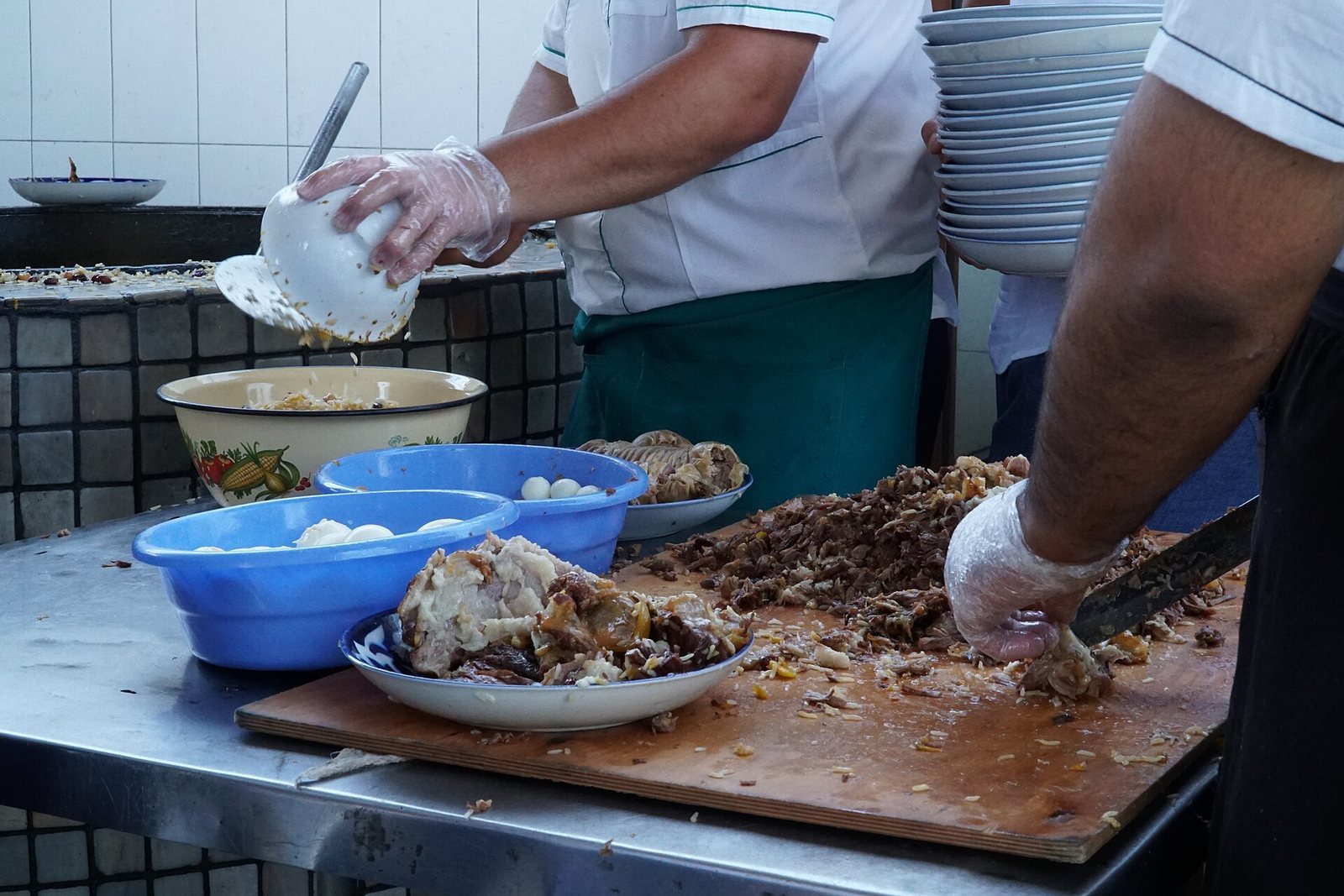
Where the benchmark is: The Besh Qozon plov center before 1 p.m. — after that the kazans run empty.
Tashkent measures plov in kazans: Besh Qozon can go through a cauldron holding a ton and a half of rice in a single morning.
Samarkand plov
Technique: The only major style never stirred at all: rice, carrots and meat finish in layers, steamed.
Taste: The lightest of the great schools — the rice stays almost white, the taste cleaner, the carrots keep their shape.
Where the benchmark is: The oshxonas near Siab bazaar in the morning; by lunchtime the best kazans are already done.
Samarkand insists its plov can be eaten by the spoonful the day after a wedding — it never turns heavy.
Bukhara osh-i-sofi
Technique: The rice is boiled separately and joined with the zirvak only at the end, with raisins and sometimes dried apricots.
Taste: Sweetish and silky, without pronounced zira — the taste of a merchant city, not the steppe.
Where the benchmark is: Bukhara's wedding oshxonas; on ordinary days, the old chaikhanas by Lyabi-Hauz.
'Sofi' comes from Sufi: legend places the recipe in dervish lodges, where meat and rice were cooked apart out of modesty.
Khorezm plov (chavla)
Technique: Less carrot, more rice, a quieter fire: chavla cooks longer and with almost no stirring.
Taste: The crumbliest and most restrained in flavor — closer to Persian polo than to Fergana osh.
Where the benchmark is: Home oshxonas of Khiva outside the Itchan Kala walls — the tourist kazans inside are softer and sweeter.
Khorezmians joke that theirs is the only plov you can still dance the lazgi after.
Kashkadarya plov
Technique: Chickpeas go into the kazan, and in season quince — stewed with the meat in the zirvak.
Taste: Quince adds tartness and perfume, chickpeas a nutty density; the most autumnal flavor of all the schools.
Where the benchmark is: Oshxonas of Shakhrisabz and Karshi in October–November, at quince season.
Locals hold that autumn plov without quince marks a lazy oshpaz.
Wedding toy-palov
Technique: Cauldrons for hundreds of servings, cooking starts before dawn, the rice is washed in seven waters.
Taste: Richer and fattier than the everyday version: this plov must 'hold' the guests until evening.
Where the benchmark is: By invitation only — or in the morning at the big plov centers that cook toy-palov to order.
Morning wedding plov is a men's ritual: guests arrive at six, eat, and leave for work.
Chaikhana plov
Technique: The everyday urban standard: one kazan each morning, the recipe pared to a stable minimum.
Taste: The honest baseline — neither festive nor homestyle; it is the version by which cities are compared.
Where the benchmark is: Any chaikhana with a local queue by 12:30. The queue is the quality mark.
A traveler's rule: if the plov is gone by 1 p.m., you have found the right chaikhana — come back earlier tomorrow.
 Tashkent