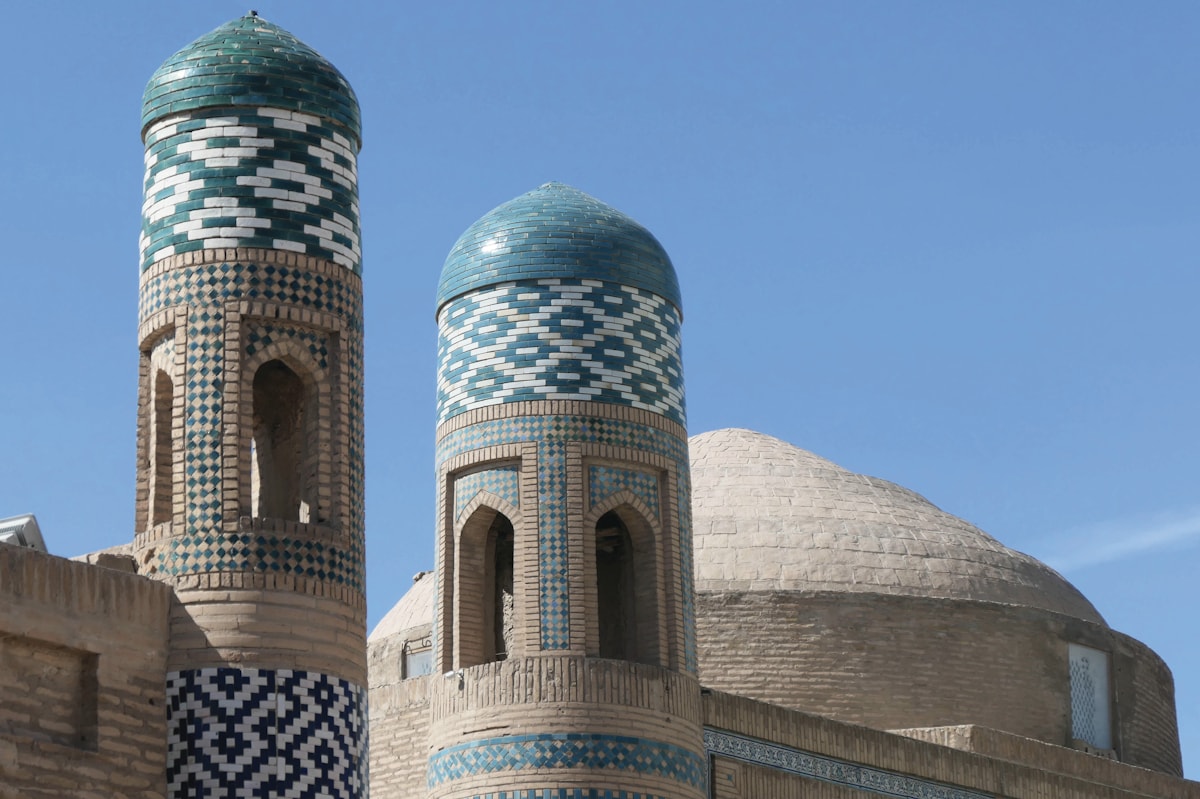
Khiva is built differently from the rest of Uzbekistan. There are no monuments scattered across a modern city here: Itchan Kala itself — the inner city behind the fortress walls — is one whole monument, preserved as an organism. So a day in Khiva is not a list of stops but a slow walk through a living medieval town. This guide shows what to fit into a day, how the single ticket works, and why Khiva deserves staying for sunset rather than a two-hour stop from Urgench.
What can you fit into Khiva in one day?
Khiva resembles neither Samarkand nor Bukhara. It is not a city with monuments inside it but a monument in itself — a fully preserved fortress-town in the sands of Khorezm. A day here is not a route from point to point but a slow walk through a medieval city that has barely changed.
The key advice for Khiva: arrive the evening before and sleep inside the walls. Then the early morning — before the day tours from Urgench arrive around 9:00 — gives you an empty city in soft light, and that is the best Khiva can offer. How to get here from Bukhara is in our Bukhara to Khiva guide; Khiva is now linked by high-speed train to Tashkent too.
How does the Itchan Kala single ticket work?
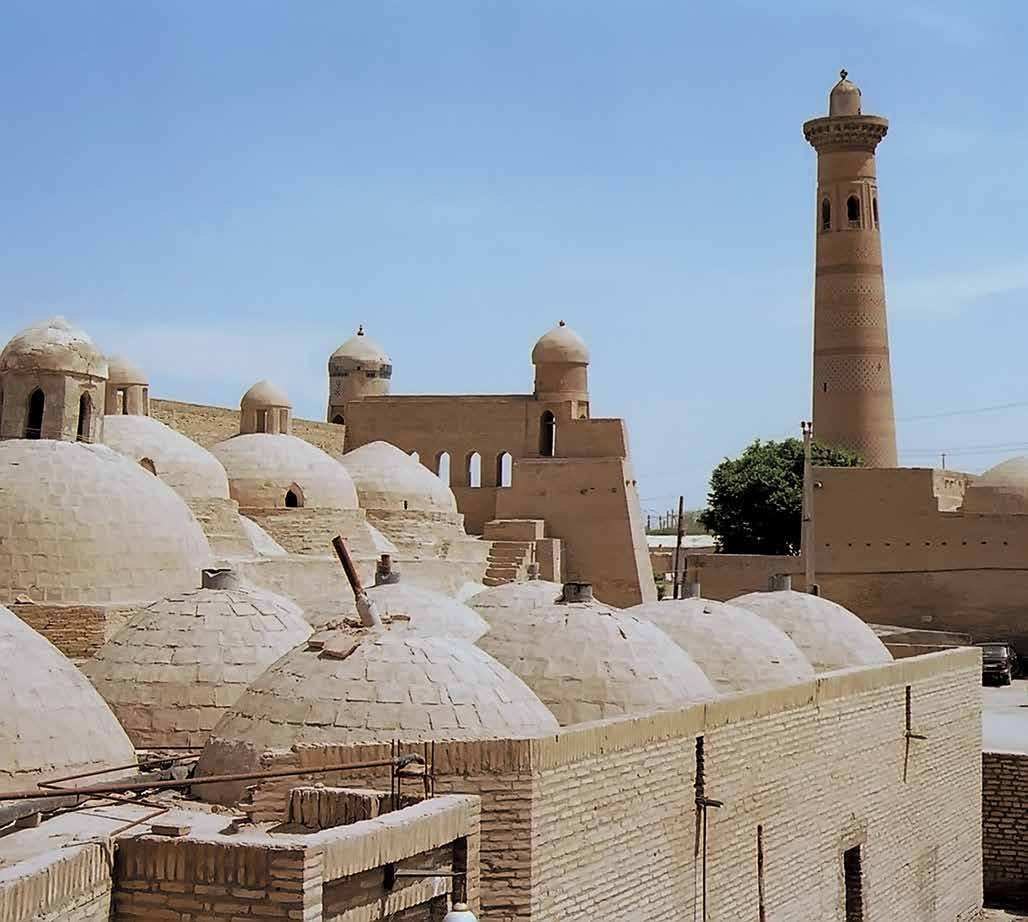
This is an important logistics detail: you pay once and walk all the included sites for two days, rather than buying tickets one by one. For a one-day visit it is more than enough. The maze of streets, the gates and the minaret views are free — the ticket opens the interiors.
What is the Kalta Minor minaret famous for?
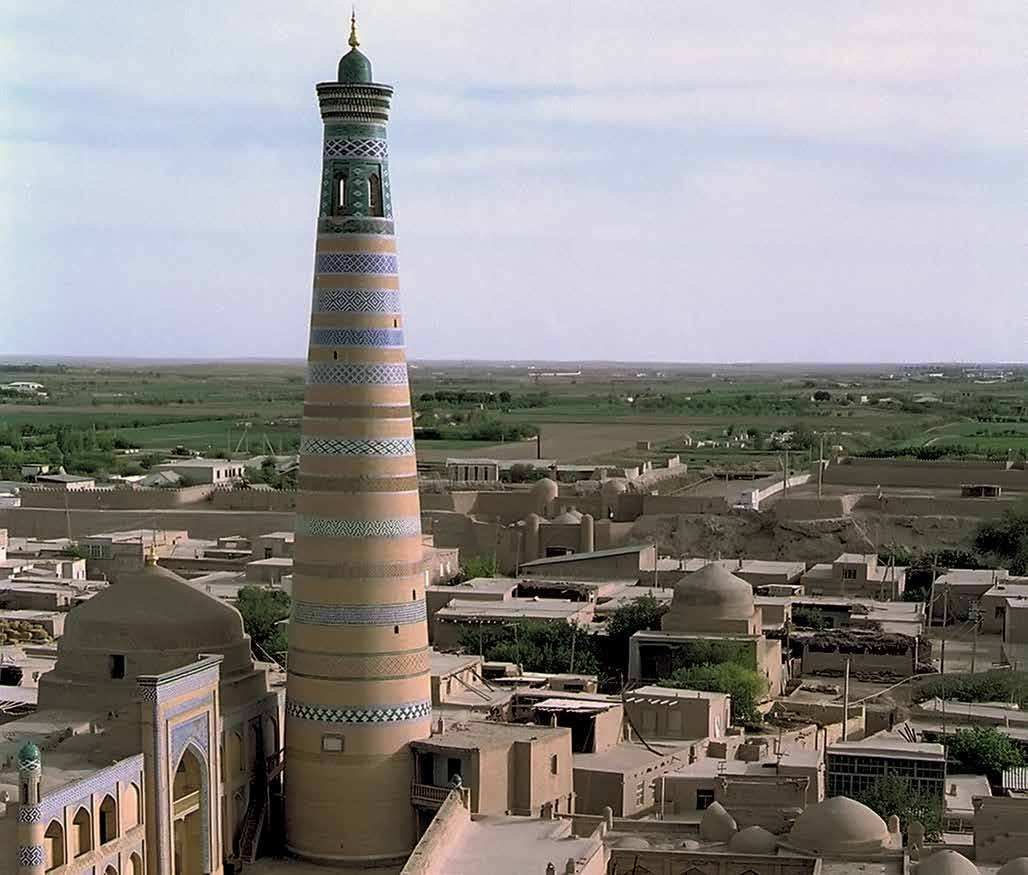
Kalta Minor stands by the western gate, the first thing you see entering Itchan Kala. Its truncation is not a flaw but a story: ambition frozen halfway. Morning light on the turquoise glaze is the obligatory Khiva shot — but come before the crowds.
What is inside the Juma Mosque?
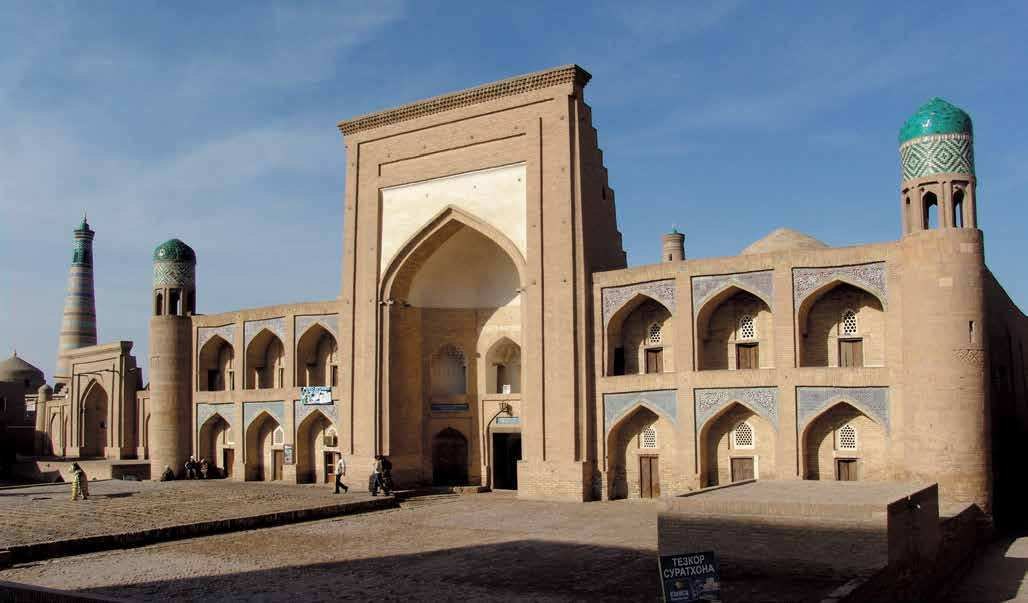
The Juma Mosque's columns are a museum of Khorezmian woodcarving under one roof: the oldest carry the geometry of early Islam, the later ones lush floral ornament. Stand in the centre and walk along the rows comparing the carving — the best way to feel the city's thousand-year tradition. The contrast with the bright facades outside is part of the design.
Samarkand and Bukhara keep separate masterpieces. Khiva survived whole — it is not a city with a monument but a monument that is lived in.
Is it worth climbing the walls and Kunya-Ark?
Kunya-Ark is a "fortress within a fortress," where Khiva's power was concentrated: the khans ruled from here. Its main value for the traveller is the view from above — from the Kunya-Ark terrace or the wall the whole compact city is seen at once, minarets against the desert. Come towards sunset.
How to end the day, and is it worth staying for sunset?
Khiva is a city of sunset above all: by day it is packed with tours, in the evening it returns to itself. A walk through empty streets in the blue hour is what makes sleeping here worthwhile rather than dropping in for a day from Urgench. What to add if you stay a second day is in our Khiva in two days guide.
Frequently asked questions about one day in Khiva
Is one day enough for Khiva?
For Itchan Kala itself, yes: the inner city is small (about 26 hectares) and can be walked in a day, including Kalta Minor, the Juma Mosque, Kunya-Ark, Tash-Hauli and the Pahlavan Mahmud mausoleum. But Khiva's best experience is early morning and sunset without crowds, so one night inside the walls is worth more than a day visit.
How does the Itchan Kala ticket work?
The single ticket is bought at the gates and valid about 48 hours, opening most sites inside (around 16–18). The Islam Khoja minaret climb and the wall climb are charged separately. You can walk the city streets without a ticket — it is needed only to enter the monuments.
Is it worth sleeping inside Khiva's walls?
Yes, this is the key advice for Khiva. Staying in a guesthouse inside Itchan Kala gives access to the empty city early in the morning, before the day groups from Urgench arrive around 9:00, and to the sunset views in the evening. These are the hours when Khiva makes its strongest impression.
How do you get to Khiva?
Most often from Bukhara (a long desert drive) or via Urgench airport 30–40 minutes away. Khiva is now also linked by high-speed train to Tashkent, Samarkand and Bukhara, which has markedly eased the western part of the route. See our route guides for details.
What should you eat in Khiva?
Shivit oshi — the signature Khorezm green noodles, with dill kneaded into the dough. The dish is rarely found outside the region, so it is a must-try in Khiva. Teahouses inside Itchan Kala serve it to visitors.
Want to see Uzbekistan the way the people who live here see it?
Become a Kvazar Explorer →