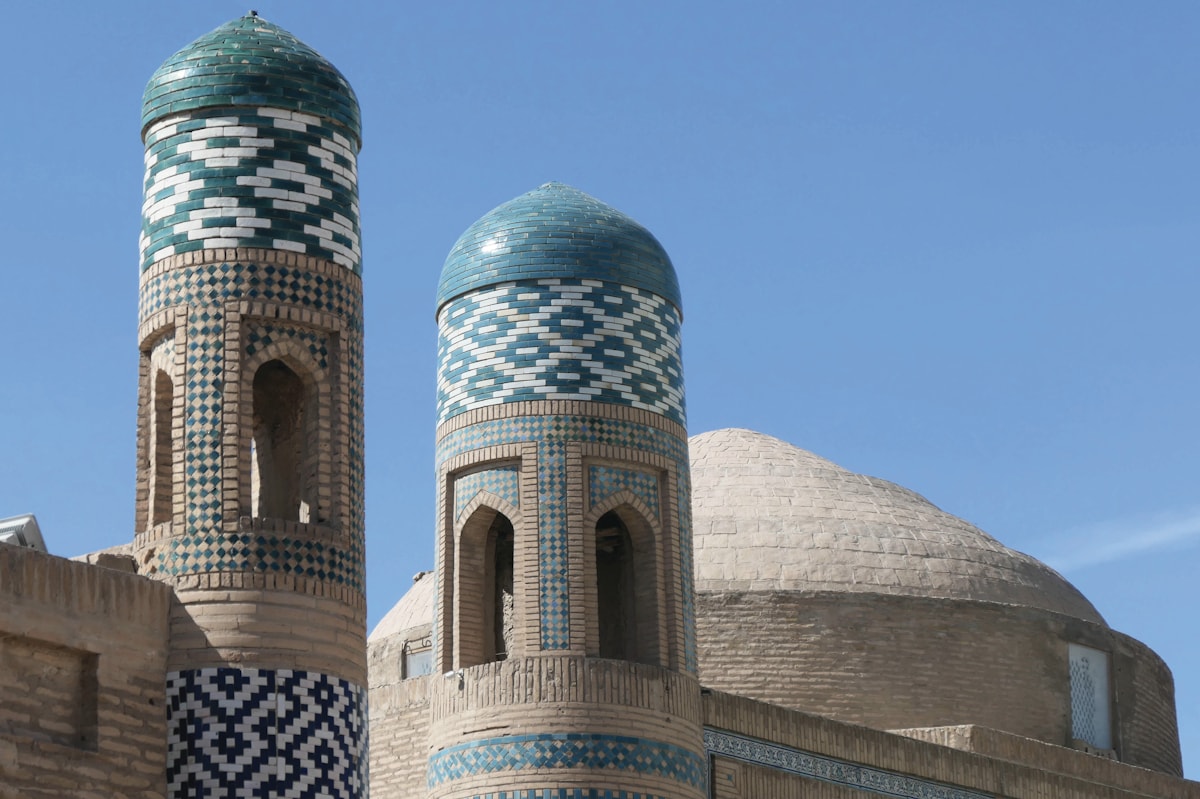
Khiva in a day is a preserved medieval city. Khiva in two days is the whole history of Khorezm, from the ancient desert fortresses to the tiled finale behind the walls of Itchan Kala. The second day does not finish a list of monuments but switches the lens from urban to archaeological: out to where fortresses stand far older than the khans' Khiva. This guide lays out both days by contrast — the living city inside the walls and its two-thousand-year prehistory outside.
What does a second day in Khiva give you?
Khiva inside the walls is the finale of Khorezmian history, its showcase. But the real depth of this region is outside, in the desert, where fortresses stand far older than the khans' Khiva. The second day shifts the scale from urban to archaeological: from the carved doors of Itchan Kala to bare walls two thousand years old.
Split it like this: day one is the walkable Itchan Kala (its route is in our Khiva in one day guide), day two is a trip by taxi or with a driver to the desert fortresses, returning to Khiva for sunset. Those heading further west may choose, instead of the fortresses, an extension to Nukus and the Aral Sea.
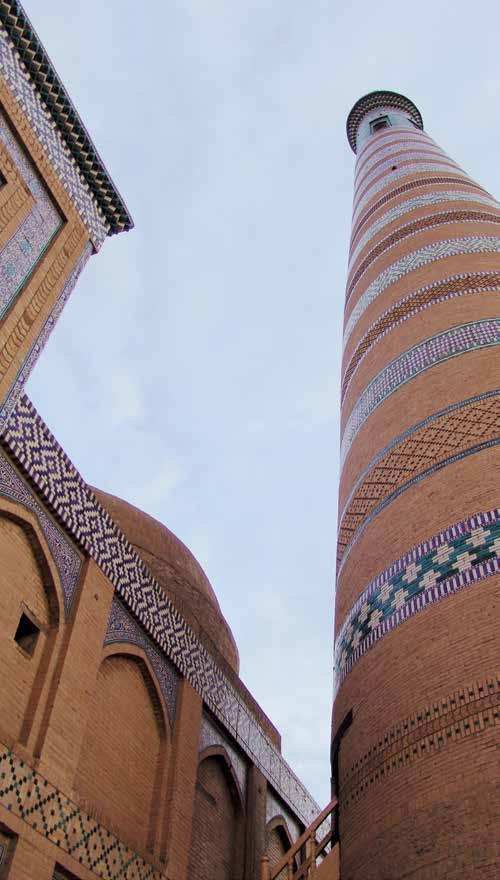
How to walk the first day in Khiva?
The detailed first-day route is in a separate guide. Khiva's key rule still holds: sleep inside the walls to catch the empty city at dawn and sunset. The single ticket is valid about 48 hours, so it still works on the second day.
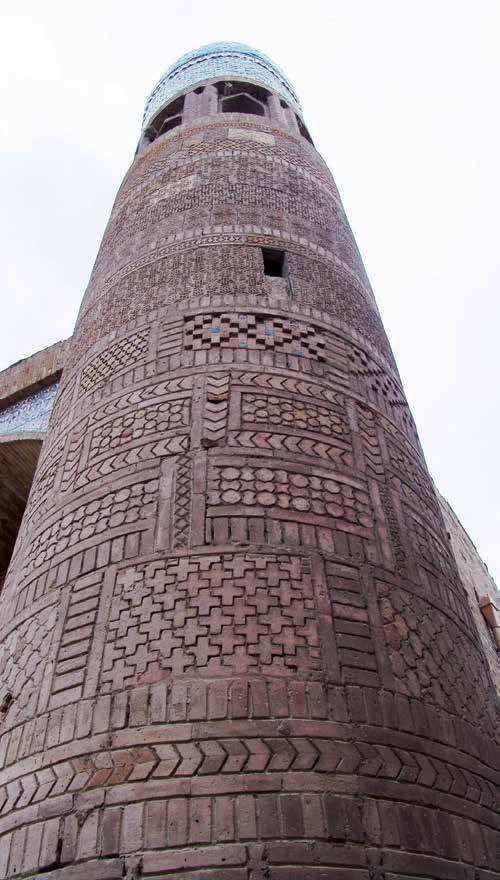
What are the Khorezm fortresses — Toprak-Kala and Ayaz-Kala?
These fortresses (the "kalas") predate Islam in the region: Khorezm was an independent ancient civilisation with its own writing and Zoroastrian roots. Standing by the walls of Ayaz-Kala, looking out over the desert to the horizon, is an experience that explains why Khiva arose just here. This is not "more ruins" but the root of all Khorezmian history.
Itchan Kala is the ornate finale of Khorezmian history. The desert fortresses are its beginning. In two days you see not a city but two thousand years.
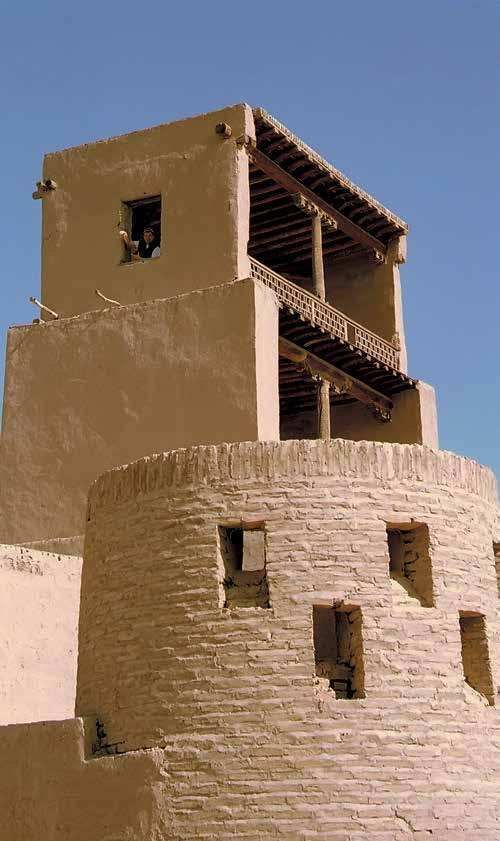
How do you reach the fortresses, and how much time to allow?
The most practical option is to arrange a driver for the whole trip: they know the order of the sites and will wait at each fortress. Leave in the morning to return to Khiva by sunset — the evening city remains the climax anyway. Tap water in the region is unsafe, so take bottled water.
Should you go to Nukus and the Aral instead of the fortresses?
The second-day fork depends on your route: the Khorezm fortresses are a compact trip with a return to Khiva, while Nukus and the Aral are a separate chapter of the journey. If the Aral is on your list, it is wiser not to squeeze it into a day from Khiva but to allow for it separately — exactly how is covered in our Aral Sea from Nukus guide.
How to end the second day?
The contrast is the point of the two days: bare ancient walls by day and an ornate living city by evening, the beginning and the finale of one civilisation in a single route. Where to go next from Khiva — west to the Aral or back through Bukhara — is covered in our route guides, for example Uzbekistan in 10 days.
Frequently asked questions about two days in Khiva
Do you need two days in Khiva?
A day is enough for Itchan Kala itself, but a second day is justified if you want to see the Khorezm desert fortresses (Toprak-Kala, Ayaz-Kala) — about two thousand years older than Khiva and offering an entirely different scale. The second day is a passage from the medieval city to the ancient civilisation it grew from.
What to see on the second day in Khiva?
A trip into the desert to the ancient Khorezm fortresses: Toprak-Kala (a former capital with a palace) and Ayaz-Kala (a complex of fortresses on hills). Usually two or three 'kalas' are combined into one circuit by taxi or with a driver, returning to Khiva by sunset.
How do you reach the Khorezm fortresses from Khiva?
Only by taxi or a hired driver: the fortresses are scattered across the desert an hour or two from the city, with no public transport. The easiest option is to arrange a driver for the whole half-day to full-day trip. Take water and sun protection — there is no infrastructure on site.
Can you visit the Aral Sea on the second day?
Not as a day trip from Khiva: Nukus and the dried-up Aral with its ship graveyard lie considerably further west and require separate days. If the Aral is on your list, it should be planned as a destination in its own right rather than a trip from Khiva.
How do the Khorezm fortresses differ from Khiva's monuments?
In age and character: the monuments of Itchan Kala are a tiled medieval and later city of the khans, while the desert fortresses are bare mud-brick walls two thousand years old, the remains of an ancient Khorezmian civilisation. The first is ornate and lived-in, the second monumental and deserted.
Want to see Uzbekistan the way the people who live here see it?
Become a Kvazar Explorer →